A performance built for one judge
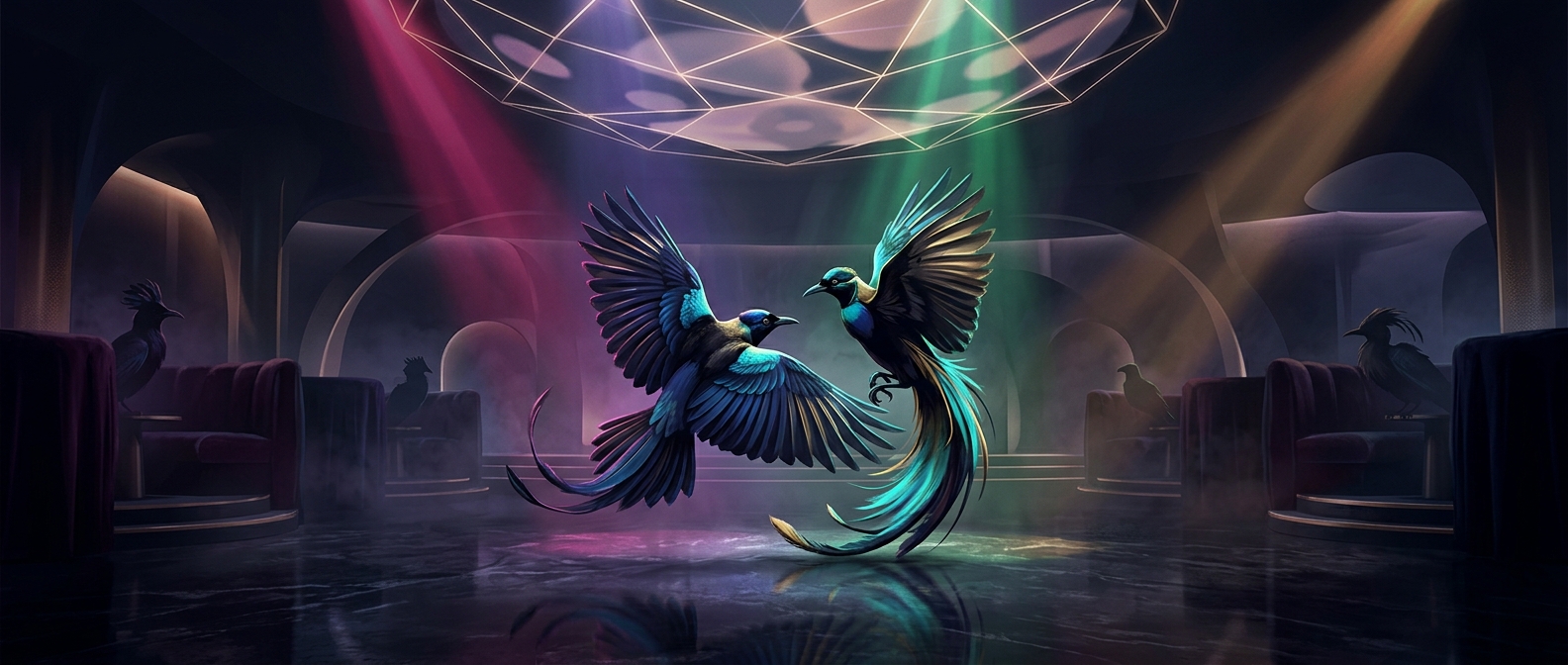
For many birds of paradise, courtship is not simply a matter of showing off bright feathers. A male’s display combines posture, movement, and sound into a species-specific routine. He may hop, pivot, or shake specialized feathers; in some species, he can also alter his outline by lifting and spreading plumage. The sequence makes particular colors or shapes flash into view, then disappear as he moves.
That choreography works best when the audience can see it. In several species, a male clears leaves and debris from a small patch of forest floor, creating a display area. The cleared space is part of the performance: it gives the female an unobstructed view of the feathers and movements she is assessing.
Why the contest is so selective
Females typically choose whether to mate, and a male’s display can be judged against those of other males. In some species, several males display in the same area; in others, a male performs at a court of his own. Either way, the show is not a guaranteed invitation to mate. A female may watch and leave, so a male’s elaborate routine has to hold her attention.
This is sexual selection: traits become more common when they help an animal win mating opportunities, even if they are not mainly useful for finding food or escaping predators. A display’s complexity can therefore reflect a long evolutionary competition over what females respond to. The “dance contest” is not a contest with a visible score; its outcome is which male, if any, the female chooses.