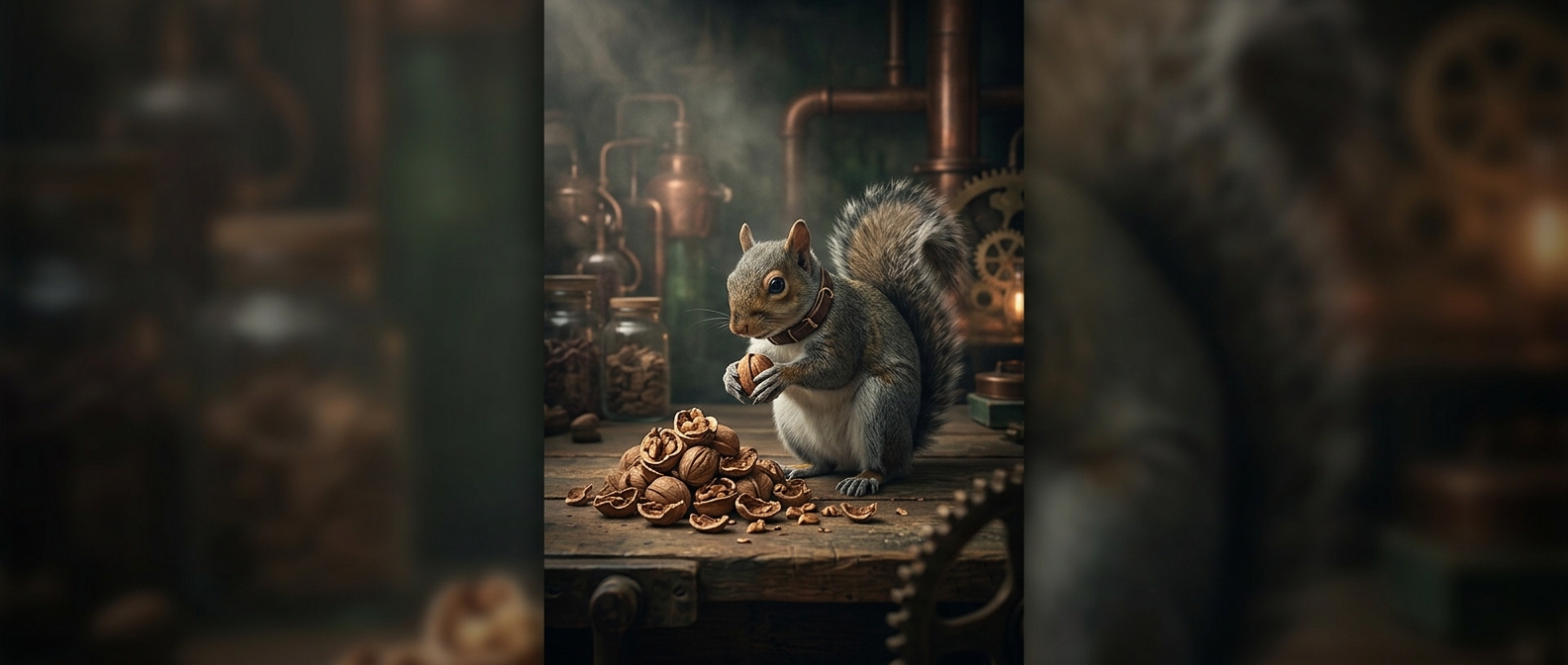
How the Squirrels Learned the Sequence
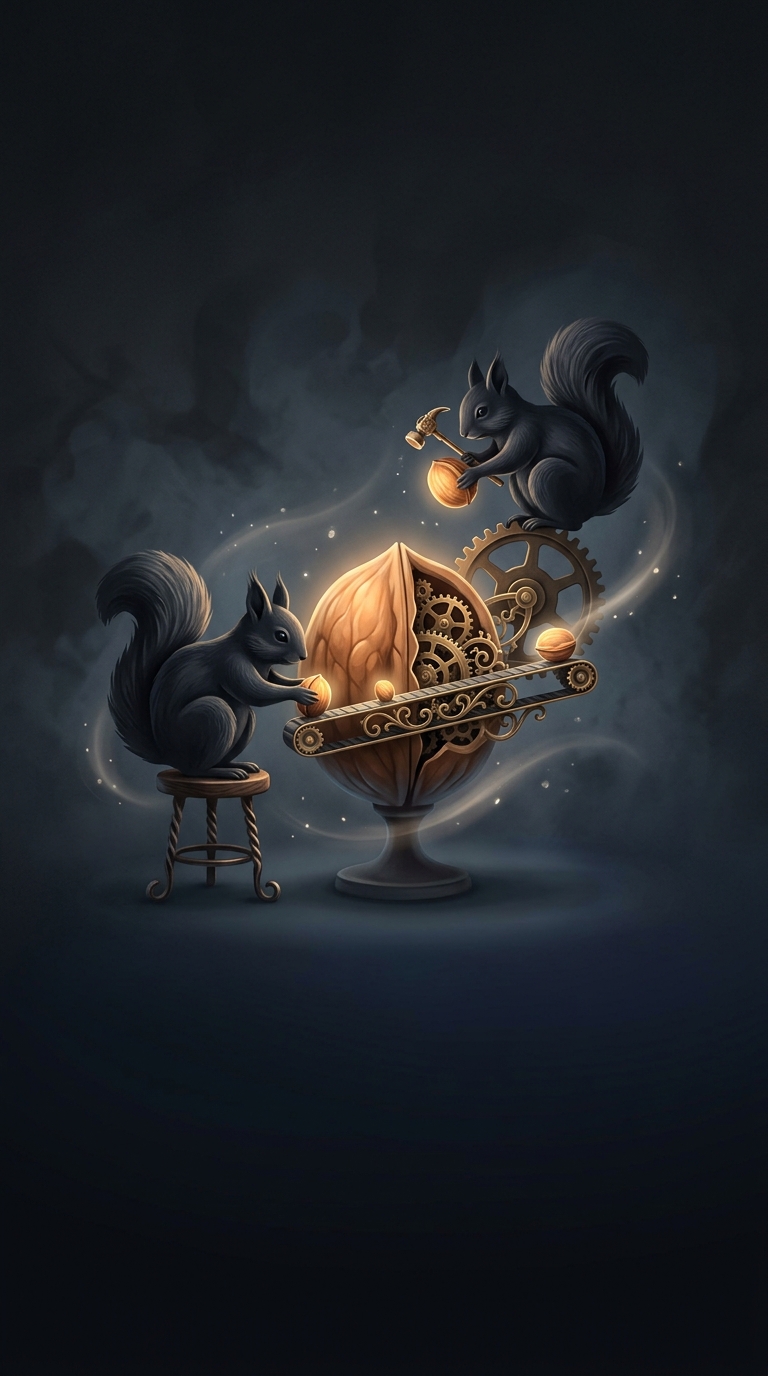
The nut-room scene depended on more than getting squirrels to appear on camera. Each animal had to perform a chain of small actions: settle on a stool, open a walnut, separate out the edible part, and send it along a conveyor belt. The production trained 40 rescue squirrels over 19 weeks for those tasks.
That sequence is a form of behavior training: a complicated routine is built from manageable actions, which can then be practiced and combined. For a film crew, the challenge is not simply teaching an animal one trick, but getting a usable performance while cameras, people, and other activity are present. The squirrels’ work had to read clearly as part of the factory’s machinery.
Why Use Live Animals?
Computer graphics can create an animal’s movements, but live squirrels supplied real bodies interacting with real props. Their paws, posture, and handling of the walnuts could be filmed directly, giving the conveyor-belt routine a physical presence. The tradeoff was time: instead of creating the action digitally, production invested weeks in preparing animals to carry it out.
The detail that makes the scene memorable is also its practical achievement: a roomful of small animals was trained to repeat a coordinated workplace routine, one walnut at a time.