How the Squirrels Became Part of the Factory
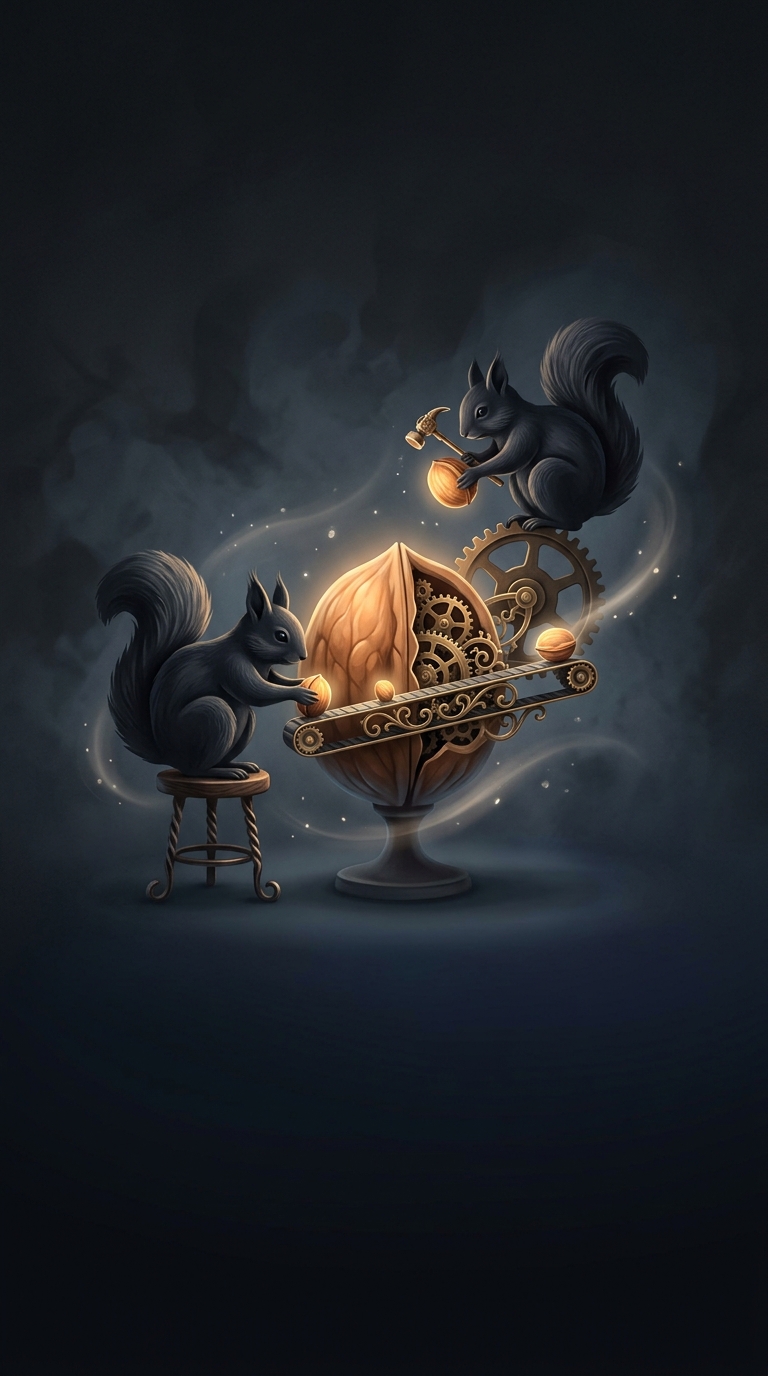
The nut-sorting scene depends on a simple visual joke: the workers are not machines but animals performing a precise factory routine. To make that routine happen on camera, the production trained forty rescue squirrels to sit on stools, crack walnuts, and drop the pieces onto a conveyor belt. Handlers worked with them for ten weeks, turning a string of separate actions into a sequence the camera could capture.
That distinction matters. A squirrel can crack a nut, but getting it to do so in the right place—and then release it where the scene needs it—requires training and patient coordination. The finished image makes the task look automatic; the work behind it was teaching the animals to repeat specific behaviors in a controlled setting.
A Practical Effect, With Practical Limits
Live animals also bring unpredictability. Each squirrel has its own pace, so filming a coordinated-looking operation means working around what the animals will reliably do rather than expecting machine-like timing. The handlers’ job was to make the necessary actions familiar, while the production built the scene around those trained behaviors.
The result gives the factory’s surreal logic a tangible texture: real squirrels handle real nuts on real stools and a conveyor. The memorable detail is not just that the workers were animals, but that the production had to train dozens of them to make a comic assembly line look routine.