Why the Rain Made the T. Rex Hard to Control
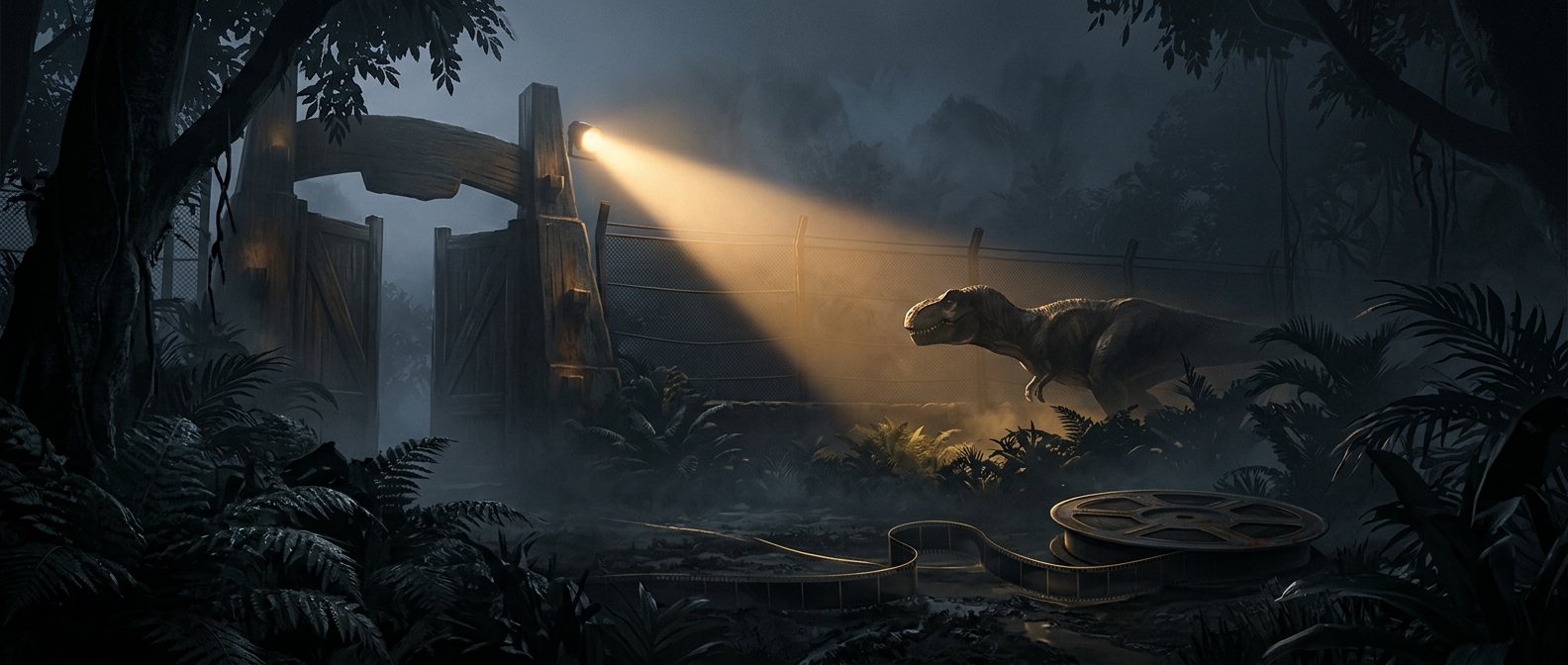
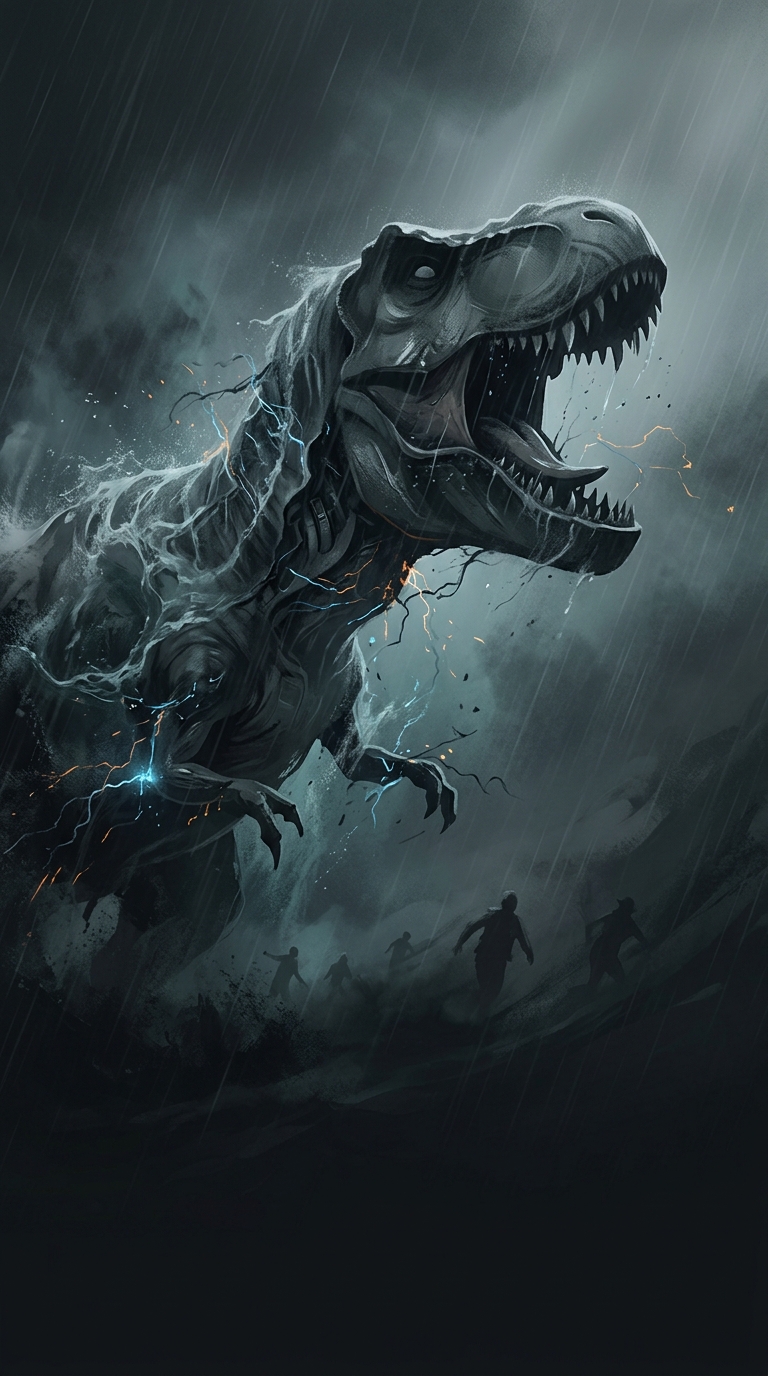
The storm in Jurassic Park was not just an effect added later: water was being sprayed over a full-size mechanical dinosaur while it performed. That created a problem the creature’s designers could not solve simply by giving it a more dramatic move. The T. rex was a heavy animatronic—a machine built to move like a living animal—and its wet outer covering changed how that machine behaved.
The skin was made from foam latex, a flexible material that could absorb water. As it soaked up the artificial rain, it grew heavier, putting extra strain on a mechanism already moving a massive head and body. The altered weight could throw off the T. rex’s carefully tuned movements, making its motions shake or lurch rather than land smoothly.
A Practical Effect With a Weather Problem
The creature was controlled through mechanical and electronic systems, but that did not make it immune to the set’s conditions. Water could complicate the machinery, while the saturated skin itself changed the load the controls had to handle. The storm turned a reliable performance machine into one whose weight and movement were harder to predict. That is different from a simple switch being flipped: the trouble came from a wet, heavy physical object interacting with a complex mechanism.
For the crew, the consequence was immediate. They had to treat the dinosaur as an unpredictable piece of machinery as well as a performer, watching for unstable movement and dealing with the wet covering between takes. The scene’s rain helped make the T. rex feel immense and threatening on screen—but behind the camera, every extra sheet of water made the machine harder to manage.