Why detergent lights up blue
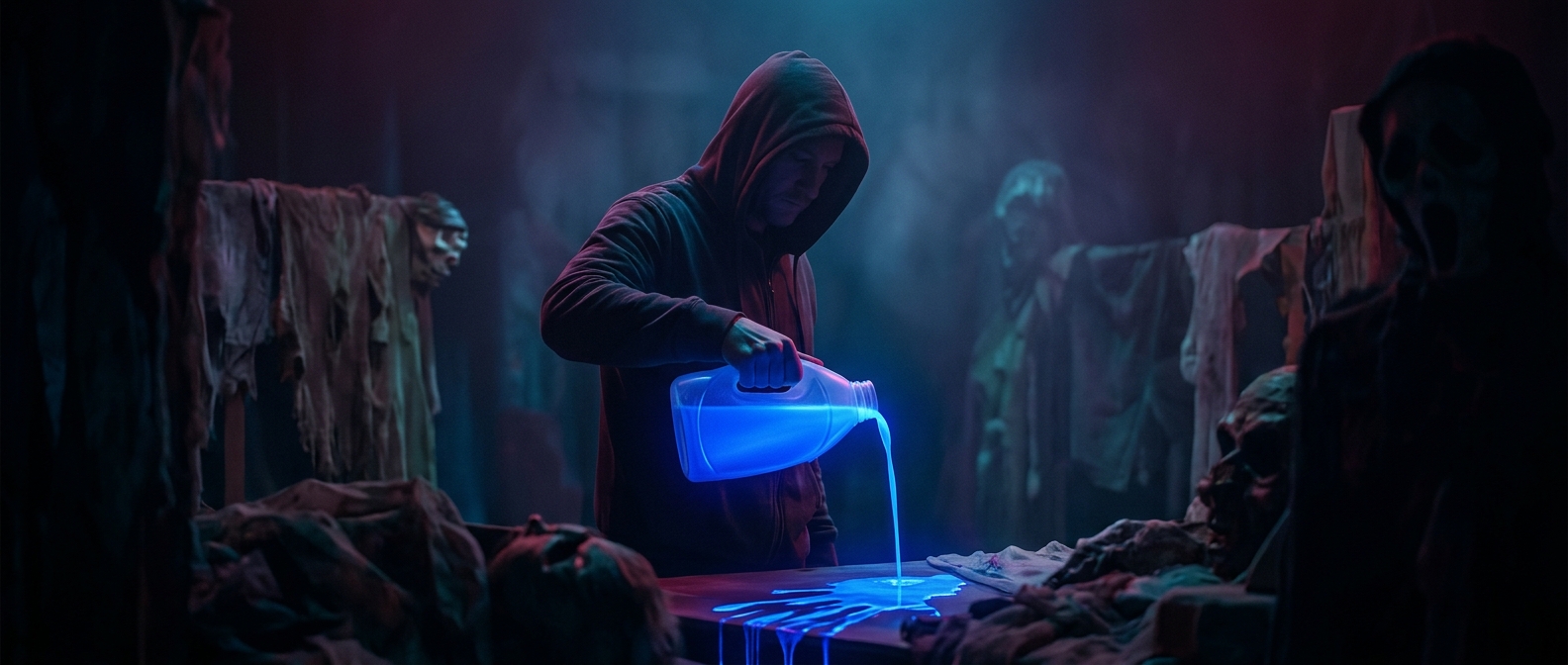
Blacklights emit ultraviolet (UV) light, which people cannot see well. Optical brighteners in many laundry detergents absorb some of that UV energy and release it as visible blue light. On clothing, the effect helps counteract a yellowish cast, making fabric look whiter in ordinary light. Under a blacklight, the same process becomes conspicuous: detergent-treated areas appear to glow.
The glow is fluorescence, not light stored for later. It appears while the material is exposed to UV and fades when that illumination stops. Its color and intensity depend on the detergent, the amount left on the surface, and the blacklight, so the result is less controlled than purpose-made theatrical paint.
A low-cost effect with practical limits
At a Halloween attraction, detergent can provide a quick way to make fabric or props stand out in a UV-lit scene without buying a specialized coating. But it may dry unevenly, leave a visible residue in ordinary light, or wash away when the item is cleaned. Because a laundry product is formulated for washing, not makeup, it should not be treated as face or body paint; using it on props or washable materials keeps the effect in its intended lane.