Before the Phone, a Camera on a Pole
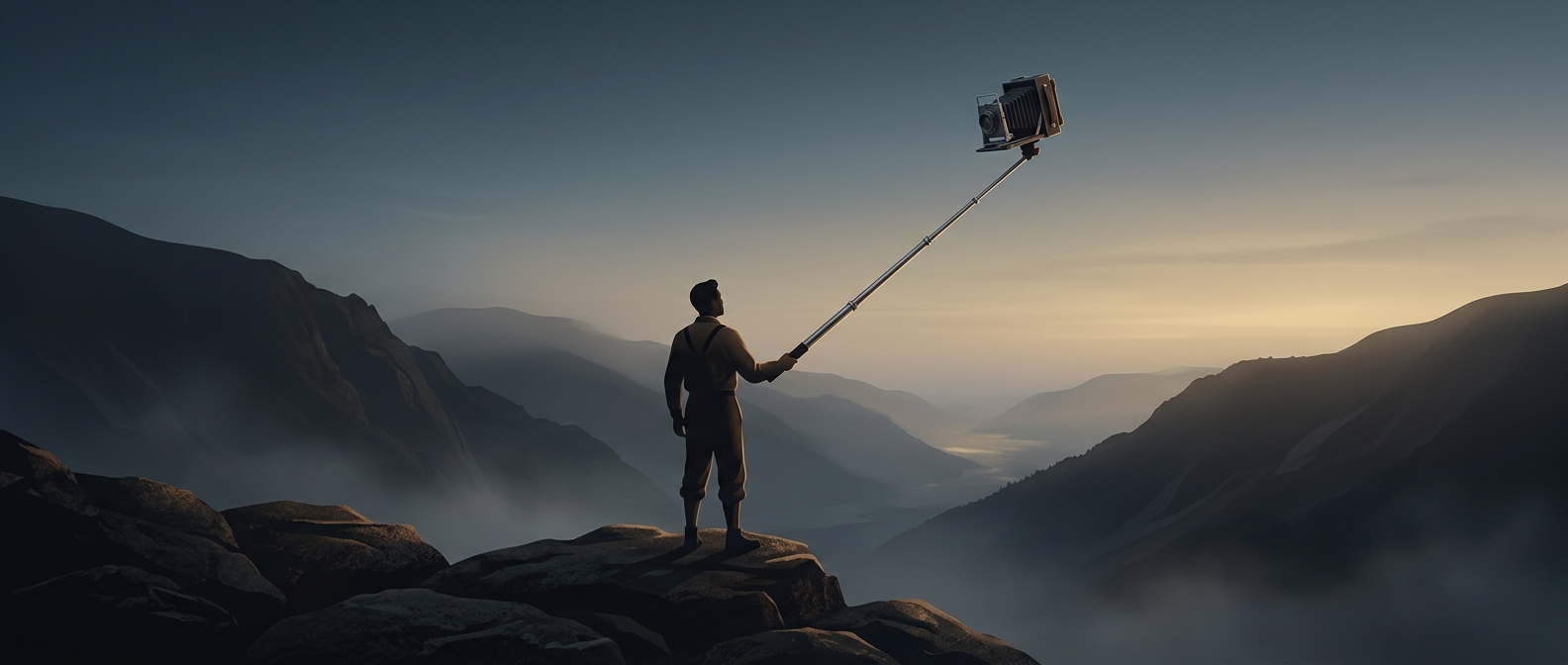
The basic idea was simple: move a film camera farther from the photographer so the person taking the picture could appear in it too. A Japanese inventor patented such an extender in the 1980s, decades before the smartphone made the selfie stick familiar.
But a pole solved only one part of the problem. With a typical film camera, the photographer could not look at a live screen to check what the lens was capturing. The farther the camera was held away, the harder it could be to judge the framing—especially when trying to fit several people into a shot. Film also meant each attempt used a real exposure, not a disposable preview on a screen.
Why the Idea Needed the Right Camera
A camera extender could change the angle and distance of a picture, but it could not by itself provide the immediate feedback people now expect. The modern phone combines camera, screen, and controls in one device: users can see the composition, adjust the position, and take another shot almost at once. That makes a long arm practical rather than merely possible.
The 1980s invention was therefore an early answer to a familiar travel problem—how to photograph yourself with a landmark or group behind you. Its novelty was not that people had never wanted such a picture, but that the camera system of the time made the solution awkward. The selfie stick’s success depended as much on the screen in your hand as on the stick itself.