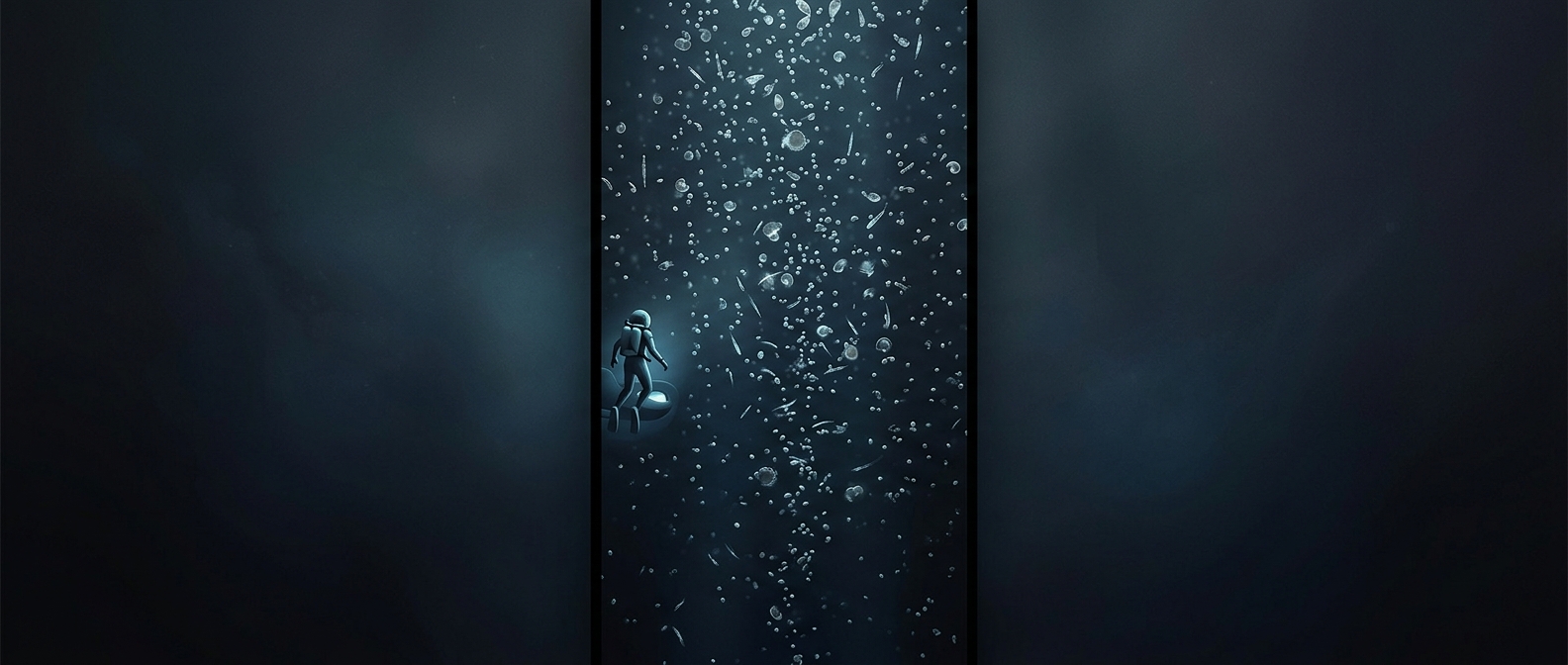
How ocean debris becomes marine snow
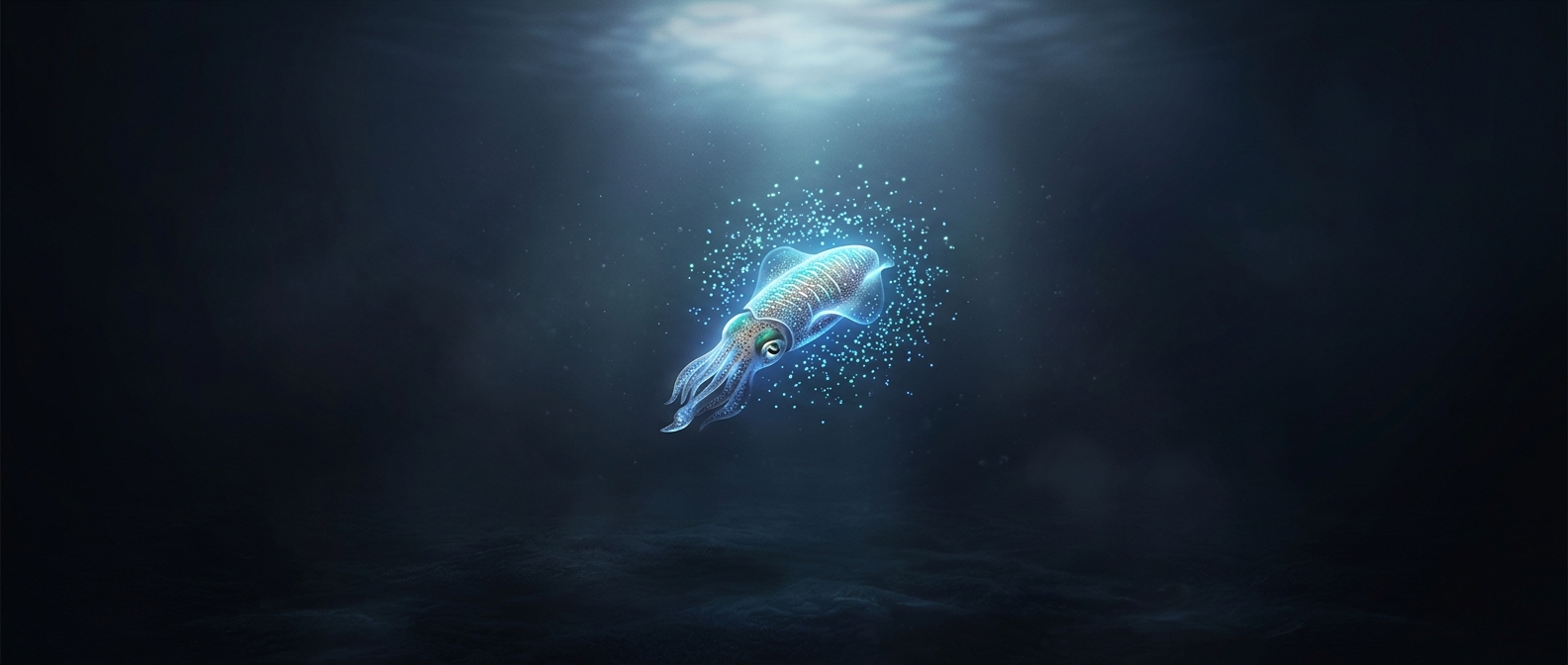
In the sunlit upper ocean, algae and other plankton take carbon dioxide from seawater to build their bodies. When they die—or shed waste, mucus, and fragments—those bits stick together with other particles. The resulting flecks and clumps drift downward like snow, carrying some of that carbon with them.
The particles vary in size and composition. A larger, sticky clump may sink quickly; tiny, loose fragments can linger in the water. That matters because sinking speed determines how long the material stays within reach of animals and microbes.
A descent through hungry waters
As marine snow falls, zooplankton and other animals may eat it, while bacteria and other microbes break it down. Much of its organic carbon is converted back into carbon dioxide in the water, where it can eventually return to the atmosphere. Some particles are repackaged into heavier waste pellets and keep sinking, but the journey is not a one-way conveyor belt: material can be consumed and recycled several times.
The deeper a particle travels before its carbon is released, the longer that carbon generally remains isolated from the atmosphere. Deep water circulates back toward the surface only over long timescales, so carbon carried far below the sunlit layer can be out of contact with the air for centuries or more.
When the snow reaches the seafloor
A small fraction makes it all the way to the bottom. There, some carbon is buried in sediment, where it can remain stored for much longer than carbon recycled in the upper ocean. Marine snow therefore does not lock away every bit of carbon it carries; its climate significance lies in the particles that escape the many chances to be eaten or decomposed along the way. In the deep ocean, even a thin, steady fall of debris can add up to a long-lived record of life above.