How a crack in the seafloor becomes a volcano
At a mid-ocean ridge, two tectonic plates slowly move apart. Hot rock from below rises to fill the opening; as pressure drops, some of it melts into magma. The magma cools against seawater and older rock, adding layers of new basalt—the dark, dense rock that makes up most ocean floor.
The process is not a single dramatic burst. Repeated eruptions and intrusions of magma gradually build a ridge that can stretch for thousands of miles, though much of it lies far below the reach of sunlight.
Why the eruptions stay out of sight
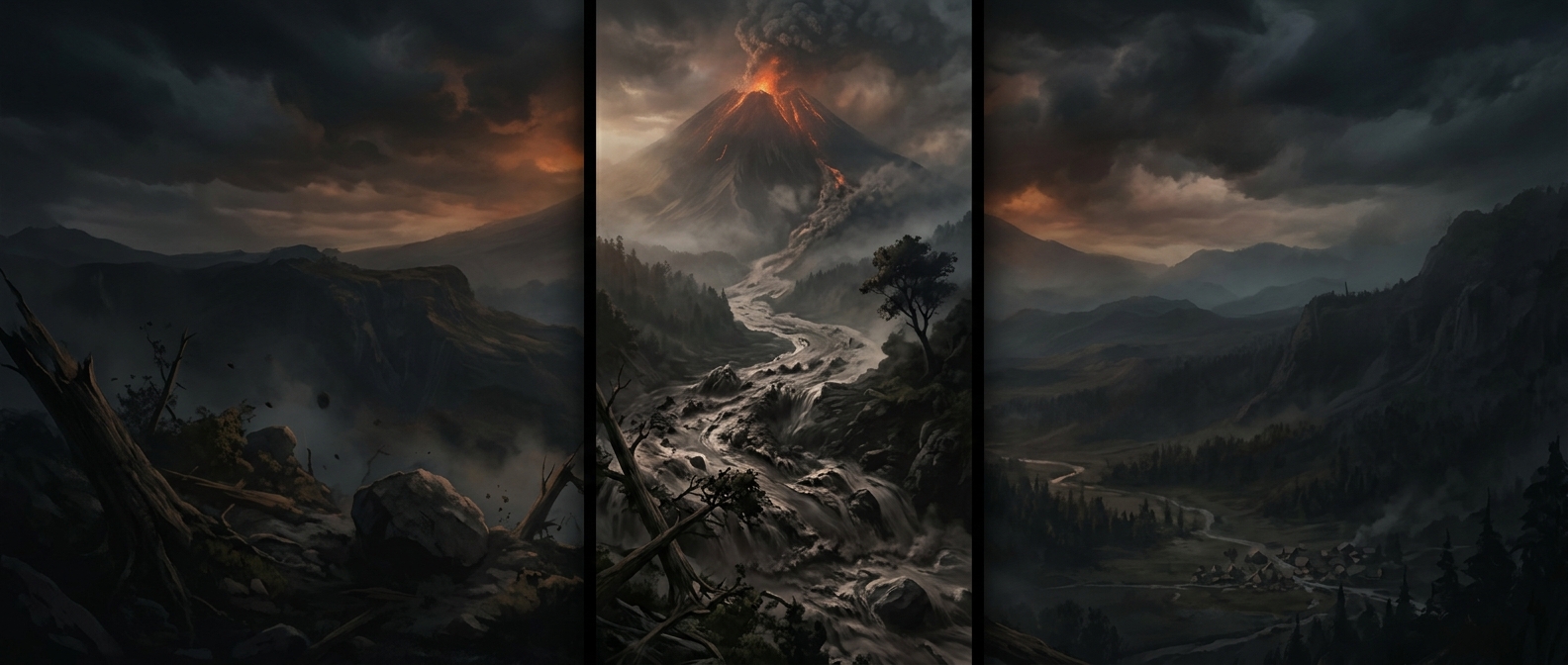
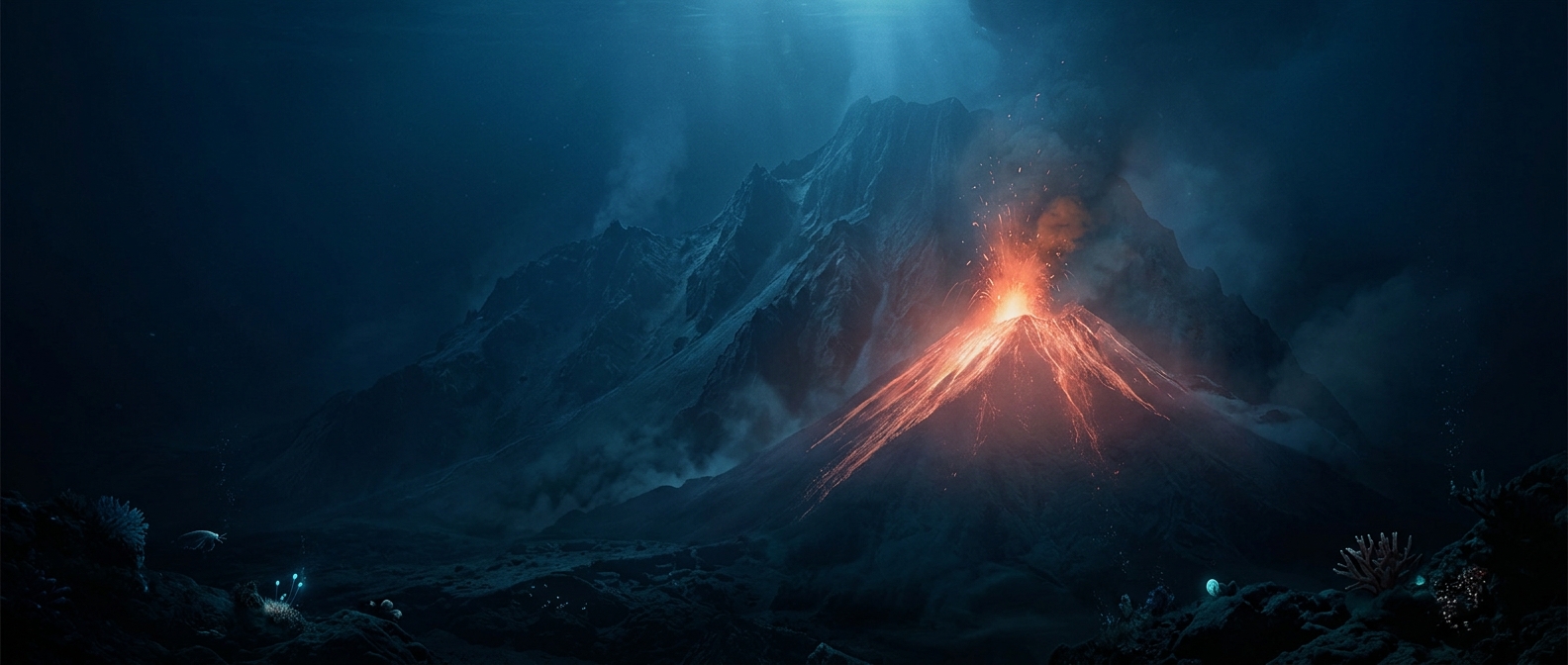
A volcano on land can throw ash and gas into the air, where expanding gases help drive explosive blasts. Deep underwater, immense water pressure makes gas bubbles harder to expand. Many ridge eruptions therefore produce flowing lava rather than towering ash clouds, and the surrounding ocean quickly chills the lava’s surface into a crust.
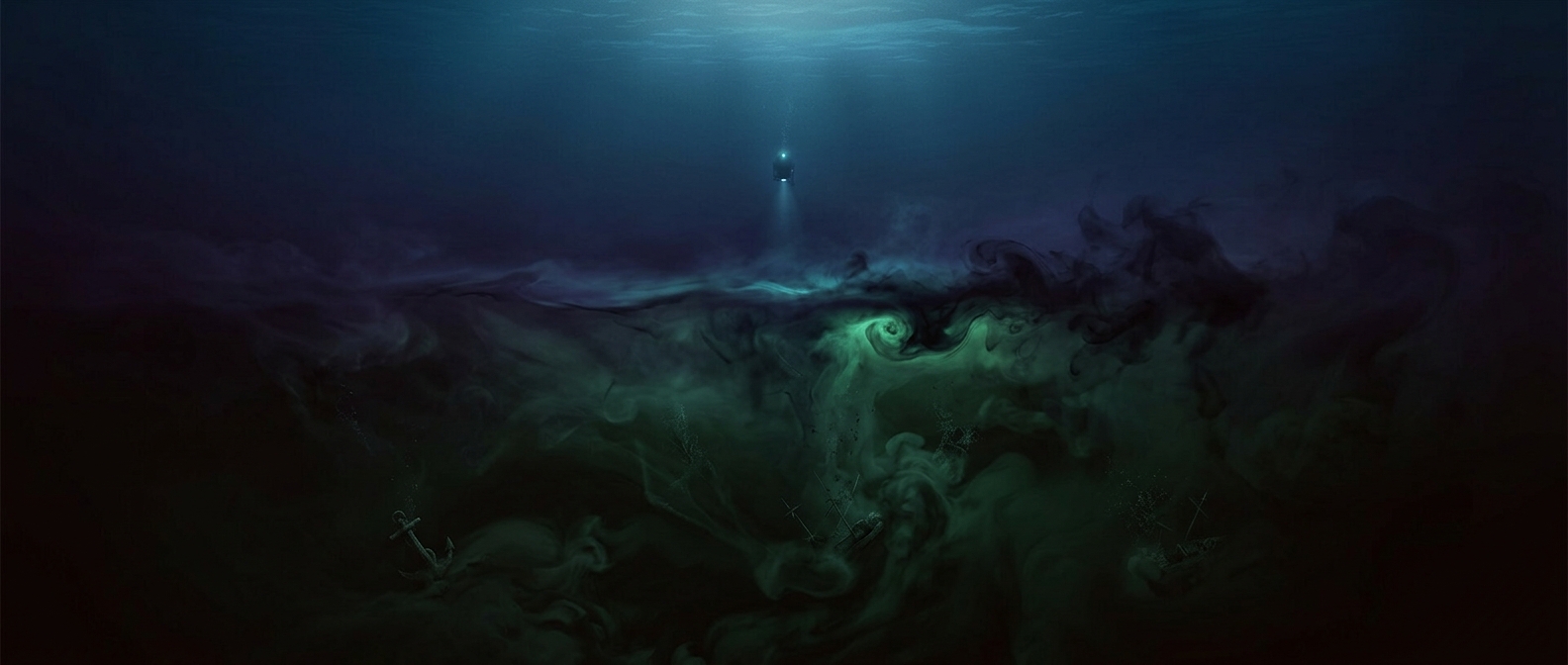
That does not make every submarine eruption quiet or harmless. Water can flash into steam when it meets very hot material, and underwater eruptions can be detected through changes in seismic activity, temperature, or the chemistry of seawater. But without a plume above the ocean, an eruption may leave no obvious sign for people on shore.
A moving record of Earth’s interior
As new crust forms, it pushes older seafloor away from the ridge. The ocean floor is therefore a slowly widening record of volcanic construction: fresh rock marks where plates are separating, while older rock lies farther away. Much of Earth’s volcanic activity happens in this largely unseen setting, building the ground beneath the oceans one eruption at a time.