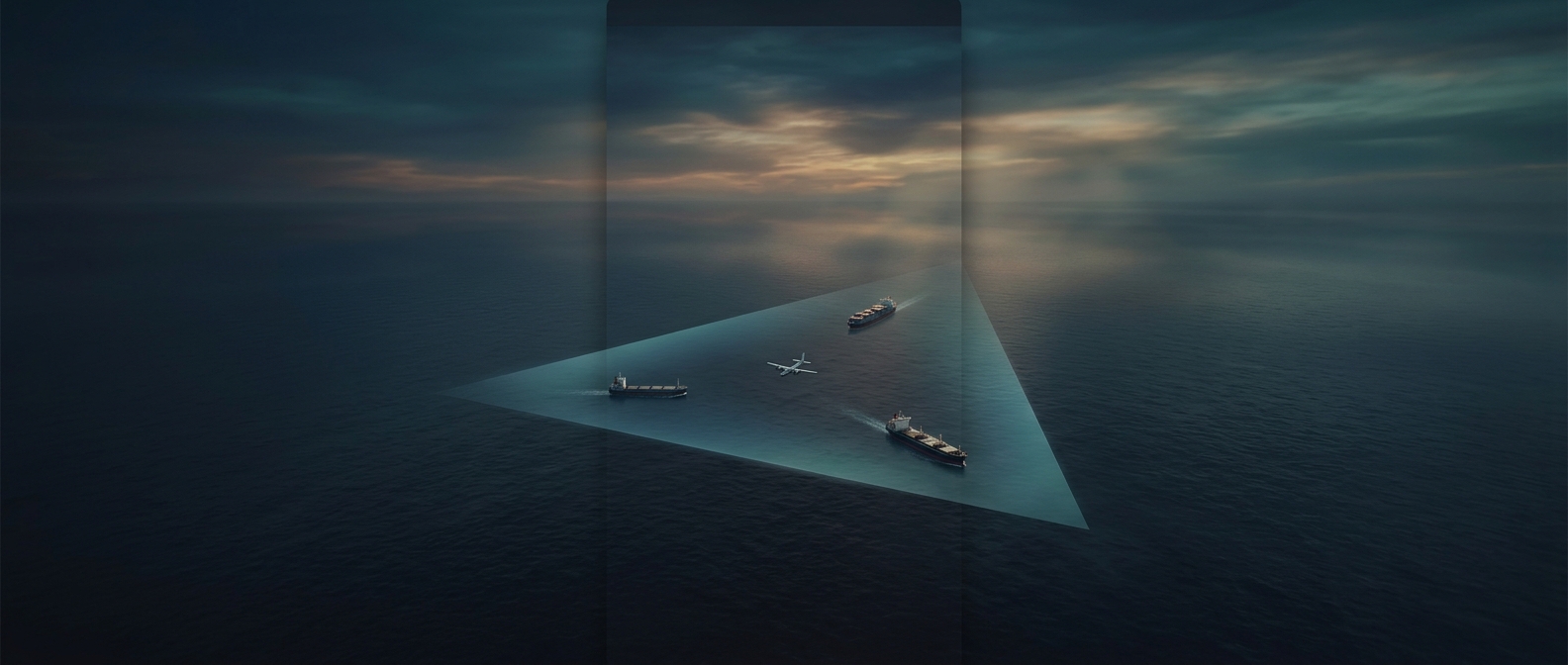
How an “ordinary” ocean can become a famous mystery
A ship or aircraft in trouble over open water can be difficult to find and harder to explain afterward. A vessel may sink quickly; weather can scatter debris; and a last reported position may be imprecise. When the evidence is sparse, several very different events can be grouped together under one dramatic label.
That label has no fixed outline on a chart. The Bermuda Triangle is commonly described as an area between Florida, Bermuda, and Puerto Rico, but accounts do not agree on its exact edges. That flexibility makes it easy to add incidents to the story without a clear rule for deciding which ones belong.
Why the hazards feel uncanny
The region has busy sea and air routes, so many people and vehicles pass through it. More traffic means more opportunities for accidents, even when the risks are familiar. Tropical storms and sudden squalls can sharply reduce visibility and make navigation difficult. The Gulf Stream—a powerful current flowing through the area—can carry wreckage away from where an accident occurred, complicating searches and later reconstruction.
These forces do not need to be unusual to produce an event that remains unexplained. A navigational mistake, deteriorating weather, and a fast-moving current can interact, leaving rescuers with little physical evidence. Stories that emphasize the missing explanation can then make separate incidents seem like parts of one pattern.
The enduring puzzle is less a special property of the water than a problem of interpretation: when boundaries are vague and evidence is incomplete, a memorable name can make ordinary hazards look like a single extraordinary cause.