How a moose’s antlers detach
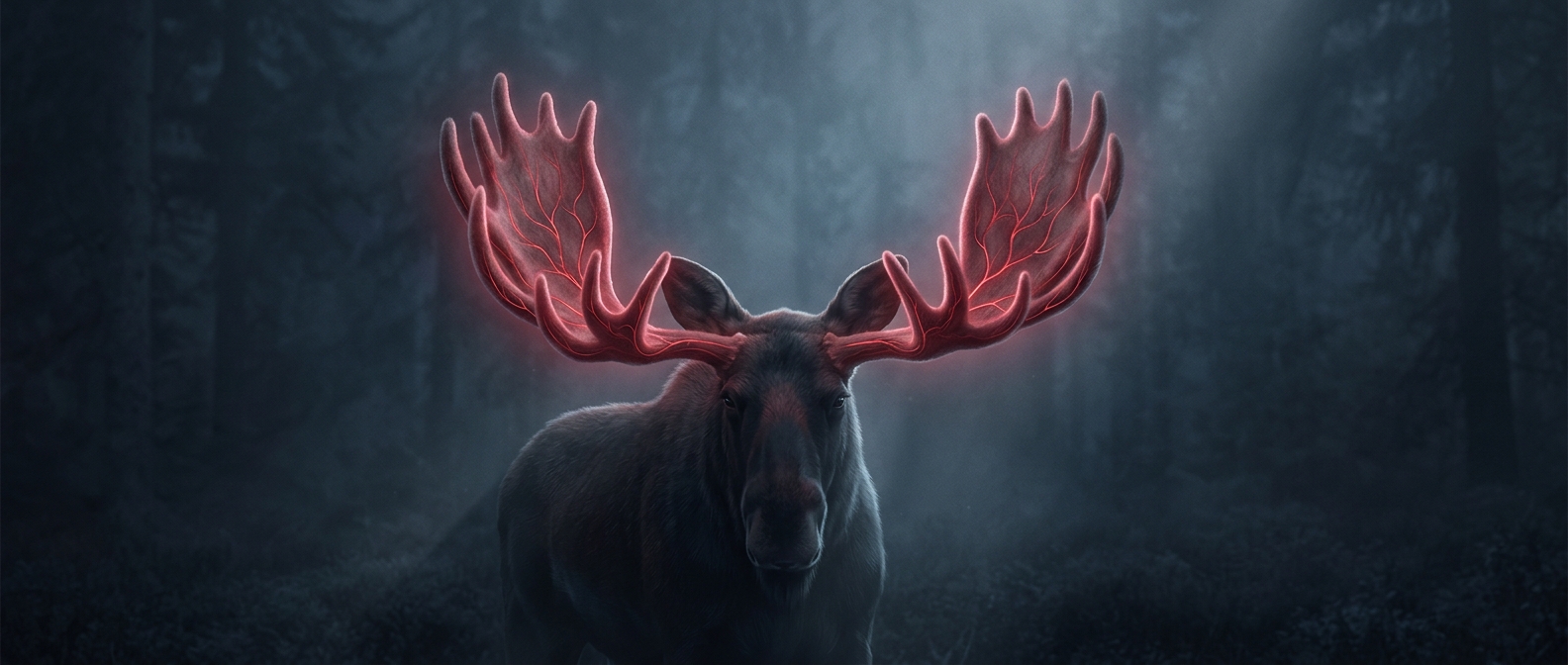
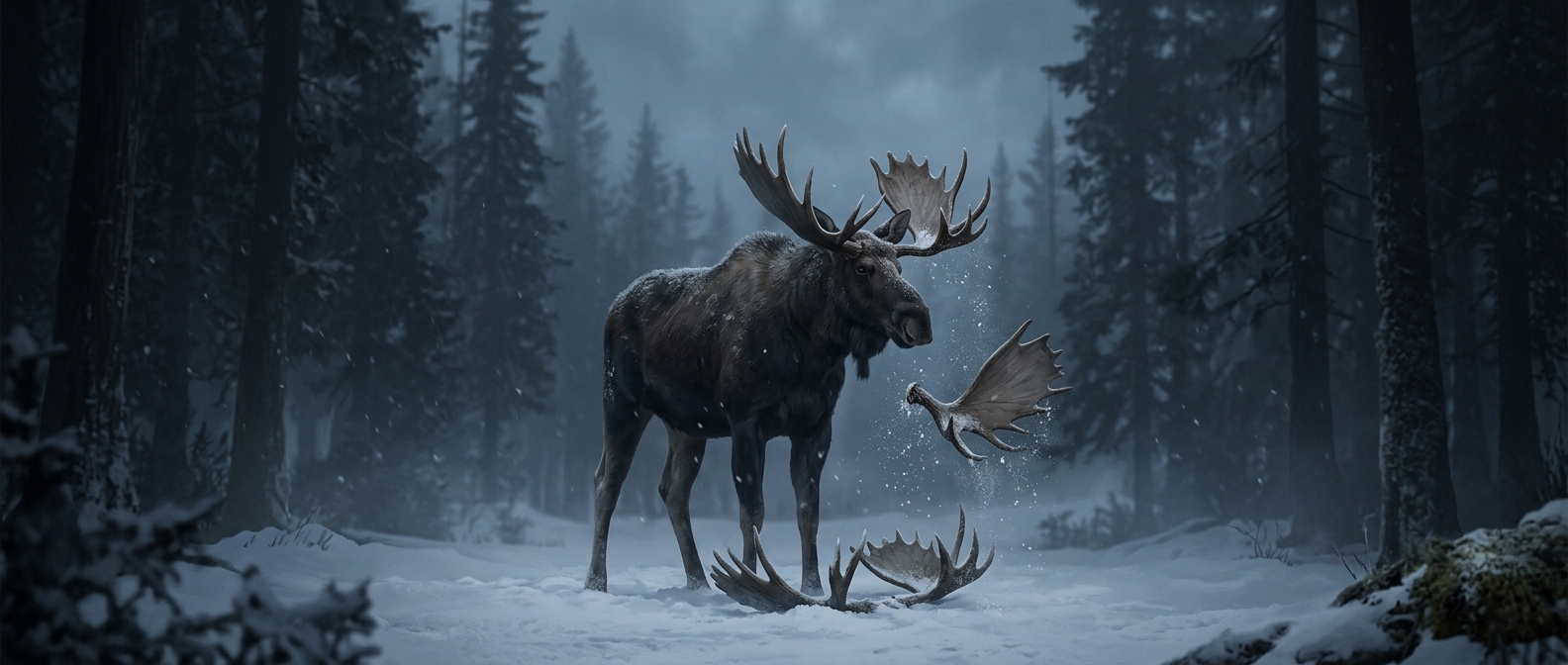
A moose antler is not a permanent part of the skull. It grows from a bony attachment called a pedicle, and the joint between the pedicle and antler changes over the year. In fall, as a bull’s testosterone level declines after the breeding season, cells at that junction break down bone tissue. The connection becomes weaker until the antler is shed, often after a bump or other ordinary movement.
A yearly cycle of growth and loss
After the antlers fall, the exposed pedicles heal. As daylight lengthens in spring, hormonal changes—especially rising testosterone later in the growth cycle—help bring the next cycle into motion. New antlers first grow beneath a soft, blood-rich covering called velvet, which supplies oxygen and nutrients to the rapidly forming bone. When growth is complete, the velvet dries and is rubbed away.
The new rack is built from the moose’s own resources, so its size and shape can vary with age, nutrition, health, and growing conditions. Replacing antlers is not like growing a new set of teeth: it is a seasonal remodeling of living bone, followed by a controlled weakening of the attachment.
Why shed them at all?
Antlers are useful in competition between bulls, but they are also heavy equipment to carry when the breeding season is over. Shedding lets the body stop maintaining that large structure through winter; regrowth can begin when conditions favor it. The timing is not identical for every moose, because hormone levels and seasonal cues vary.
A dropped antler is therefore more than discarded headgear: it marks a shift in the animal’s annual cycle, from autumn competition to winter without the rack, and then back to spring growth.