How Velvet Feeds a Growing Antler
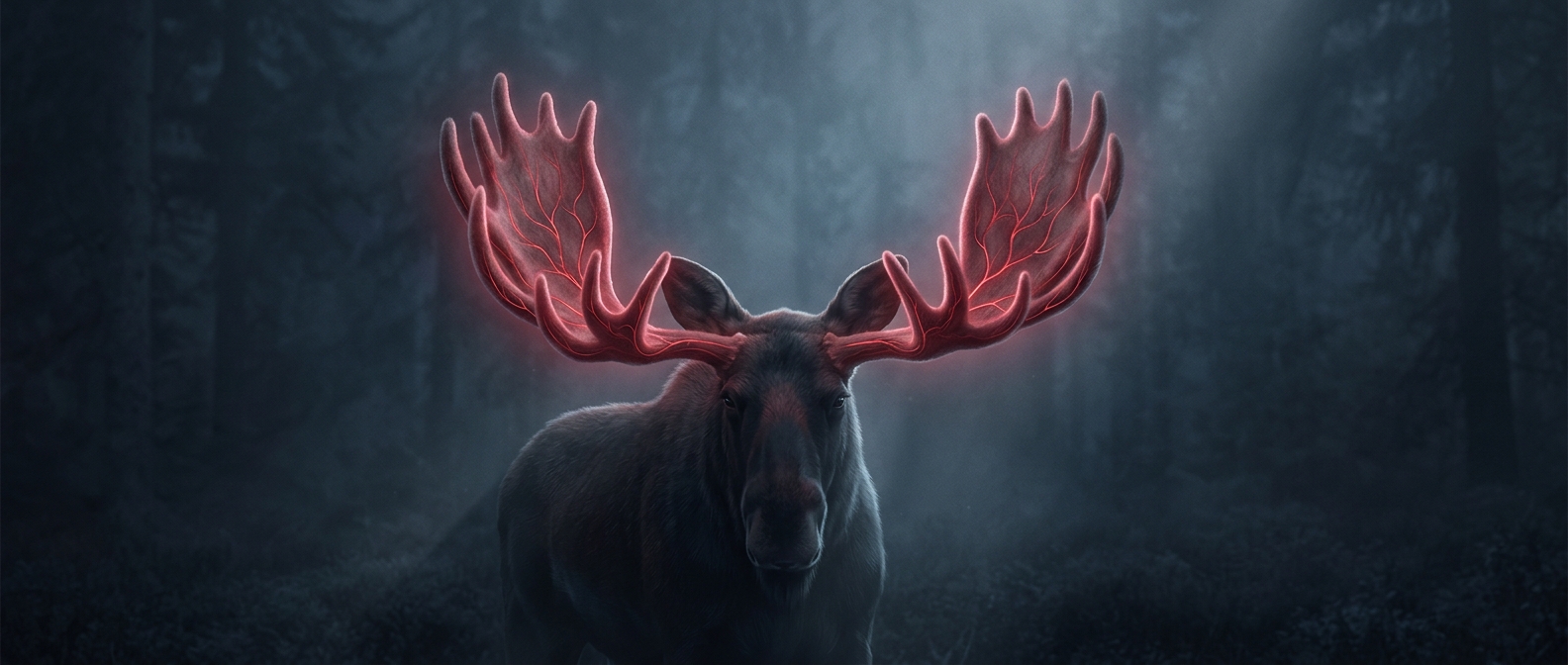
An antler begins as rapidly growing bone covered by velvet, a soft layer of skin. Its dense network of blood vessels supplies oxygen and nutrients to the tissue beneath, helping the antler grow quickly. At this stage, the antler is alive and sensitive; the hard, exposed structure people recognize has not yet formed.
From Living Tissue to Hard Bone
As growth ends, the antler’s bone mineralizes and hardens. The velvet’s blood supply shuts down, so the once-living covering dries. The change is a handoff: velvet supports construction, then becomes unnecessary once the antler has finished developing.
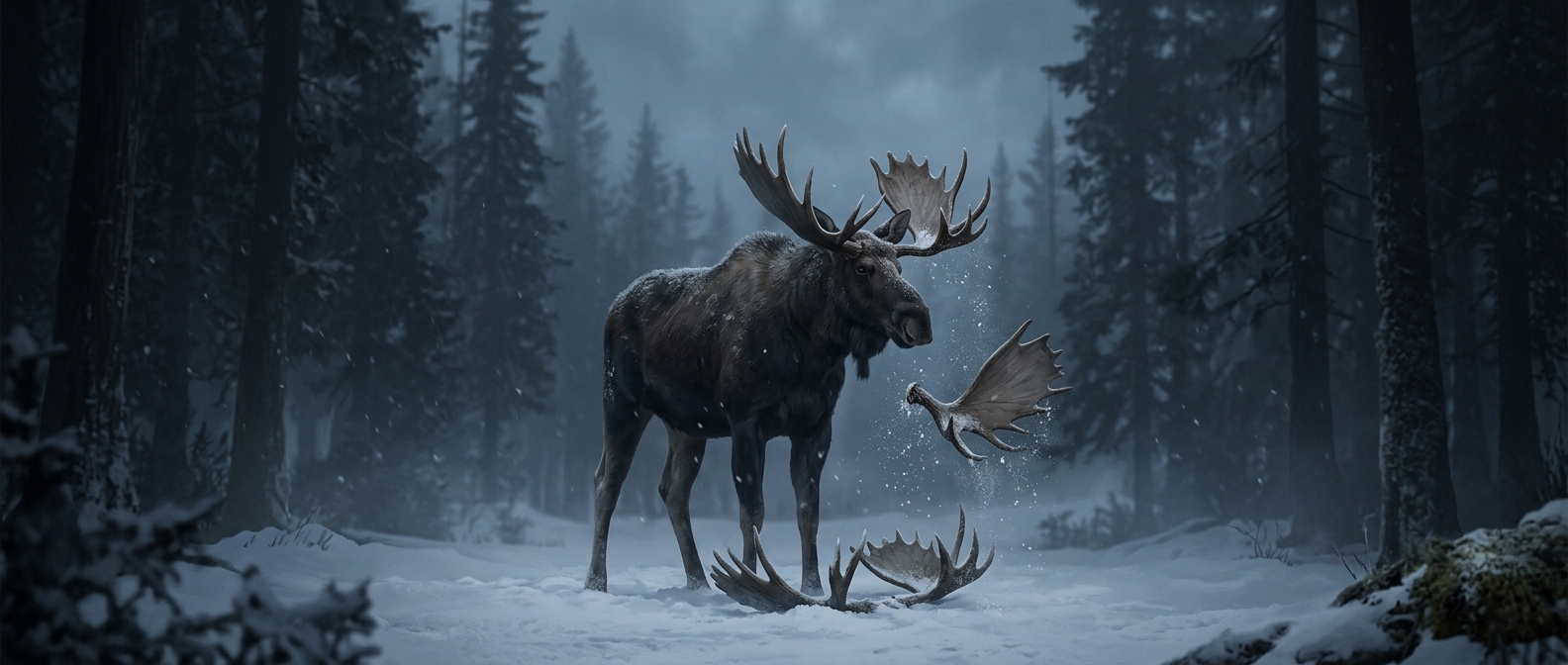
A moose removes the dried layer by rubbing its antlers against vegetation. This can leave the antlers looking ragged during the transition, but the rubbing is not what makes them grow or harden. It clears away a temporary covering after its biological work is done.
A Seasonal Structure, Not a Permanent Horn
Unlike horns, which generally keep growing and remain covered by a hard outer sheath, moose antlers are shed and regrown. Velvet is therefore part of a repeating cycle: it protects and nourishes new growth, then disappears when the antler becomes solid bone. The impressive branched structure is, for a time, built beneath what looks like an ordinary covering of skin.