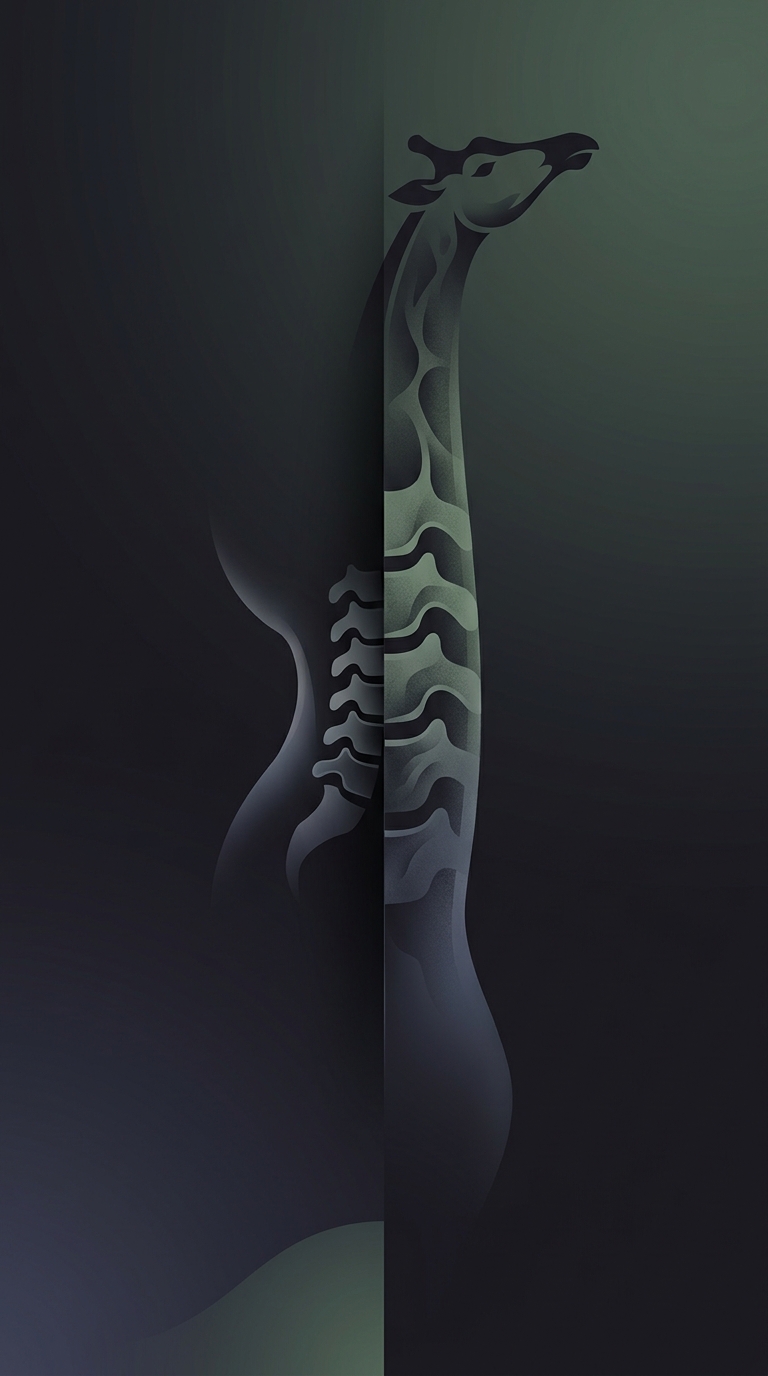
How seven bones support a towering neck
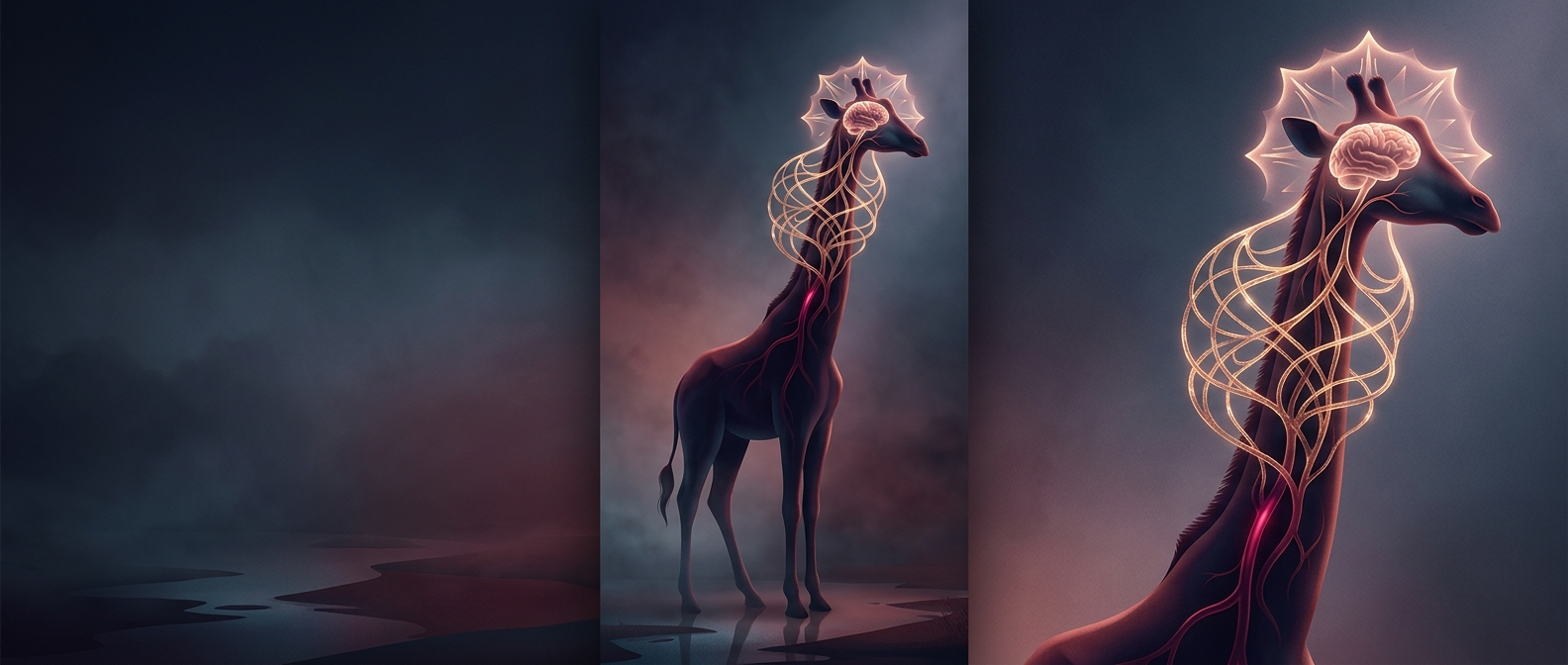
A giraffe’s neck looks as if it should contain a long chain of extra bones. Instead, it has seven neck vertebrae—the same number found in humans and most other mammals. The difference is scale: giraffe vertebrae are enormously elongated, especially the ones in the middle of the neck.
Each vertebra is a bone with joints and cushions of cartilage between it and its neighbors. Those joints let the neck bend, while the bones’ length gives the giraffe its extraordinary reach. The neck is long not because it has more hinges, but because the spaces between those hinges are built on a much larger scale.
Growing longer, not adding pieces
A giraffe calf begins life with the same seven neck vertebrae it will have as an adult. As it grows, those bones lengthen and develop; they do not divide into additional vertebrae. This is a useful distinction: the number of parts stays fixed while the parts themselves change size.
The vertebrae still have to connect in sequence and allow controlled movement. A giraffe can bend its neck to reach leaves, drink, or groom itself, but it cannot fold it like a many-jointed hose. Its flexibility comes from movement at the joints between seven unusually long bones, supported by muscles and ligaments.
A familiar mammalian blueprint
Seven neck vertebrae are a surprisingly stable pattern among mammals, even when their necks differ dramatically in length. Giraffes stretch that shared plan; humans use it on a much smaller scale. The same basic count can therefore produce very different silhouettes, because evolution can alter the size and shape of the bones without changing how many are in the neck.
That is why a giraffe’s neck is both immense and recognizably built like a mammal’s: its length comes from enlarged vertebrae, not an extra set of joints.