How a viper’s fangs fold away
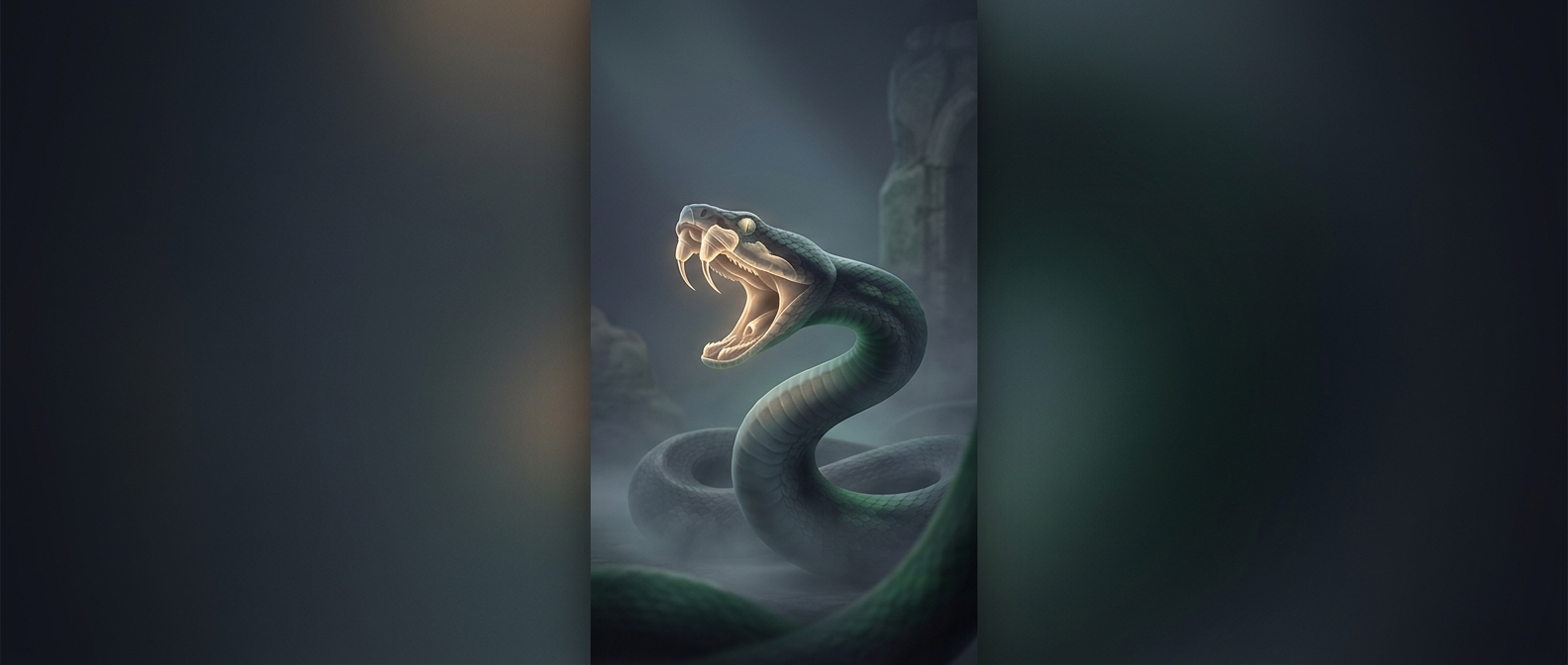
A viper’s fangs are not fixed upright like most teeth. Each one is attached to a short, movable bone in the upper jaw. When the snake closes its mouth, the jaw bones rotate and the long fangs pivot backward, lying against the roof of the mouth rather than pointing down into the lower jaw.
That arrangement solves a practical problem: fangs long enough to reach deep into prey would get in the way if they stayed extended. Folding them back lets the viper keep its mouth closed while carrying a set of unusually long teeth safely inside.
Opening the mouth deploys the fangs
The motion is part of a coordinated change in the skull. As the viper opens wide, the bones that support the fangs rotate forward, bringing the tips into position. Muscles then drive the fangs into prey. Venom travels through a channel inside each fang, much as fluid moves through a narrow tube, and enters the wound.
The fangs do not spring out independently like blades. Their movement follows the changing position of the jaw bones, so the same opening motion that lets the snake take a wide bite also places its teeth for a strike.
A tradeoff built into the jaw
Long fangs can deliver venom farther into prey, but they are fragile and awkward to keep exposed. The hinged arrangement allows vipers to have both long, effective fangs and a mouth that closes normally. After a strike, the jaw can close and the fangs fold back into their resting position—ready to deploy again the next time the mouth opens.