How an ordinary hair became armor
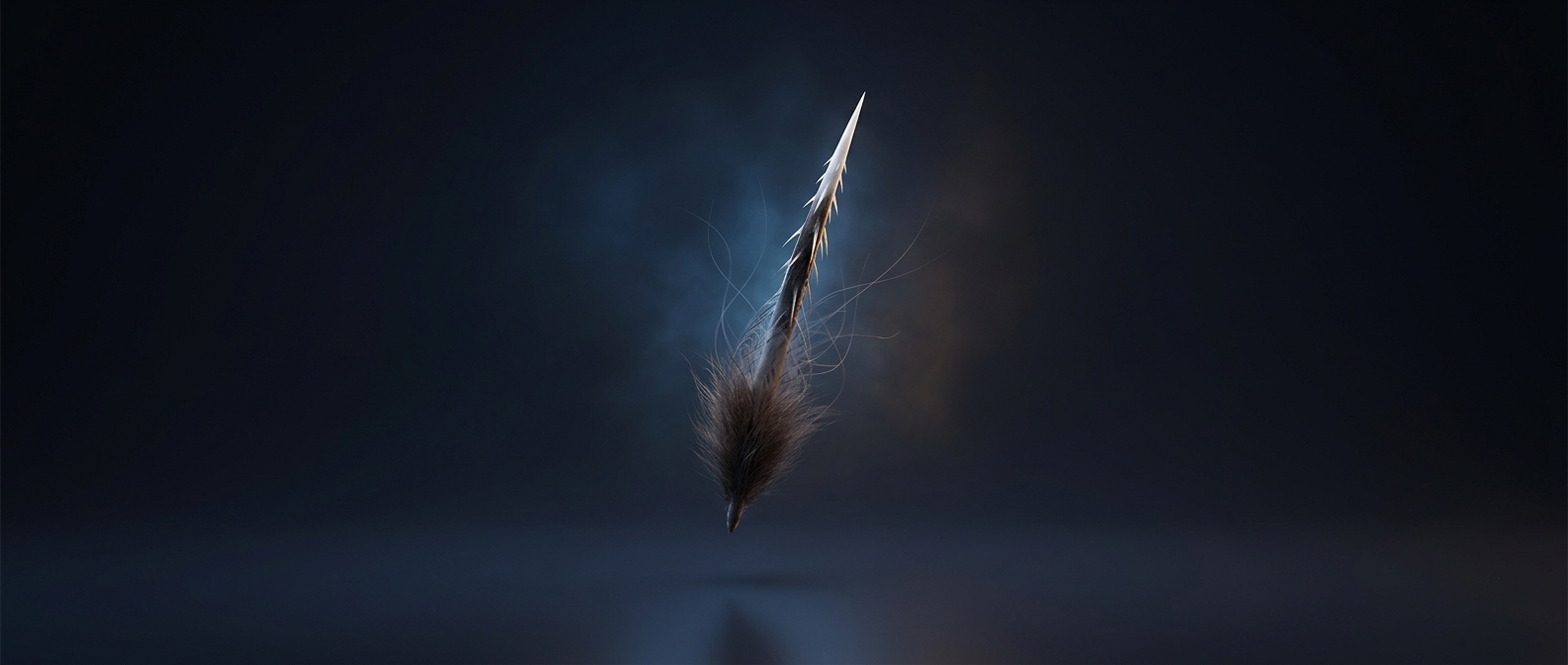
A quill is not a separate kind of material bolted onto a porcupine. It grows from a skin follicle, like a hair, but its shape and structure make it a far more effective defense. Over many generations, small inherited differences in hair thickness, stiffness, length, and tip shape could affect how well an animal survived an attack. If a sharper, sturdier hair made a predator hesitate or retreat, its owner was more likely to live long enough to reproduce. Natural selection could gradually build on those differences.
The result is a shaft that stays light enough to cover a large area of the body but stiff enough to puncture skin. Keratin—the same tough protein found in hair and nails—forms the shaft. The crucial change was not inventing a new substance; it was shaping a familiar one into a defensive tool.
Why some quills are hard to remove
In some porcupine species, tiny barbs near the quill’s tip point backward. When a quill enters an attacker’s skin, those barbs catch in tissue. Pulling it out means dragging them back through that tissue, so the quill resists removal. This turns a brief contact into a costly mistake for a predator: the wound can worsen as it struggles to free itself.
Quills are not launched like darts. They can come loose when an animal brushes against them or when an attacker grabs it, leaving the sharp shafts embedded. Their defense works by making contact dangerous—and escape difficult. A modification of a hair that once offered ordinary covering can, through changes in form, deter an animal much larger than the porcupine.