A skeleton built from a different material
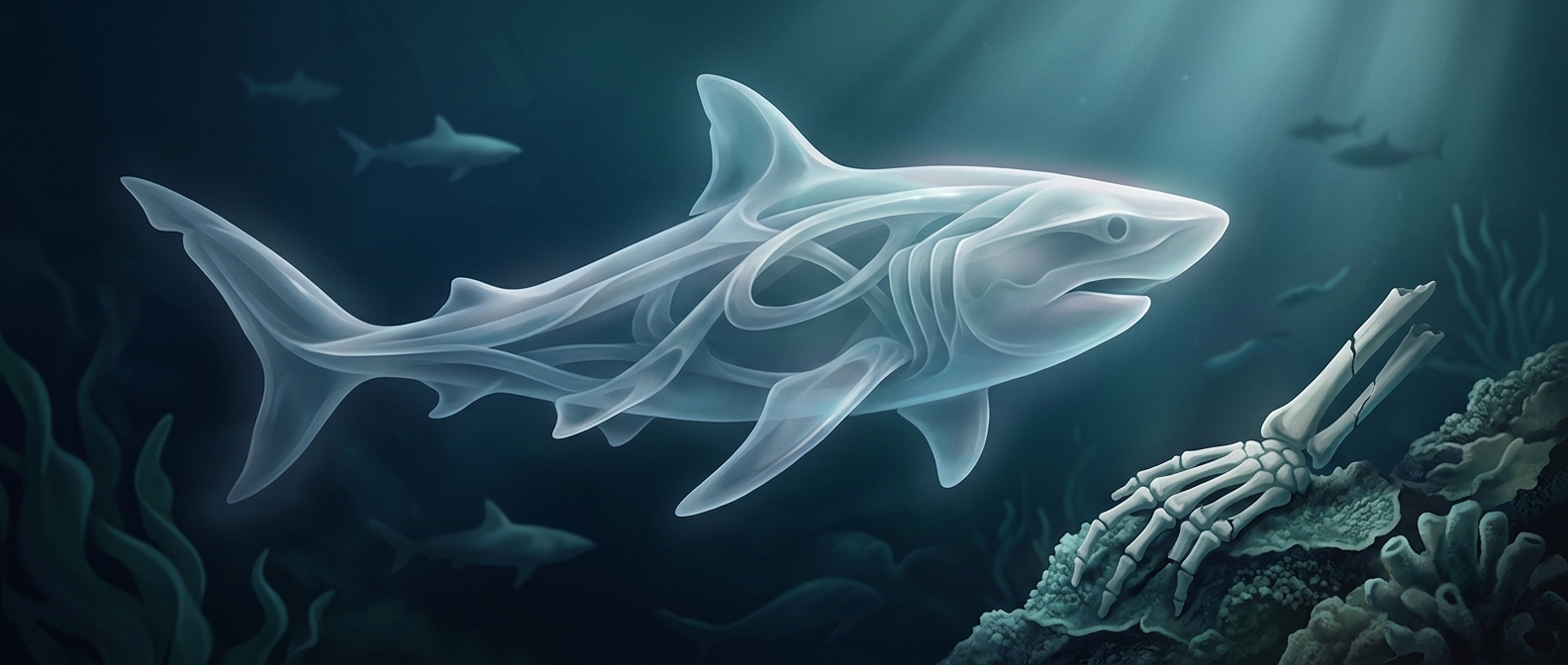
Shark cartilage is not simply soft tissue standing in for bone. Like other cartilage, it is a dense framework of collagen fibers embedded in a water-rich material. The fibers resist stretching, while the surrounding matrix helps absorb pressure. Together, they make a firm structure that can bend slightly rather than behaving like a rigid beam.
Reinforcement where forces concentrate
In parts that take heavy loads, especially the jaws, cartilage is reinforced with tiny mineralized plates called tesserae. These plates stiffen the structure without turning it into a solid bone. Their tiled arrangement leaves the cartilage between them able to flex, much like a surface made of small, fitted pieces can curve while still resisting a blow.
That combination matters when a shark bites: the jaw must withstand strong forces, but it also benefits from a little give as those forces shift through the structure. The result is not a flimsy skeleton or a bone-like one, but a frame whose stiffness varies with the job each part has to do.