How a Tail Becomes a Walking Limb
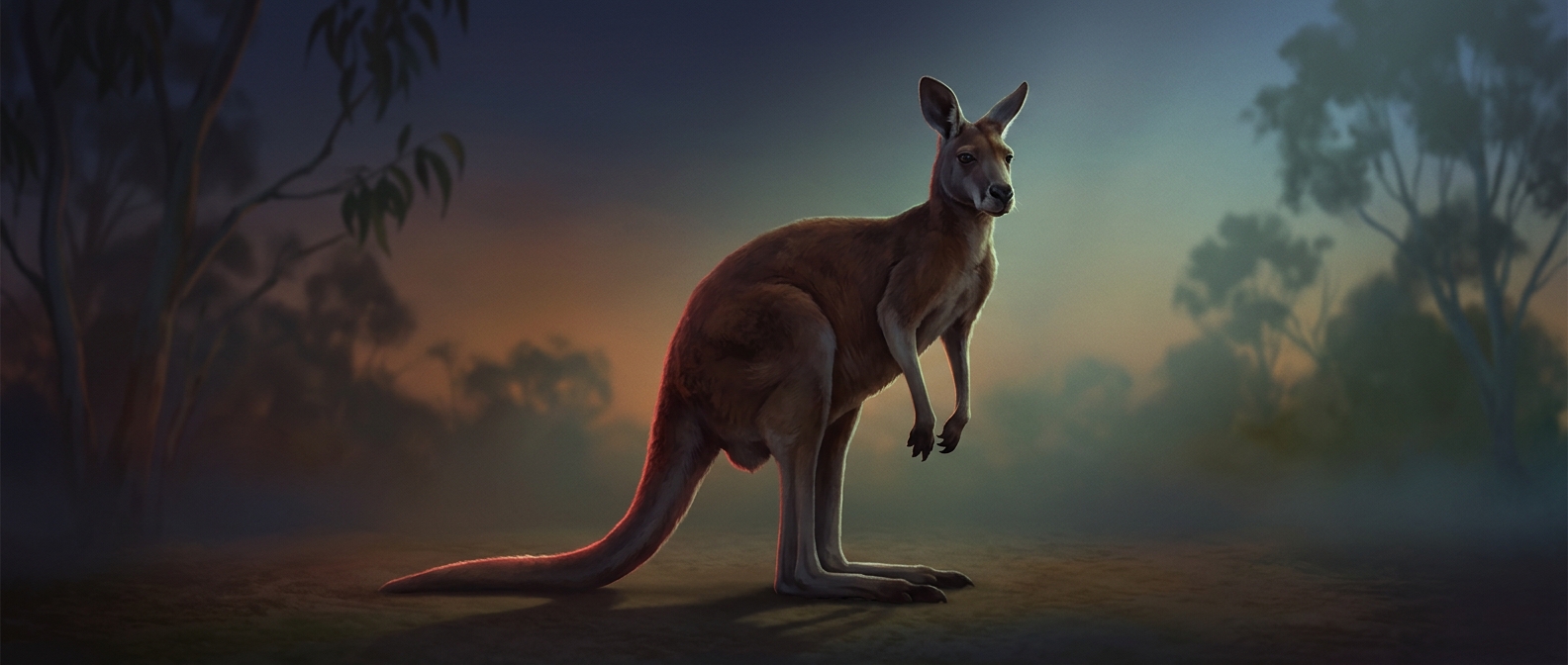
A kangaroo’s tail is a muscular, mobile structure, not a rigid pole dragged behind the body. During slow travel, it can bear the animal’s weight and press backward against the ground. That backward push produces forward motion, just as a foot does when it pushes off. Meanwhile, the tail also helps support the body as the hind legs move, so it contributes both propulsion and balance.
This is why the gait is called pentapedal locomotion: “penta” means five, and the animal’s two forelimbs, two hind limbs, and tail all take part in moving it. The tail’s role is more than preventing a stumble; it supplies force that would otherwise have to come from the limbs.
A Different Solution From Hopping
At higher speeds, kangaroos are famous for hopping on their powerful hind legs, with the tail helping stabilize the body. Slow walking is mechanically different. The forelimbs and tail form part of a coordinated support-and-push sequence, letting the animal move while keeping its large body supported close to the ground.
That contrast makes the tail’s versatility easy to miss: the same appendage that steadies a hopping kangaroo can act as a weight-bearing, propulsive limb during a walk. Watch a kangaroo moving slowly, and its tail is not trailing behind the action—it is one of the limbs driving the next step.