A wrist bone turned into a grip
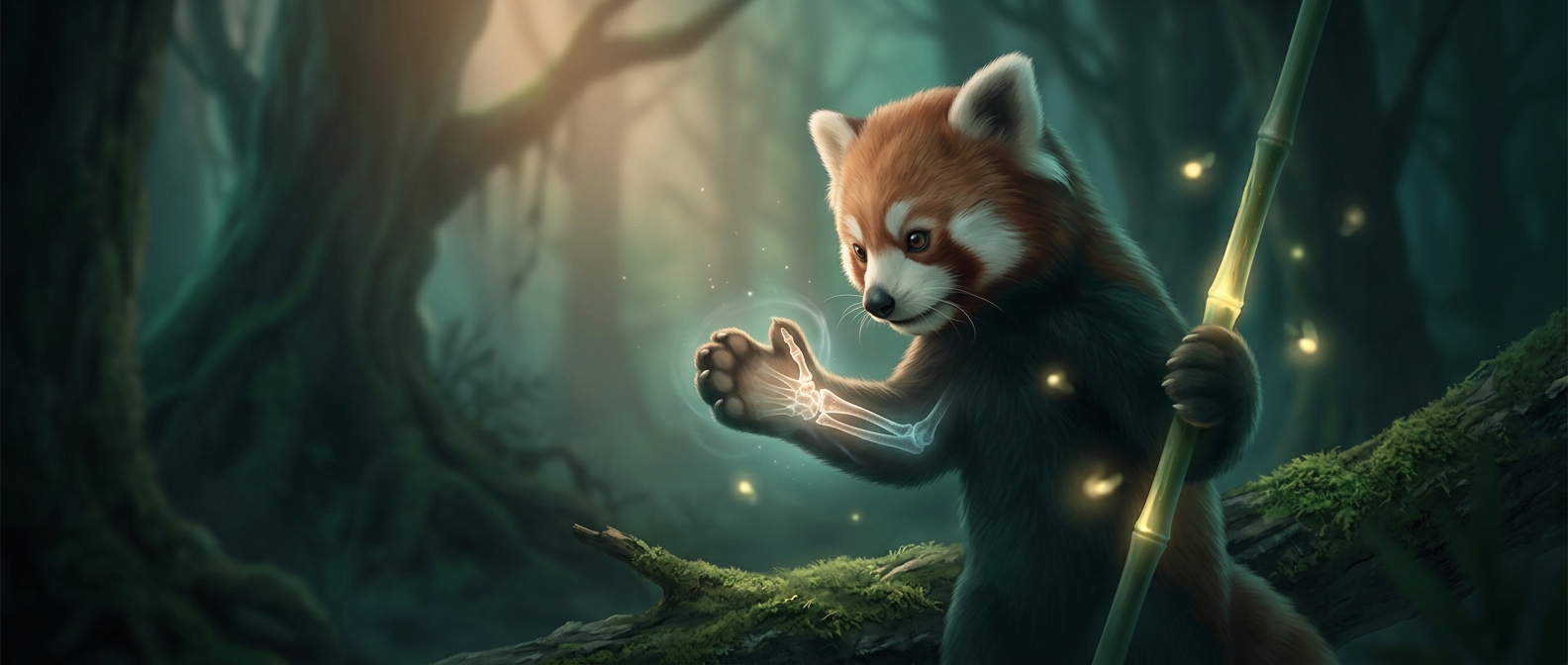
A red panda’s “extra thumb” is an enlarged wrist bone called the radial sesamoid. It sits beside the other digits and projects outward, creating a stubby surface the animal can press against its fingers. The bone is not a true finger: it lacks the joints and flexible movement of a digit. But paired with the rest of the paw, it works like a simple clamp.
That extra contact point matters when a red panda feeds. Bamboo stems are narrow and can be slippery, so the paw needs to hold a piece steady while the animal brings it to its mouth and strips off leaves. The wrist bone helps keep the stem from rolling free. It does not make the paw a humanlike hand; it makes an otherwise ordinary paw better suited to a repeated task.
Two lineages, a similar solution
Giant pandas have a comparable enlarged wrist bone that also helps them grip bamboo. Red pandas and giant pandas are not close relatives, however, so their similar-looking “thumbs” did not come from a recent shared ancestor with the same specialized grip. The feature evolved independently in the two lineages—a case of convergent evolution, when different branches arrive at similar adaptations under similar pressures.
The resemblance is a useful reminder that evolution works with what an animal already has. Rather than growing a new finger, each lineage modified a bone in the wrist. The result is less like adding a whole new digit than reshaping an existing part into a useful brace: a small change in anatomy that helps turn bamboo into manageable food.