Why a mouse can pass through a gap that looks too small
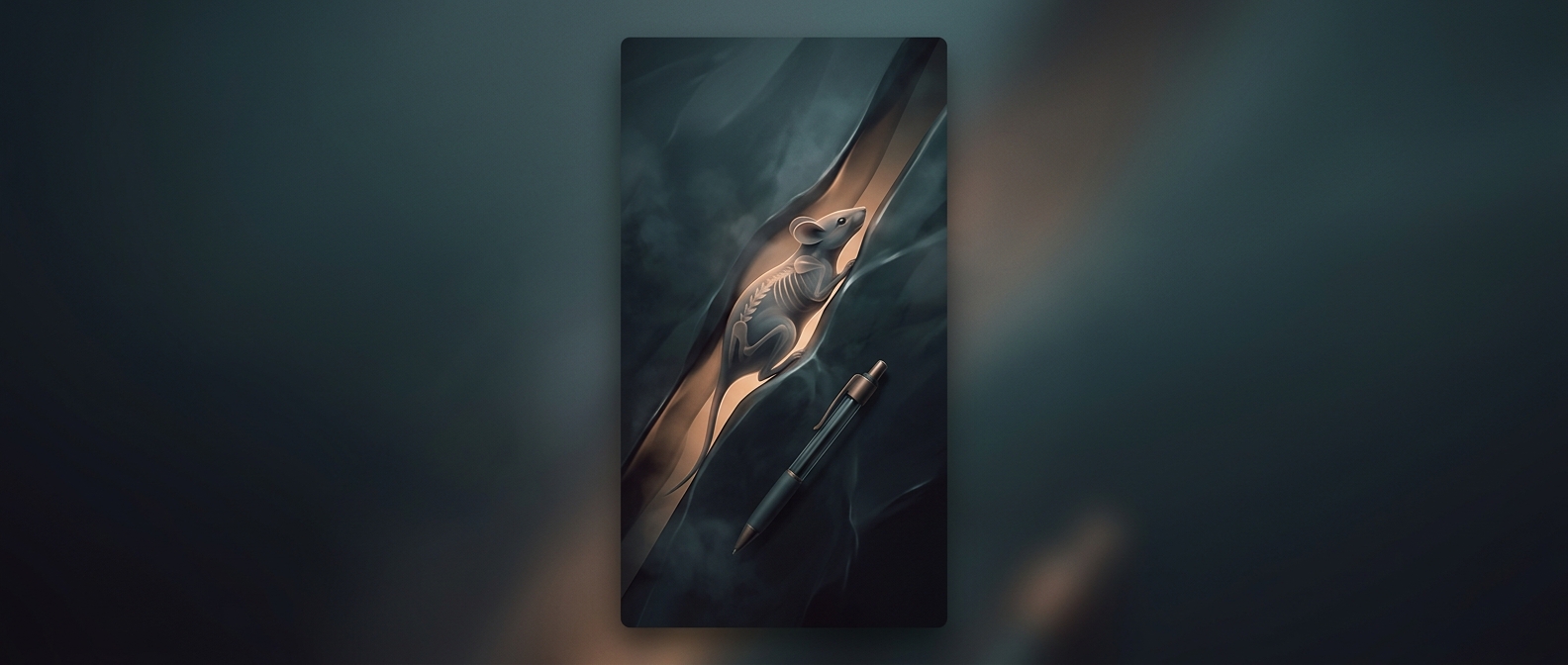
A mouse’s body is not a rigid cylinder. Its narrow chest and flexible shoulder region can change shape as it pushes through an opening, while its forelegs can reach forward and draw the body after them. The shoulder blades are not locked into a broad, rigid human-style arrangement; they can move along the sides of the chest, helping the front of the body narrow as it squeezes.
The skull is different. Bone cannot flatten to match a tight opening, so the head is the least compressible part and a useful limit on how small a gap the animal can cross. If the head can pass, the rest of the mouse may be able to follow—but the opening’s shape and the animal’s posture still matter.
Whiskers help test the opening
Before committing, a mouse can feel around an edge with its whiskers, which detect nearby surfaces and help it judge a narrow route. It may angle its head and press forward rather than trying to enter broadside. Once its head and shoulders are through, the rest of its body can slide after them.
That is why a slim crack can be a real passage even when the mouse’s body looks much wider beside it. The apparent mismatch comes from comparing a flexible body with a bony head: the body can compress; the skull sets the hard limit.