Why a Cheetah’s Voice Isn’t a Roar
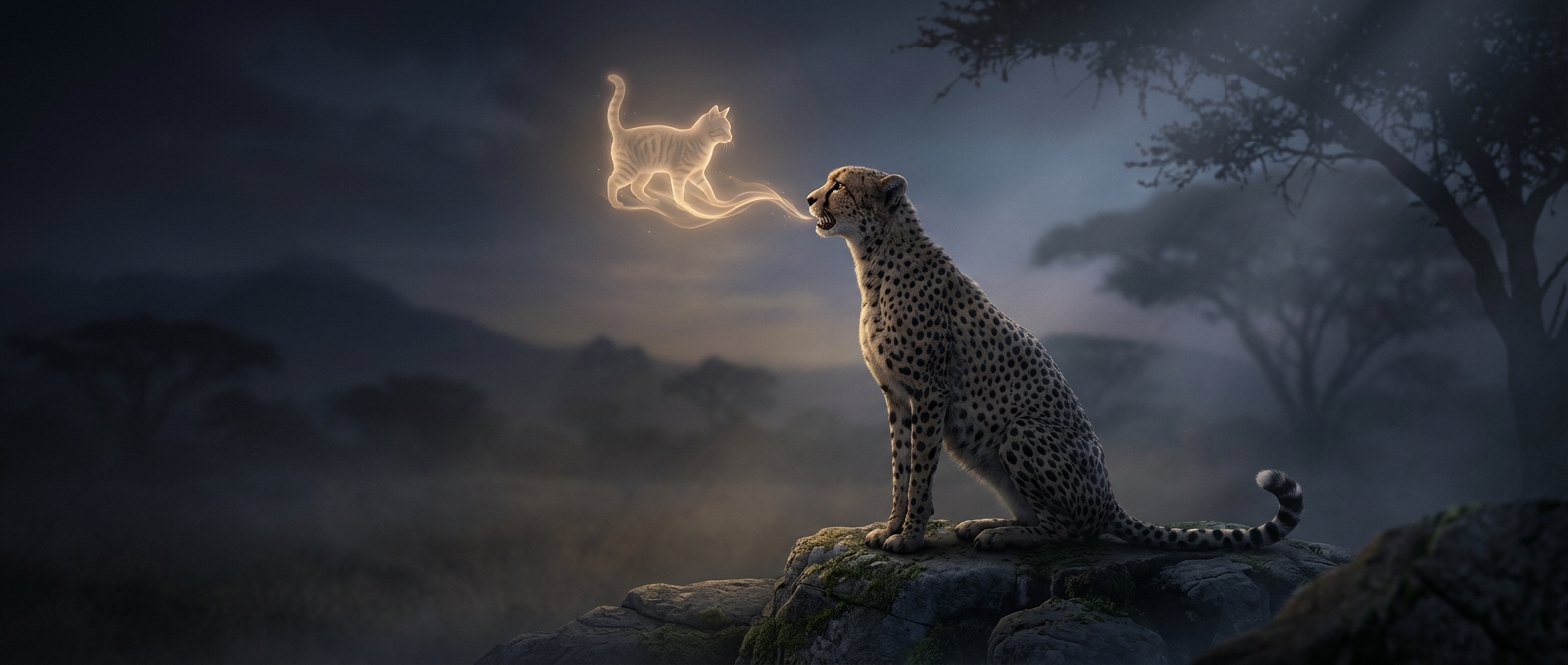
A roar is not simply a very loud meow. It depends on how an animal’s larynx—the structure in the throat that houses the vocal folds—produces and shapes sound. Cheetahs lack the vocal setup needed for the sustained, forceful calls associated with roaring cats. Instead, they can purr and make a varied set of shorter sounds, including chirps and meow-like calls.
Those sounds suit a different kind of communication. Cheetahs are generally less dependent on loud, long-distance displays than roaring cats, and their calls often help individuals keep contact in particular situations.
A Chirp Can Help Reunite a Family
One striking example comes when a mother and her cubs are apart. She may give a high-pitched chirp, and the cubs can use the call to locate her. It functions less like a warning broadcast and more like an audible signal between animals trying to find one another.
That matters because cheetah cubs spend time hidden while their mother hunts. A call that helps them reconnect can be useful without drawing on the same vocal machinery as a roar. The next time a cheetah’s voice sounds surprisingly catlike, the sound is doing a practical job: helping family members find each other across the grass.