A sensor beneath the scales
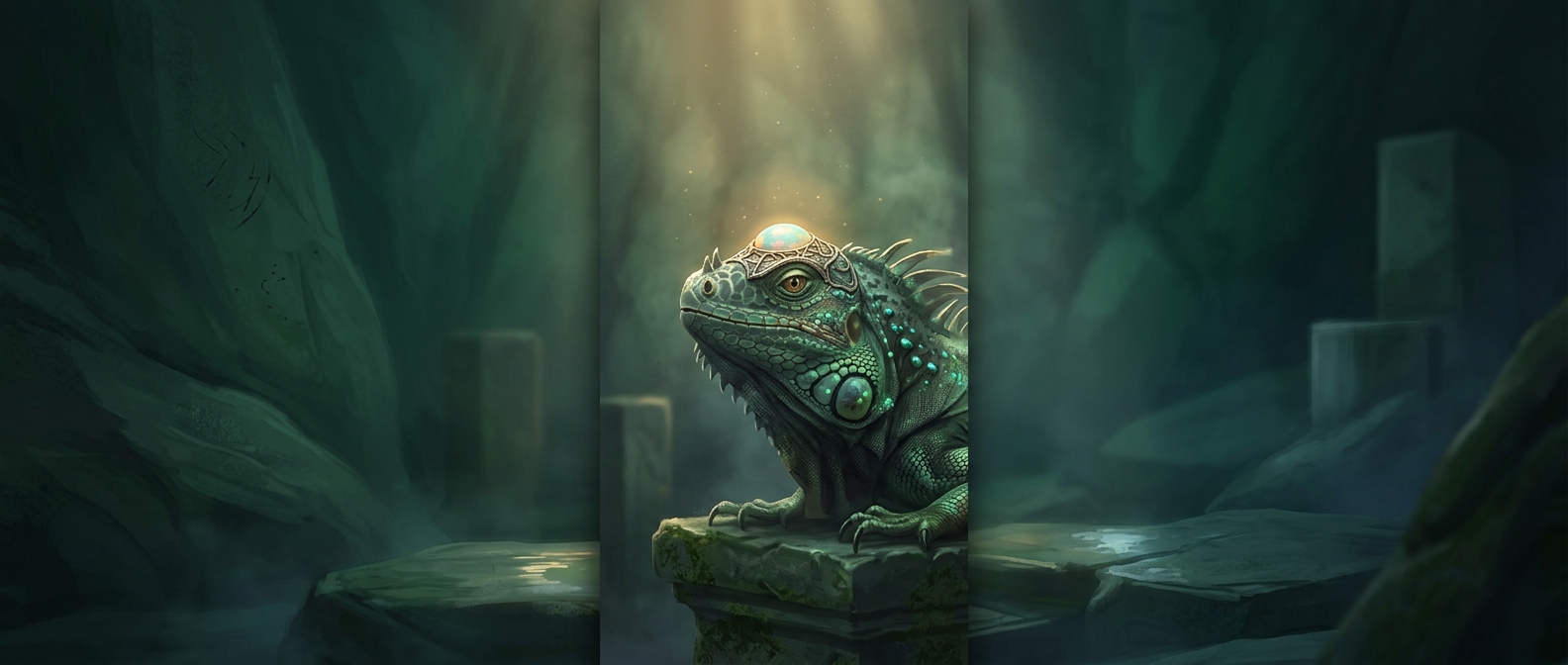
On an iguana’s crown, a small, pale spot marks the parietal eye. Light passes through the skin and a thin, transparent covering to reach light-sensitive cells beneath it. Those cells report changes in illumination to the nervous system, but they do not form a picture: there is no camera-like lens-and-retina system for focusing an image.
That makes the organ useful for a different kind of information. A sudden shift from bright to dim can signal that something has blocked the sun. The iguana does not need to identify the object overhead to register the change; its ordinary eyes handle detailed vision, while the crown sensor supplies a rough warning about light.
Light helps set the body’s schedule
The parietal eye is connected to the pineal system, a network involved in coordinating internal rhythms with the day-night cycle. Light reaching the sensor can therefore help the animal’s body track changing conditions over the day, rather than simply provide a second view of its surroundings.
For an iguana, timing matters because it relies on outside warmth to regulate its body temperature. Changes in daylight help cue when conditions are shifting, while the regular daily pattern helps organize activity. The third eye’s value is not seeing more detail; it is detecting light changes that ordinary vision and daily rhythms can use in different ways.