How a leech’s nerve cord divides the work
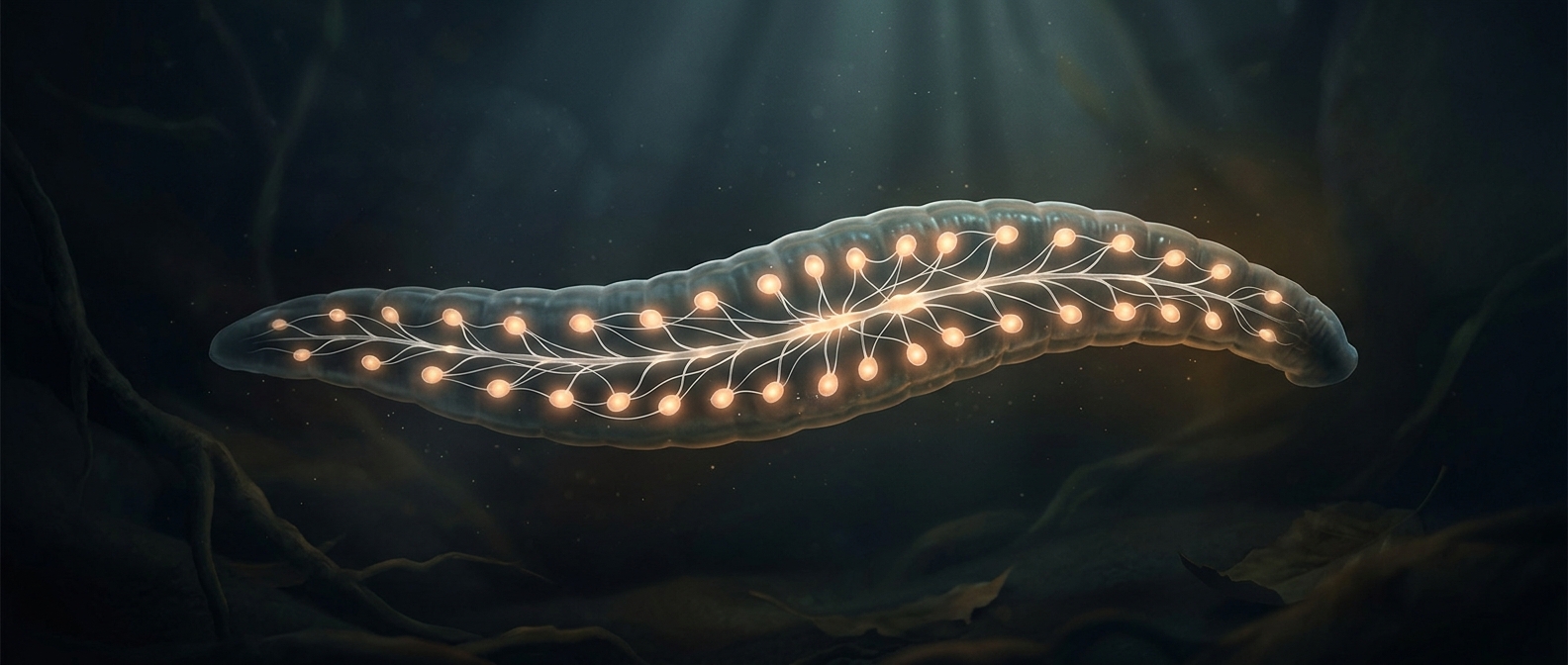
A leech’s nervous system is arranged along its body rather than concentrated in a single brain. Its nerve cord links repeated clusters of nerve cells called ganglia. Each cluster receives signals from nearby tissues and sends commands back out, giving different body regions a way to handle simple responses locally.
That arrangement can make a reaction faster and more direct. If a stimulus touches one part of the body, sensory cells can pass the signal to nearby nerve cells, which help trigger a local movement without waiting for every step to be planned centrally. A local response, however, is not the same as a separate mind: the ganglia are connected and operate as parts of one nervous system.
Local reactions, coordinated movement
When a leech moves, its body segments must do more than react one at a time. Signals traveling through the nerve cord help coordinate repeated muscle contractions across the body, while information from the surroundings can alter the pattern. The result combines local control with wider coordination: a segment can respond where the signal arrives, but the animal’s movement remains organized as a whole.
This distributed layout is useful in a long, flexible body. It lets nearby nerve circuits handle immediate tasks while connections along the cord help align those tasks with the leech’s direction and overall movement. The striking point is not that a leech has many independent brains, but that one nervous system can delegate some control along the length of its body.