How a layer of warm air lifts a mountain’s image
A distant mountain can appear to hover above the horizon when the air near the ground is colder than the air above it. This unusual arrangement is called a temperature inversion. It often forms over cold water or snow, where the surface chills the lowest layer of air while warmer air remains overhead.
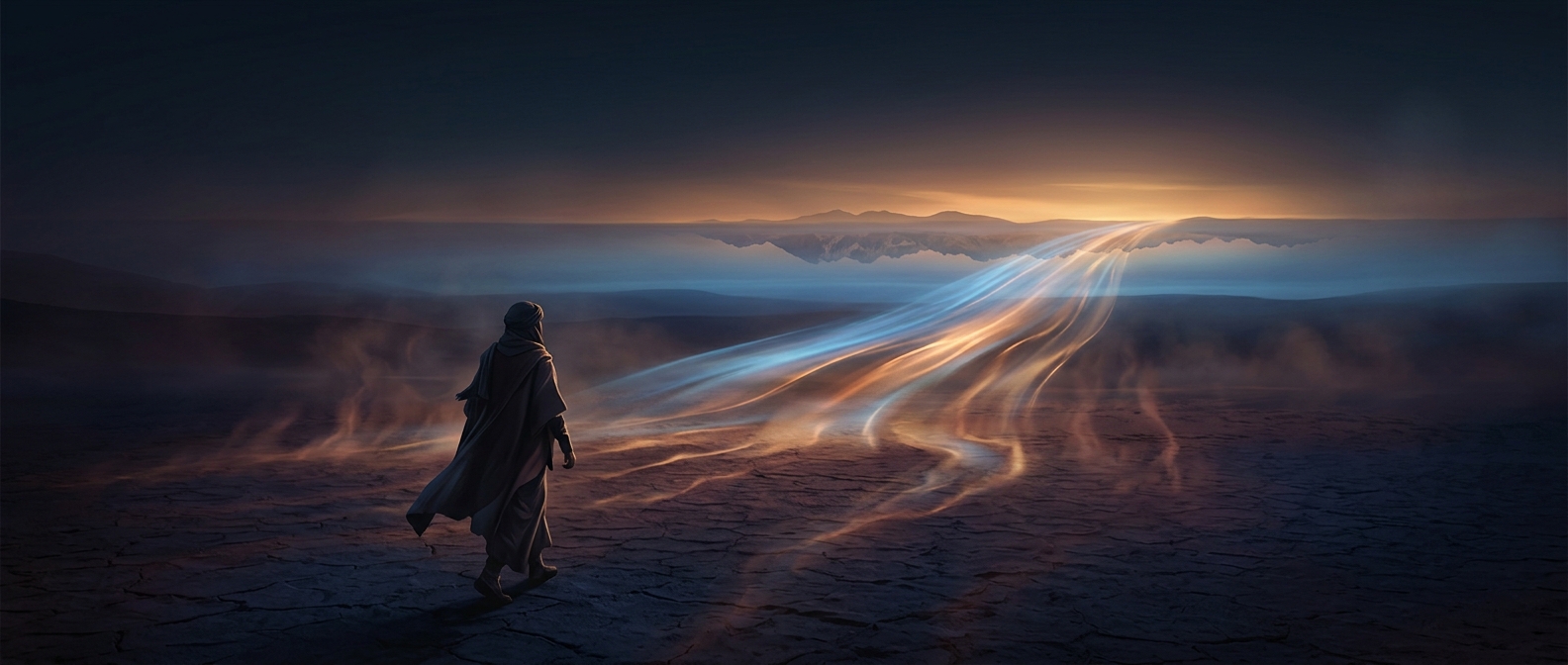
The temperature difference matters because it changes how quickly air’s density—and therefore its refractive index, the degree to which it bends light—varies with height. Light traveling through these layers curves gradually toward the colder, denser air. A ray from the mountain can therefore bend downward as it crosses the inversion instead of continuing along a straight path.
Why the mountain seems to rise
Your eyes and brain do not trace that curved route backward. They interpret the light as if it had traveled in a straight line, extending the ray from your eye toward the sky. The mountain’s image is consequently assigned a position higher than the mountain itself, sometimes appearing detached from the horizon.
Nothing has lifted the mountain, and the effect is not a reflection in the ordinary mirror-like sense. It is a mirage: a distorted image produced by light traveling through air layers with different temperatures. Because the atmosphere is moving and its layers vary in thickness, the image can shimmer, stretch, or change as you watch.
That is why a mountain can seem to float on a clear day: the landscape stays put, while an invisible boundary in the air redraws where your eyes think it is.