Why a Hot Road Can Look Wet
A mirage begins with a temperature gradient: pavement heats the thin layer of air touching it, while the air above remains cooler. Warm air is less dense than cool air, so the two layers have slightly different optical properties. Light changes direction as it passes through that gradual shift—not because it bounces off a pool of water, but because its path curves through air of changing density.
Light Takes a Curved Route
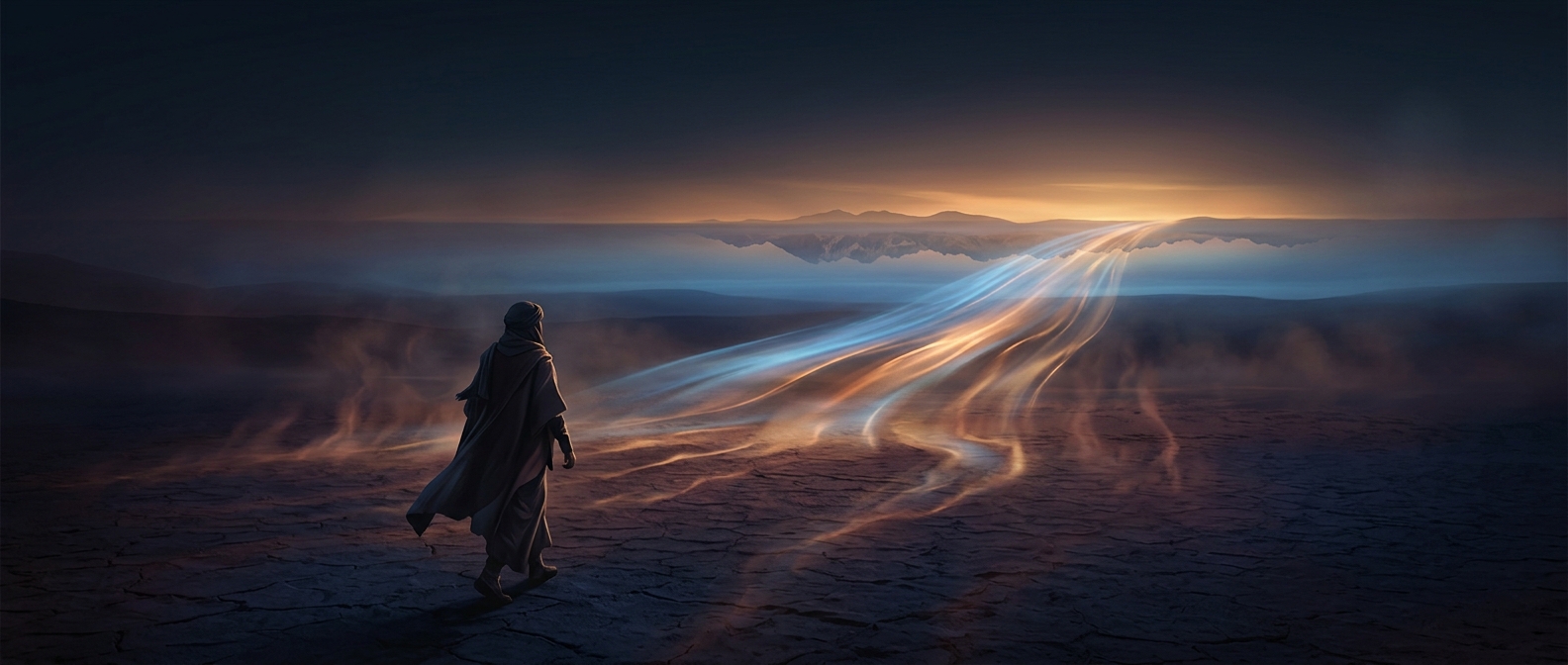
On a hot day, light from the sky can travel downward through the cooler air, then bend upward as it crosses the much hotter air near the road. That curved path can bring sky light to your eyes from a point low on the pavement. Your visual system generally treats incoming light as if it traveled in a straight line, so it assigns the light to a spot on the road. The result resembles a reflection in water.
The same bending can make distant objects appear displaced or distorted. The effect is strongest when the air near the ground is much hotter than the air above it, creating a sharp enough change in density to redirect light noticeably.
Why the “Puddle” Moves
The apparent patch is not fixed to the pavement. As you move, the angle of the light reaching your eyes changes, shifting the spot that seems to show the sky. It can appear to slide ahead of you, much like a reflection would—yet there is no water there. The road is showing you a detoured view of the sky, carried by layers of air heated unevenly from below.