Why Rain Can Turn Volcanic Ash Into a Moving Hazard
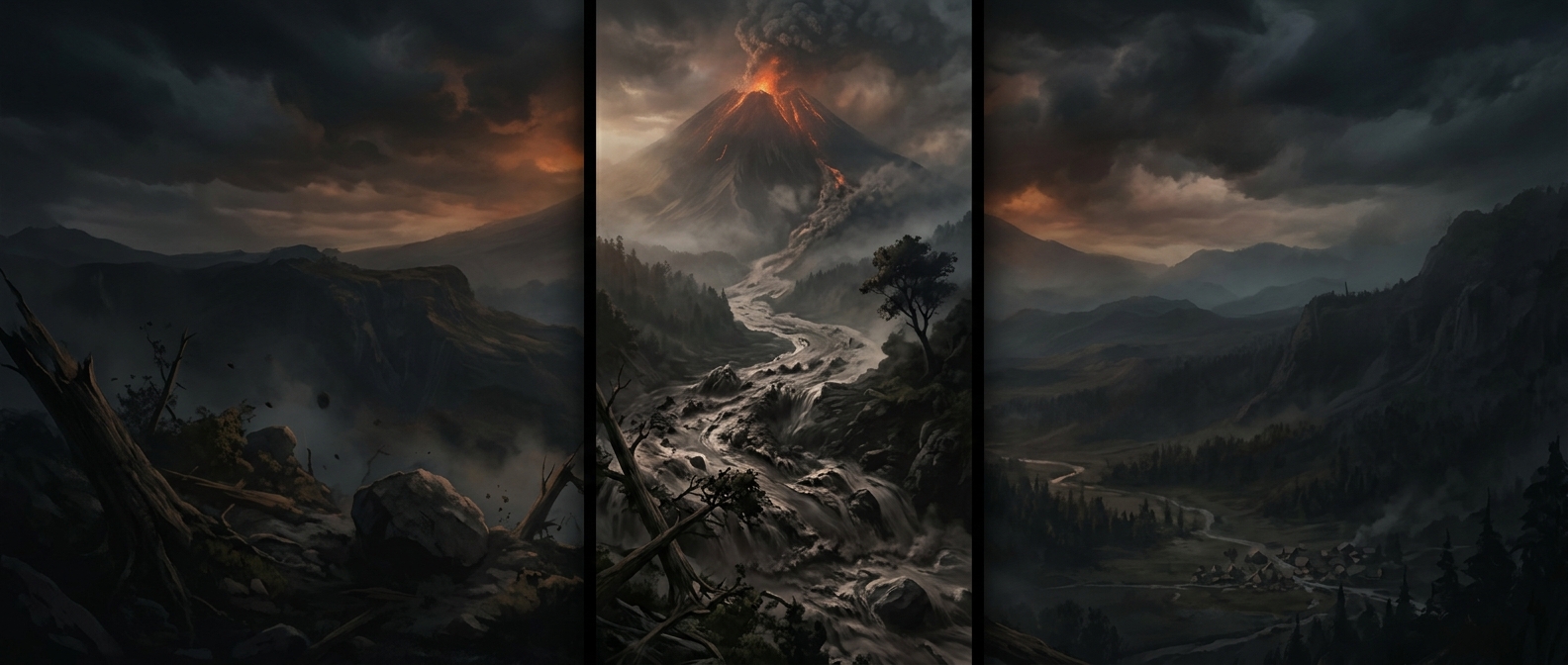
A lahar is a flow of water mixed with volcanic debris. It does not require an eruption at the moment it begins: rain can soak loose ash and rock left on a volcano and set the material moving. Because the mixture is far denser than ordinary floodwater, it can push and carry heavy debris rather than simply washing it aside.
How a Slope Becomes a Channelized Flow
At first, water loosens particles on the slope. As they collect, the mixture can grow into a thick slurry—muddy water loaded with ash, gravel, and larger rocks. The moving debris can also scour material from the ground beneath it, adding to the flow as it travels.
Once the slurry reaches a streambed or valley, the terrain steers it. A valley concentrates the flow into a narrower path, allowing it to move rapidly downhill and reach places well beyond the volcano’s slopes. Boulders and other large debris can travel with it, making a lahar more destructive than its muddy appearance might suggest.
Why the Danger Can Extend Beyond an Eruption
Volcanic debris left on a mountain can remain vulnerable to heavy rain after an eruption has ended. That means the hazard is not limited to the period when lava or ash is actively erupting: rainfall can remobilize loose material later. For communities in valleys, the key risk is the route the debris-filled water can follow—not just how close homes are to the volcanic cone.