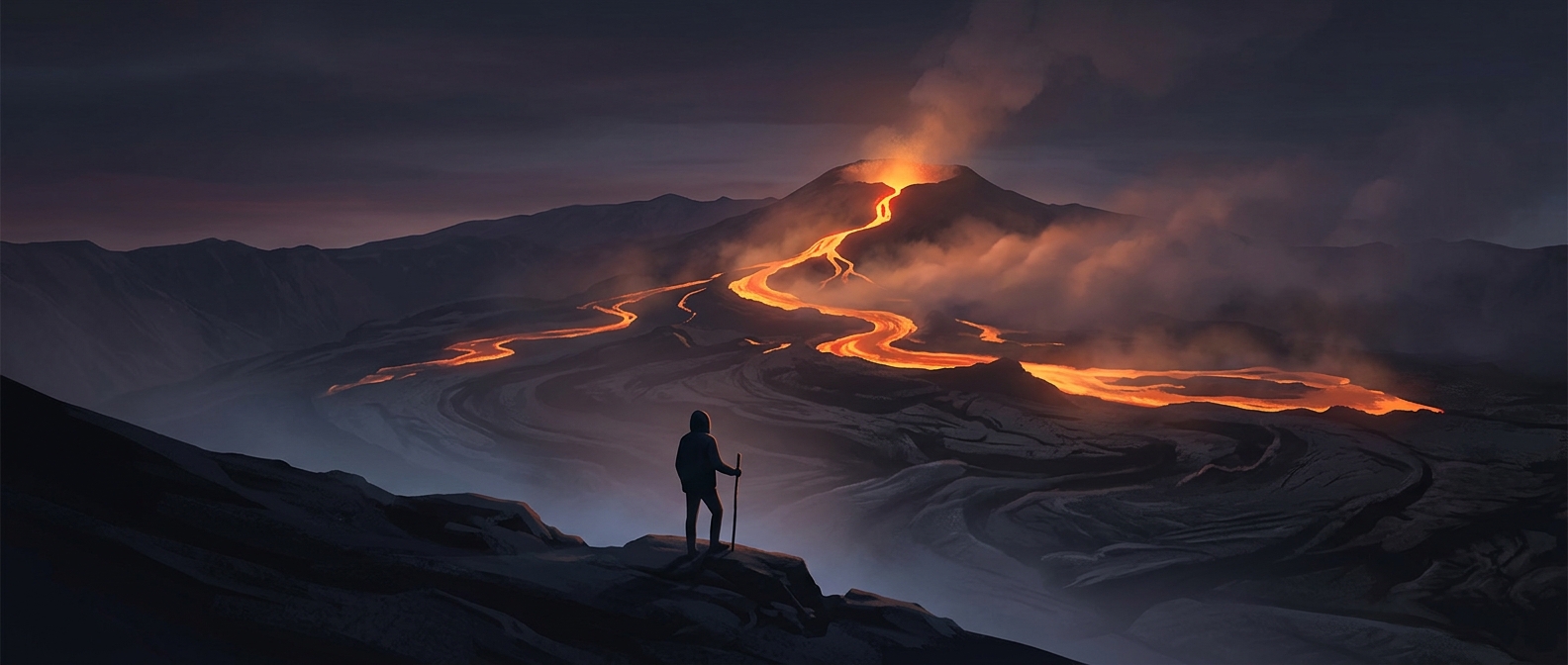
A volcano active in episodes
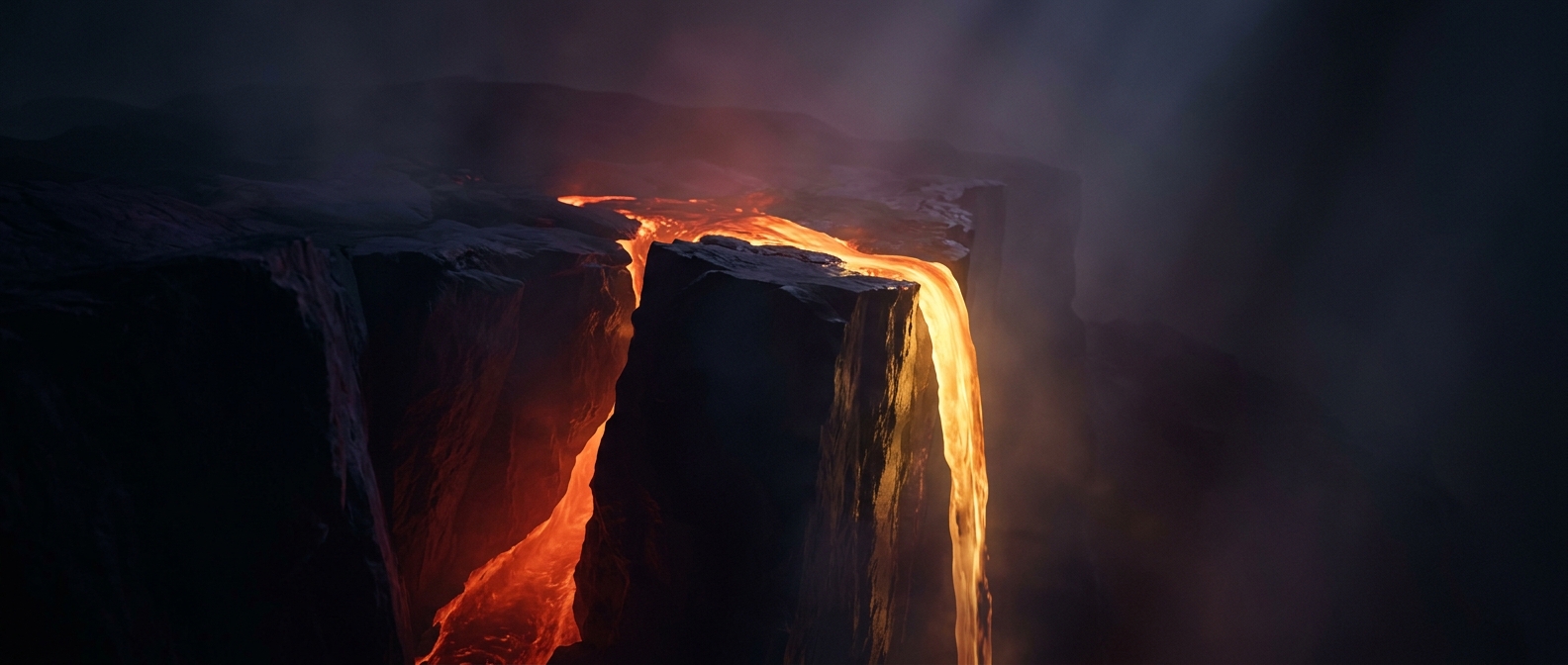
Kīlauea’s reputation for near-continuous eruption can sound as if a single river of lava has been flowing nonstop. In reality, activity comes in episodes: lava emerges, slows or stops, and may erupt again later. The pauses matter. A cooled flow is no longer molten lava; it is new volcanic rock, left behind as the next episode begins.
How one episode leaves a lasting mark
Kīlauea erupts mostly basalt, a type of lava that can flow readily while it is hot. As a flow loses heat, its surface and then its interior solidify. The result is a fresh layer of rock that can bury older terrain. Repeated episodes therefore build a landscape in stages, even when no single flow lasts very long.
The ground does not have to look dramatically different after every pause. A later eruption may cover part of an earlier flow, while other parts remain exposed. Over time, the stacked and overlapping rock records the volcano’s activity more durably than any one burst of molten lava.
When lava reaches the ocean
If a flow reaches the sea, it can cool into rock at the water’s edge and extend the coastline. That is land-building by accumulation: molten material becomes solid ground, and the shore moves outward where the new rock meets the ocean. Kīlauea’s near-continuous activity is thus not one uninterrupted stream, but a succession of events whose cooled remains can reshape the island long after each episode ends.