How a river cuts off one of its own bends
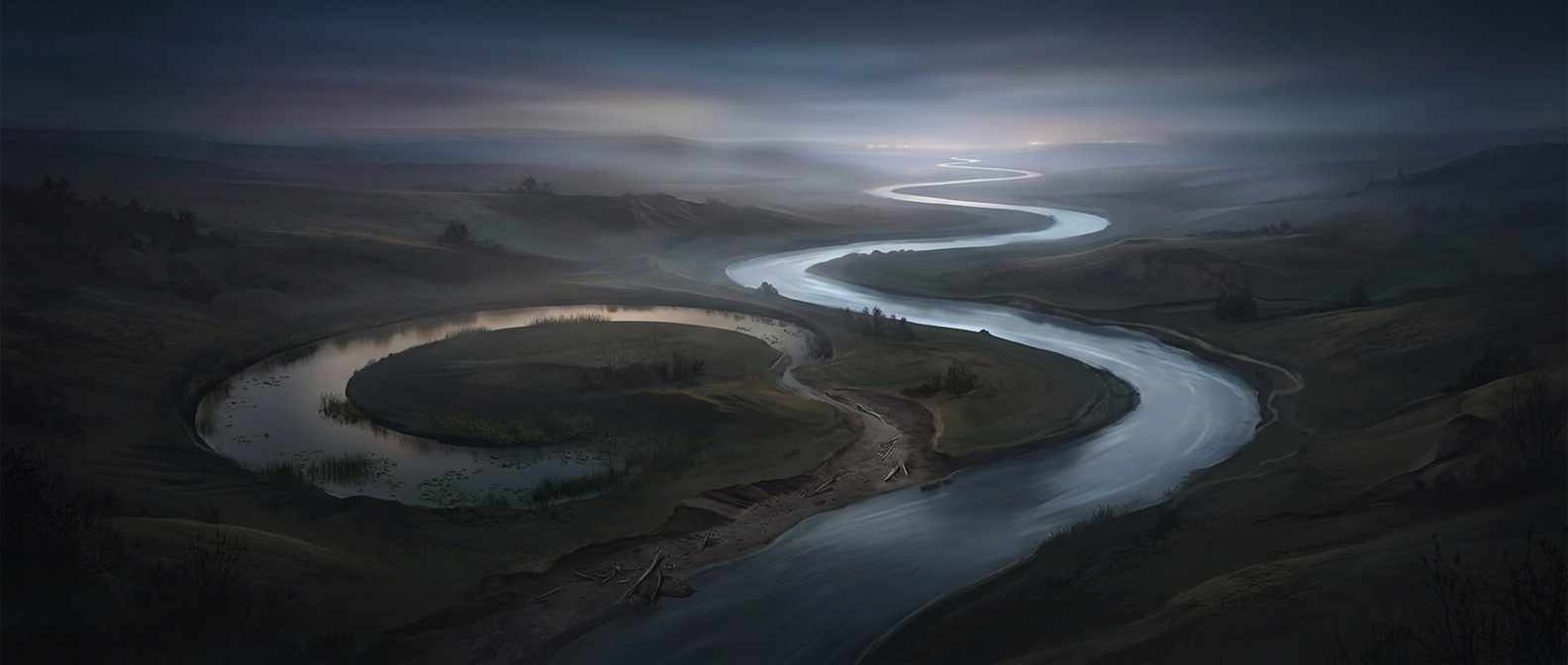
A looping bend, or meander, shifts as water erodes the outside bank and drops sand and silt along the slower-moving inside bank. Over time, the loop can grow wider and the narrow strip between its two ends can shrink. During high water, the river may carve a shorter route across that strip. Because the shortcut is more direct, the main flow increasingly favors it, leaving much less water moving through the old loop.
From active channel to oxbow lake
Once the river has shifted into its shortcut, currents at the abandoned loop’s openings weaken. Sand, silt, and mud settle there, gradually sealing the old channel from the main river. The separated, curved water body is called an oxbow lake—named for its resemblance to the U-shaped collar once used to harness oxen.
The cutoff can happen quickly during a flood, but the sealing and reshaping of the abandoned channel take longer. The new lake may retain water for years, while sediment and plant growth slowly make it shallower. Some oxbows eventually become marshy wetlands or dry land, so a river’s former course can remain visible in the landscape long after the water has moved on.