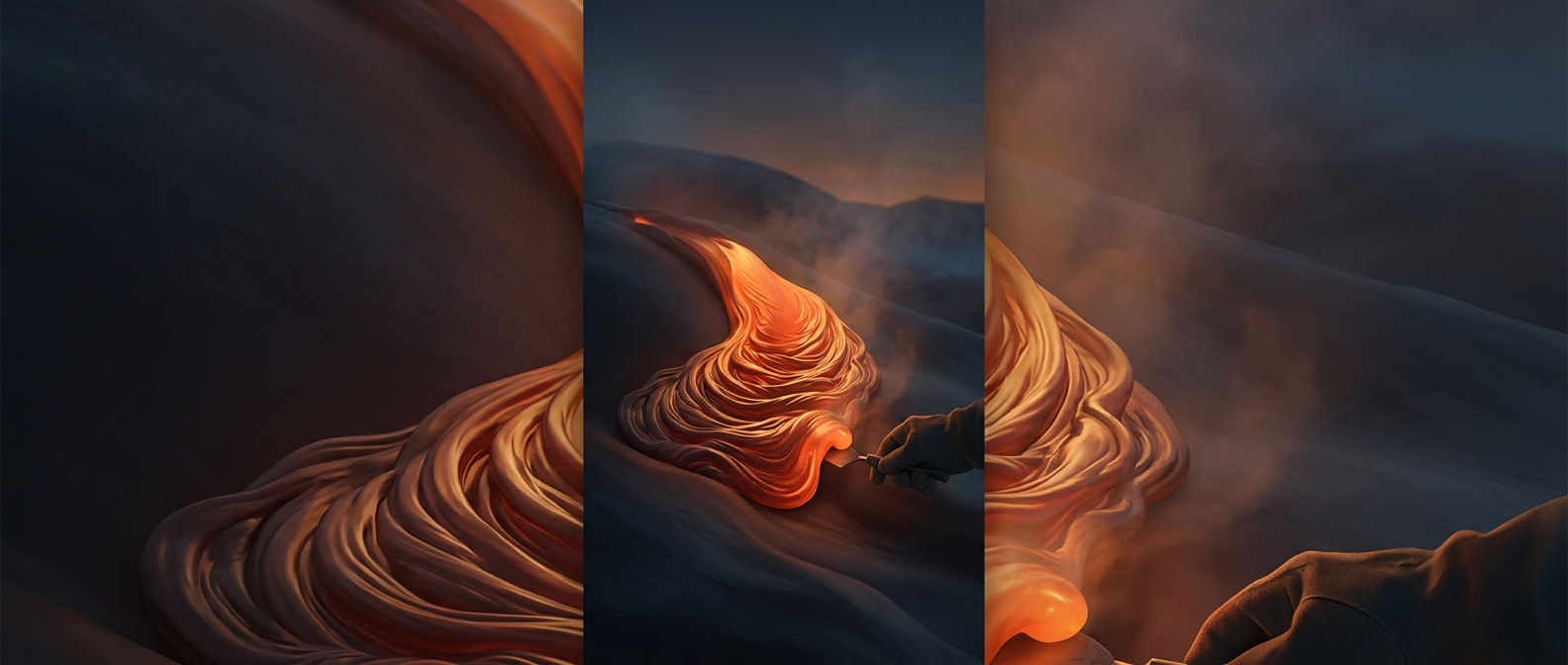
How pahoehoe lava keeps flowing under a crust
Pāhoehoe is a smooth, often rope-textured kind of basaltic lava. It can spread because its interior remains hot and mobile even as the exposed surface cools. Basalt with relatively low viscosity—resistance to flowing—moves more readily than thicker lava, while the thin crust above it acts like a flexible lid.
The surface wrinkles as the lava moves
As molten rock pushes forward, it drags the partly solidified skin along. The skin buckles into ripples and rope-like folds, recording the direction of flow. New lava can also push beneath an older crust and lift it, so a surface that appears still may cover rock that is continuing to advance.
The crust helps slow heat loss, but it does not make the flow harmless or predictable. A pāhoehoe front may creep forward in small lobes, then extend as fresh hot lava presses underneath. Its smooth appearance is a clue to how it formed—not evidence that the rock below has stopped moving.