A continent-scale crack in the crust
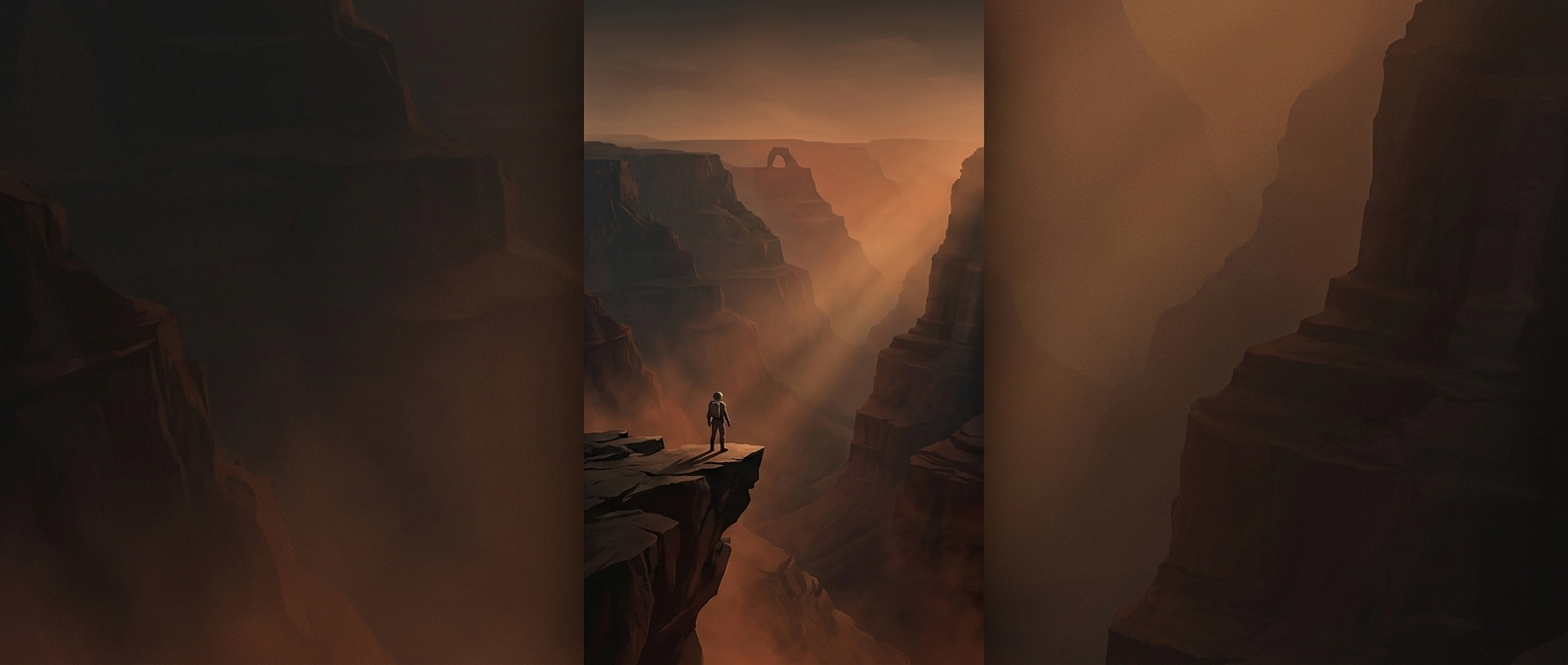
Mars’s canyon system, Valles Marineris, stretches for roughly 4,000 kilometers—long enough to cross much of the United States. It is not one narrow gorge but a network of deep chasms, cliffs, and broad troughs near the planet’s equator.
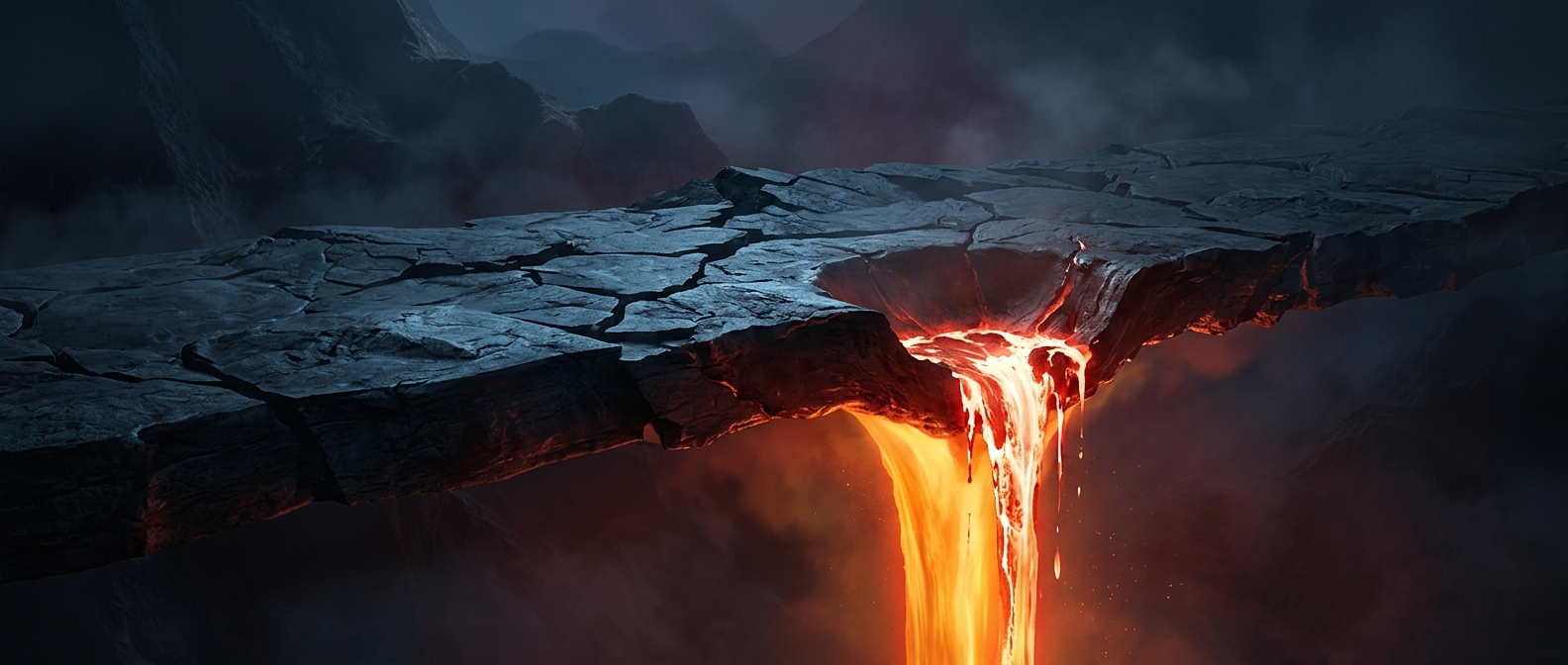
The key structure is a graben: a strip of crust that drops down between roughly parallel faults. As the crust is pulled apart, blocks along the breaks can sink, opening long troughs. On Mars, this stretching is associated with the enormous volcanic region of Tharsis, where the planet’s crust was uplifted and stressed.
A rift reshaped over time
The original fractures and sinking blocks made the basic architecture, but they did not leave the canyon walls untouched. Rockfalls and landslides widened slopes; wind moved dust and sand; and water may have altered some locations. These later processes modified the chasms rather than turning the whole system into a river-carved valley.
That distinction matters: Valles Marineris preserves a record of forces acting on a planet’s crust. Its scale shows how uplift and stretching can create landforms far larger than familiar terrestrial rifts, even without Earth-like plate tectonics continually rearranging the surface.