A buried brine reaches the surface
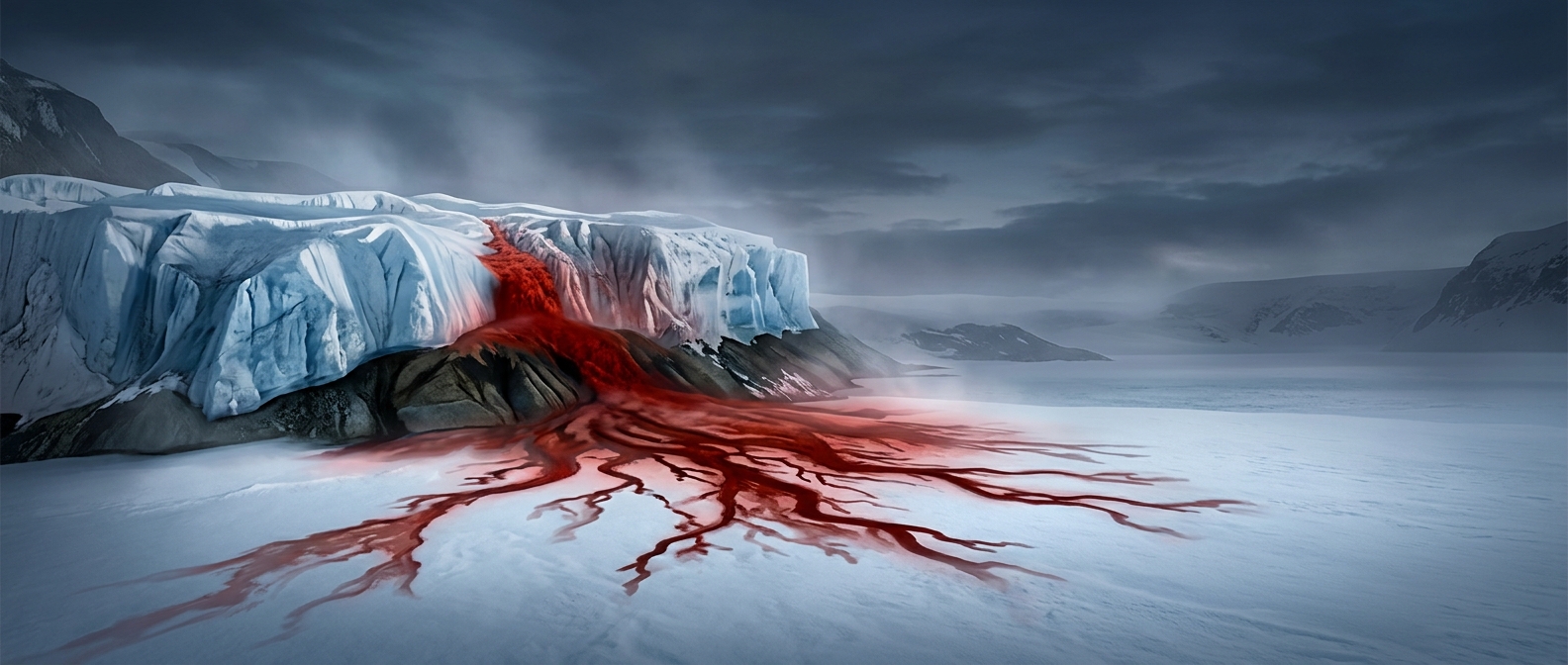
Blood Falls begins with salty water sealed beneath Taylor Glacier. The brine can stay liquid in Antarctic cold because dissolved salt lowers water’s freezing point. In the dark beneath the ice, it has little contact with the atmosphere, so its dissolved iron has not yet undergone the same reaction it will at the surface.
As the brine seeps out, it meets oxygen in the air. Iron atoms lose electrons in a process called oxidation—the same basic chemistry behind rust on exposed metal. The resulting iron compounds absorb and scatter light differently from the original water, producing the striking red-orange stain.
Why the color spreads across the ice
The glacier is not painted red by a single burst of rusty water. Brine repeatedly emerging at the outlet carries iron across the ice, where it reacts and leaves mineral-rich residue behind. The contrast makes the stain especially visible against the surrounding white glacier.
That color is a surface clue to a hidden environment: liquid, salty water can persist beneath Antarctic ice, then reveal its chemistry only when it escapes into the air.