Why an enclosed lake can rock like a bathtub
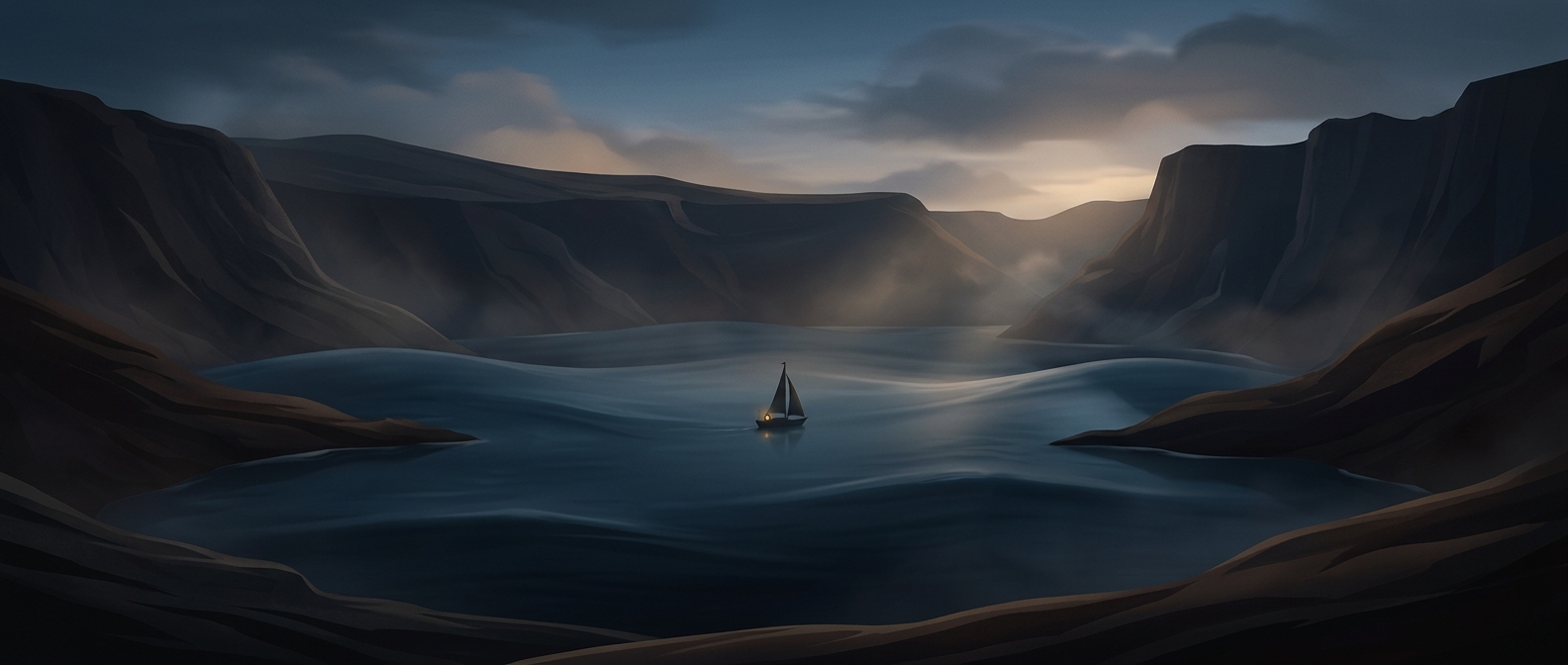
A lake does not need a river flowing through it to move from end to end. Wind blowing across the surface can push water toward the downwind shore; a rapid change in air pressure can also press unevenly on the lake. The water level rises slightly at one end and falls at the other, creating a slope across the surface.
The lake’s own rhythm
Once the push weakens, gravity draws the tilted surface back toward level. But the water is already moving, so it overshoots: the first end drops while water piles up at the other. That repeated exchange is a seiche—a standing wave in which water rocks through a basin rather than traveling steadily onward.
The lake’s length, depth, and shape determine how quickly this rocking repeats. A long, narrow basin generally has a slower rhythm than a short one. Irregular shorelines and changing depths can make the motion more complicated, but the central process is the same: the basin’s boundaries help set the wave’s pace.
Motion that outlasts the wind
Because water has momentum, the oscillation can continue after the wind or pressure difference that started it has passed. Friction against the lakebed and shores gradually drains that motion, so each swing becomes smaller. In a completely enclosed lake, the water is not escaping through an outlet; it is redistributing within the basin. A calm-looking lake can therefore still be carrying a slow, basin-wide rhythm beneath its surface.