How a Hollow Forms Inside Solid Rock
A geode begins with a pocket of open space. In volcanic rock, gas bubbles can leave cavities as lava cools; in other settings, spaces may form when material dissolves away. Later, groundwater carrying dissolved minerals can seep through tiny cracks and into the hollow.
Minerals Build a Crystal Lining
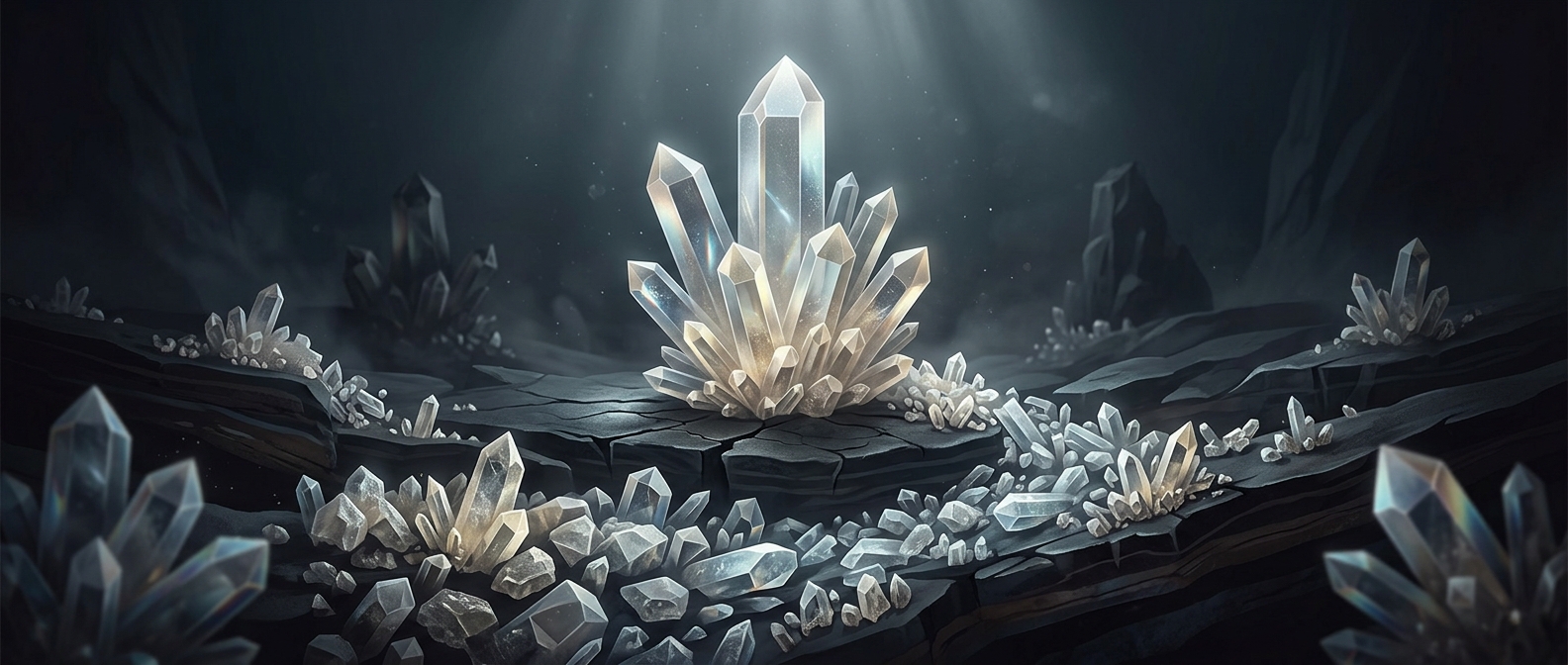
Water can hold minerals in solution, much as a drink holds dissolved sugar. When conditions change—such as when water cools or evaporates—some minerals come out of solution and settle on the cavity’s walls. Their atoms join an orderly repeating structure, growing crystals a little at a time. Different minerals and growth conditions produce different colors and shapes; quartz is common, while amethyst is purple quartz colored by trace impurities.
The process is often slow and uneven. A thin mineral coating may form first, followed by later deposits that add to the lining. If the hollow remains open, crystals can project inward; if mineral deposits eventually fill the space, the interior may instead become solid.
The Outside Does Not Tell the Whole Story
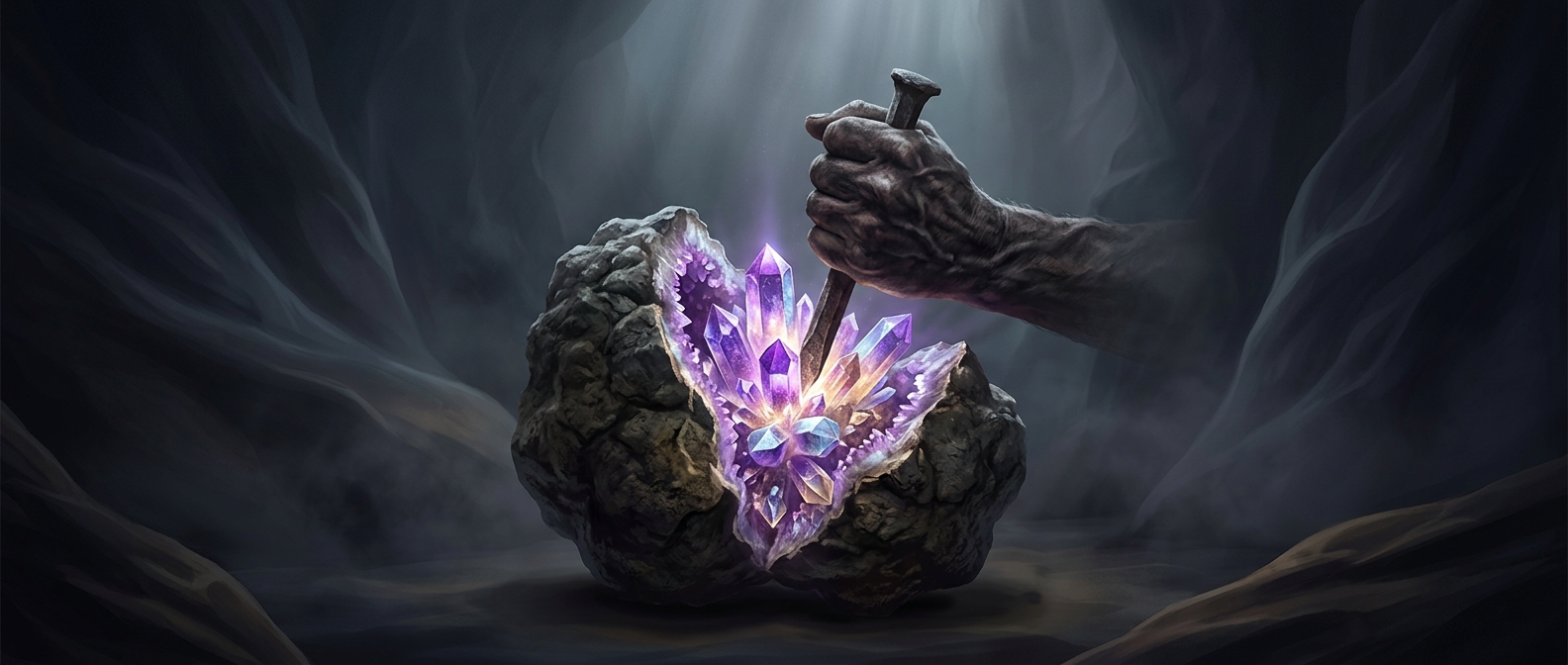
The rock surrounding the cavity can weather into a plain, rough-looking shell while the protected interior preserves its crystal surface. That contrast is why a geode can look unremarkable before it is split: its crystals formed in a hidden space, not on the exposed exterior. Opening one reveals a small record of water moving through rock and changing its chemistry over time.