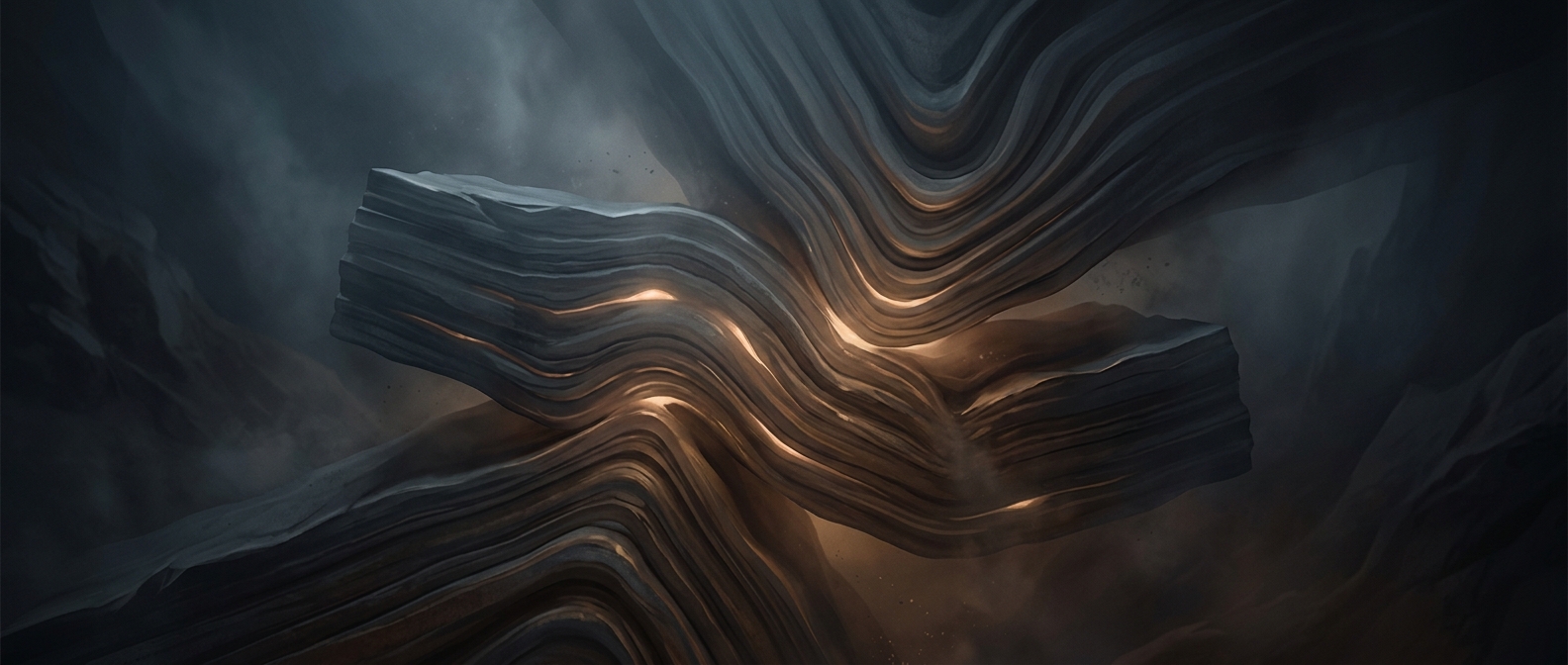
How Pressure Reshapes Rock Without Melting It
Deep underground, rock is squeezed and heated over long periods. The pressure comes from the weight of overlying layers and from tectonic forces that push crustal blocks together. Temperatures rise with depth, but in metamorphism they remain below the point at which the rock would melt.
Instead of becoming liquid, minerals recrystallize in the solid state: atoms shift, crystals grow or change form, and new minerals may develop as conditions change. Tiny amounts of water moving through cracks can help carry chemical ingredients from one place to another, speeding some reactions. The rock’s overall shape may remain intact even as its mineral grains are transformed.
Why Some Metamorphic Rocks Develop Bands or Layers
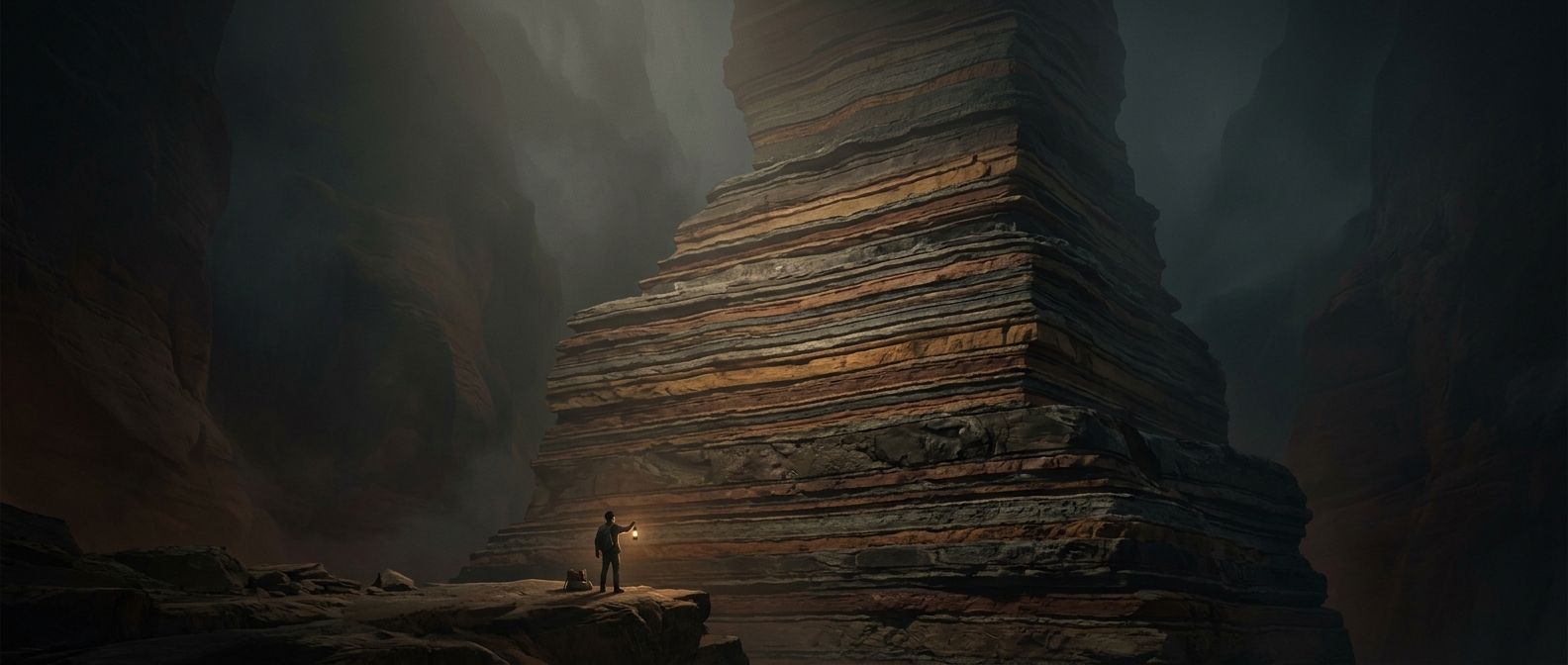
Pressure is not always equal in every direction. When it pushes more strongly from the sides, flat or elongated minerals can rotate or grow with their broad faces aligned across the direction of greatest squeeze. That alignment gives many metamorphic rocks a layered or banded appearance, called foliation. It is a record of how the rock was deformed, not a layer of sediment laid down on top of it.
The starting material matters, too. Calcite-rich limestone can recrystallize into interlocking calcite crystals, producing marble. Fine-grained shale can be compressed and altered until its minerals form the closely spaced planes that let slate split into thin sheets.
A single mountain-building event can subject nearby rocks to different temperatures and pressures, so they may emerge with different minerals and textures. The finished rock is therefore not just a transformed substance: its crystals preserve clues to the underground conditions that shaped it.