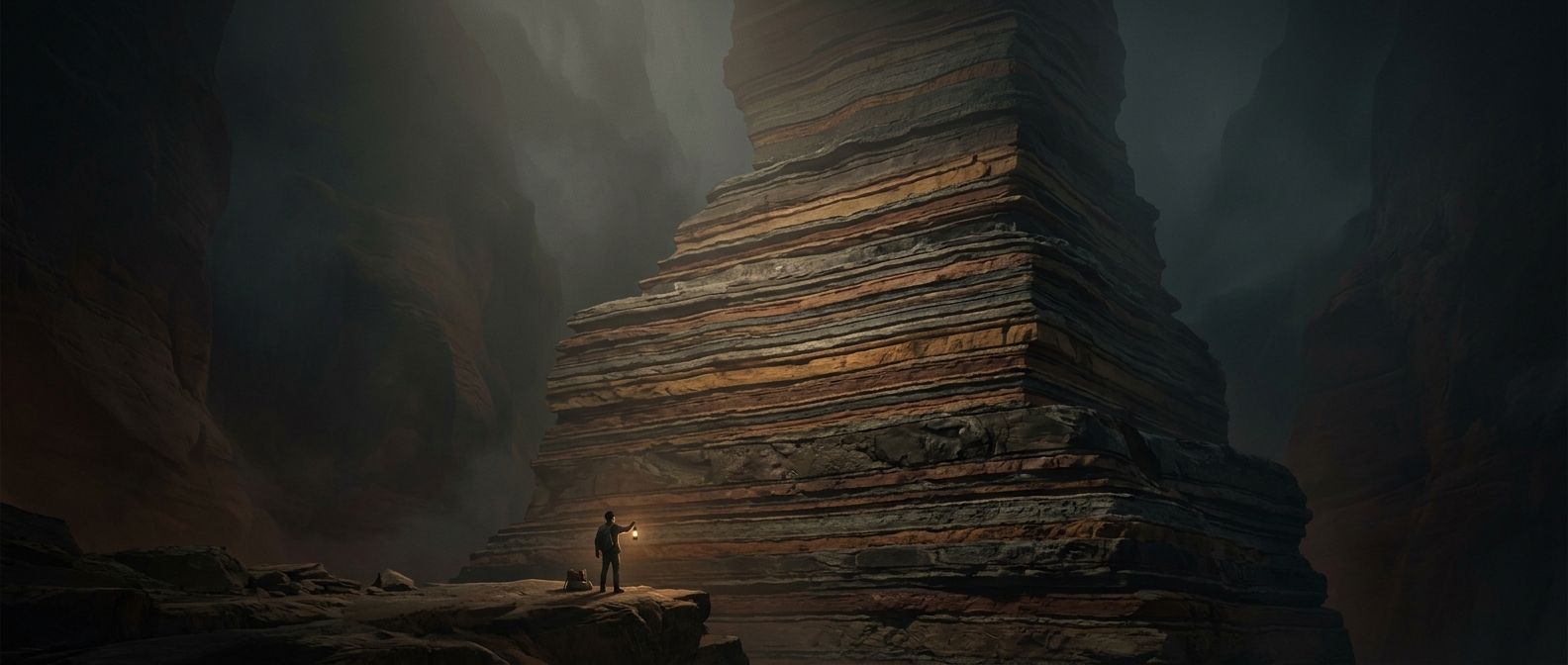
How loose sediment becomes stone
As sand, mud, and other grains accumulate, newer layers bury older ones. The weight squeezes the sediment: grains settle into tighter contact, and some of the water between them is pushed out. This compaction makes the deposit denser, but it usually does not lock every grain into a solid mass.
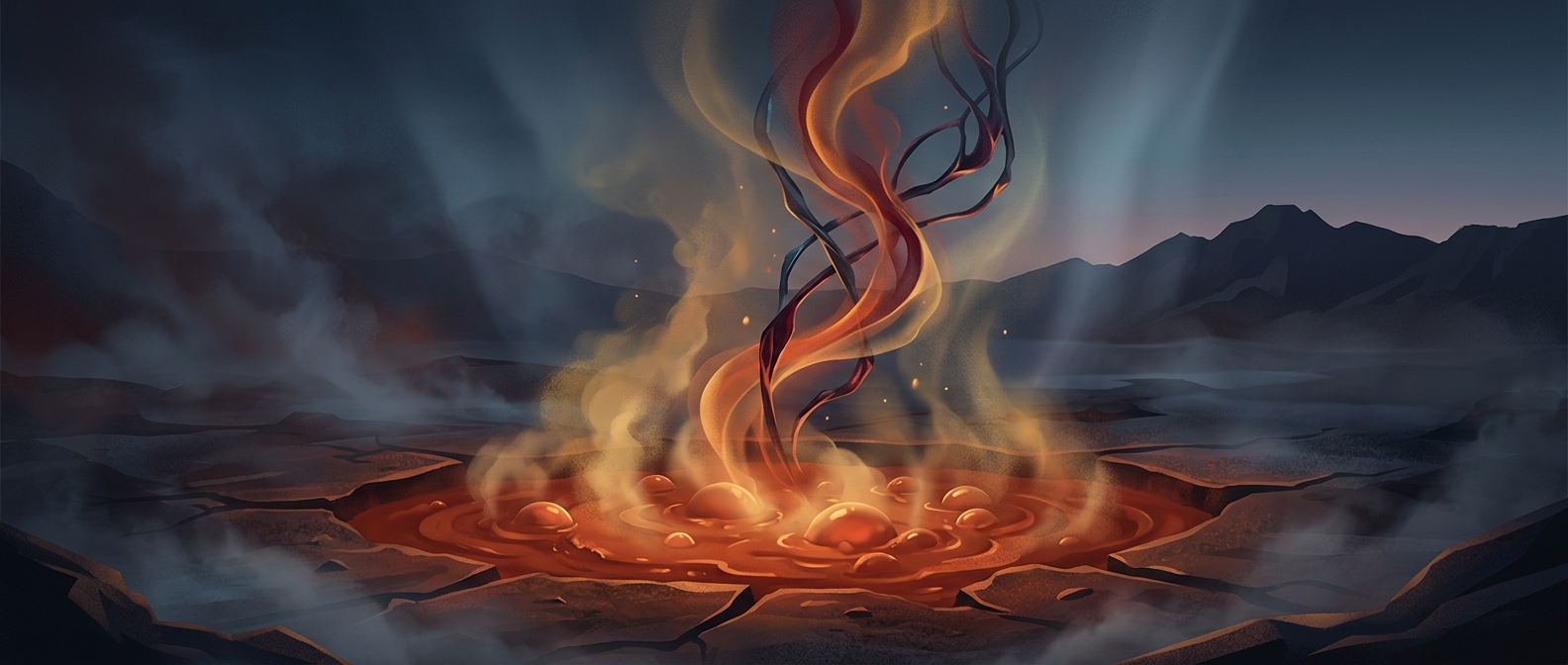
That takes cementation. Water moving through the remaining tiny openings carries dissolved minerals. When conditions cause those minerals to crystallize, they coat grains or grow in the spaces between them, binding the sediment together. Compaction and cementation together turn loose deposits into sedimentary rock, a process called lithification.
Why the layers remain readable
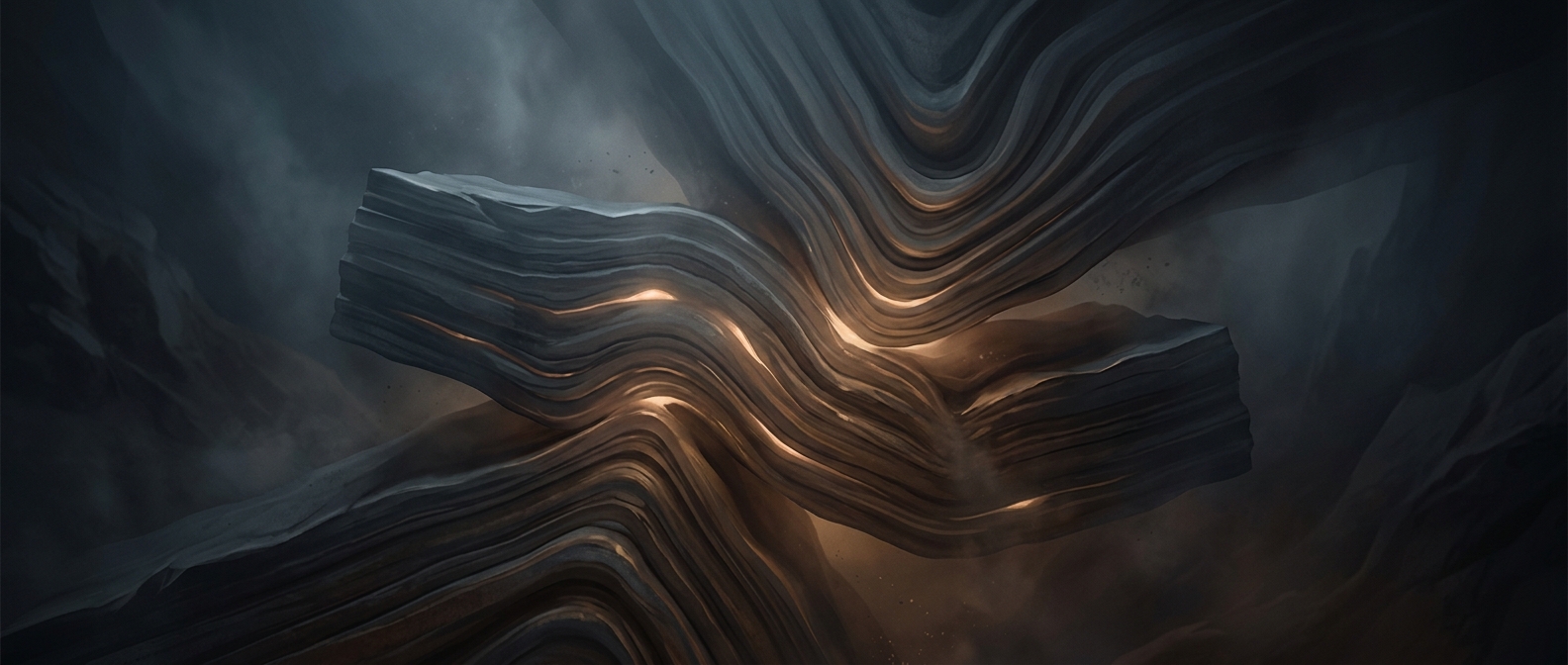
The rock can preserve the arrangement of the original sediment because the grains are not melted and remade. A layer may differ from the one below it in grain size, color, or composition, reflecting changes in what was deposited or how it arrived. A shift from finer mud to coarser sand, for example, records a different kind of sediment supply or transporting energy.
Later layers can press those differences into a single rock, while mineral cement helps hold each layer in place. The result is not a perfect diary—burial and later changes can blur or alter details—but its bands and grains can retain evidence of changing conditions. A stone’s visible stripes may therefore mark episodes of deposition that were once separate stretches of loose sediment.