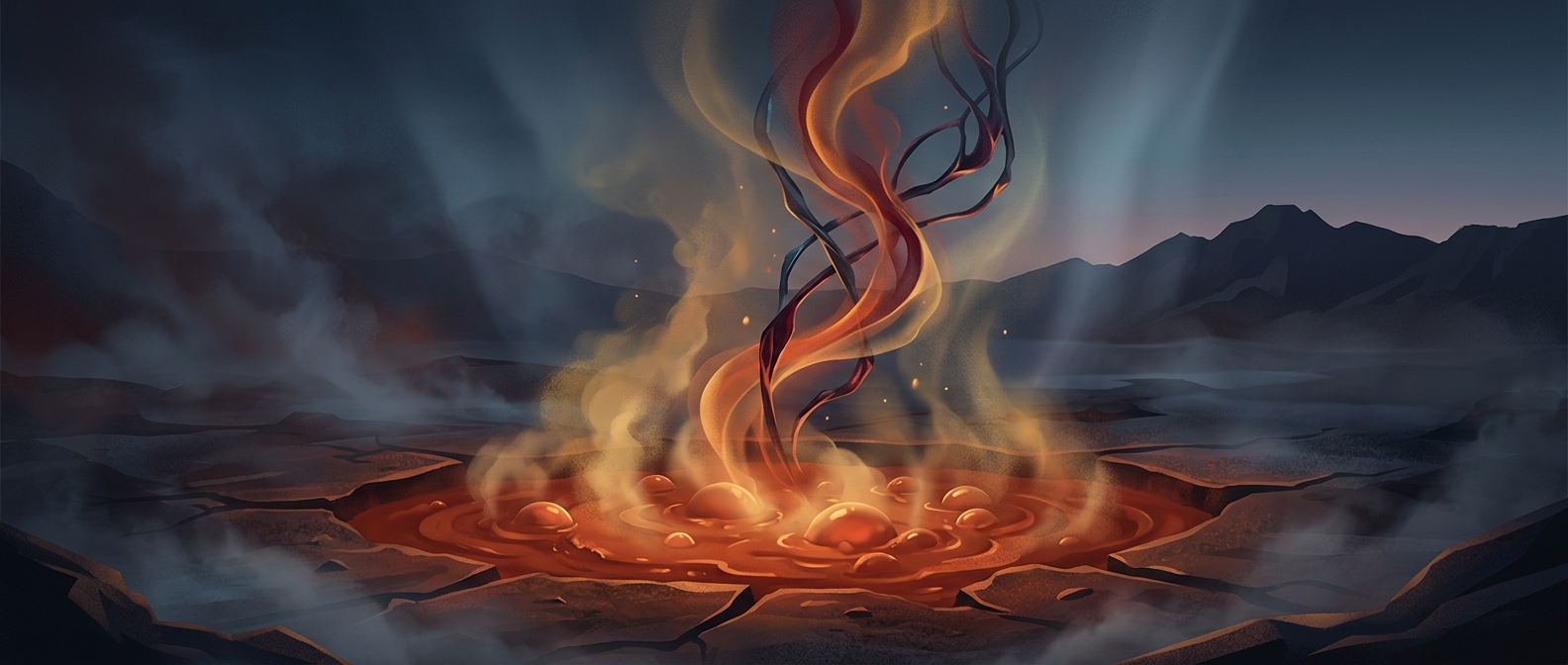
How rock turns into geothermal mud
A mud pot begins with a chemical change, not a pool of ordinary soil. Acidic water seeps through nearby rock and alters its minerals, breaking the material down into fine clay. The resulting slurry holds water among tiny particles, giving it a thick, sticky consistency rather than the easy flow of a spring.
Why the surface keeps splattering
Heat from below warms the water, while gas moving through the slurry forms bubbles. In a thin pool, bubbles can rise and escape with little fuss. In dense clay, they have to push through a heavier mixture. When a bubble finally reaches the surface and bursts, it throws mud outward; more bubbles follow as heat and gas continue to arrive.
The pot’s texture depends on the balance between water and clay. With more water, the mixture can flow more readily; with less, it may become thick enough to mound and crack between eruptions. That is why a mud pot can look less like a bubbling spring than a simmering stew: its splats reveal bubbles breaking through a material that is both being heated and continually reshaped.