How a mineral deposit escapes gravity
A helictite can grow sideways because the water feeding it moves through a passage too small for gravity to dictate its route. In a narrow pore, surface tension—the pull along a liquid’s surface—can help draw water through and hold it at the tip. As that water loses carbon dioxide to the cave air, dissolved minerals can come out of solution and build a crystal deposit.
The growing crystal also matters. Its tiny surface irregularities and internal structure can influence where the next mineral layer forms. If the water continues to reach an off-center point, the deposit may extend in that direction rather than simply lengthening downward. The precise balance of forces can vary, but the result is a growth path that bends or twists.
A record built one thin layer at a time
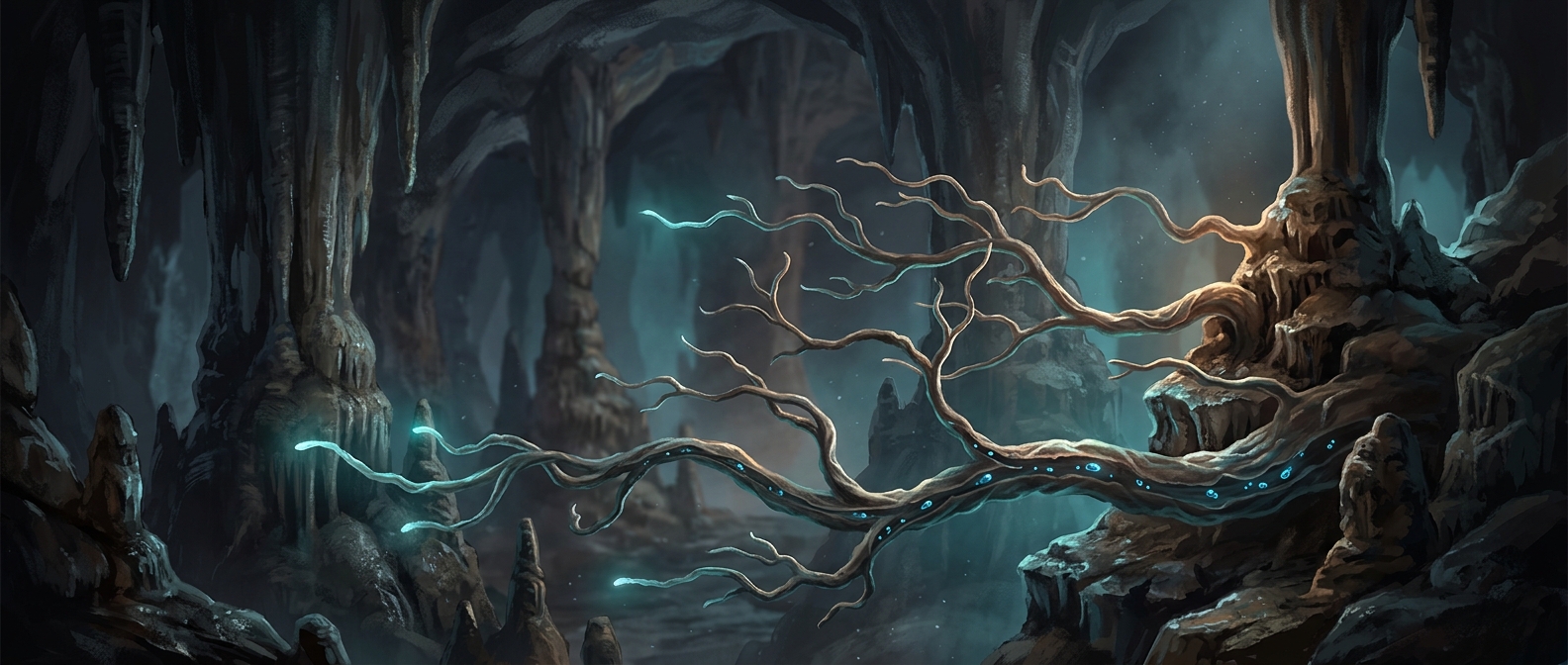
Unlike a dangling stalactite, whose growth is visibly aligned with dripping water and gravity, a helictite may sprout from a wall or ceiling in a crooked, twig-like shape. Its bends are not a deliberate turn: they emerge from the changing route of water and the changing surface of the growing mineral.
Because the channels are minute, the supply is delicate. A small shift in where water seeps or where crystals form can redirect the next increment of growth. Over time, those tiny changes accumulate into a formation that appears to point sideways—or even upward—while still being built by water moving through the cave.