A rolling grain becomes the center of a cave pearl
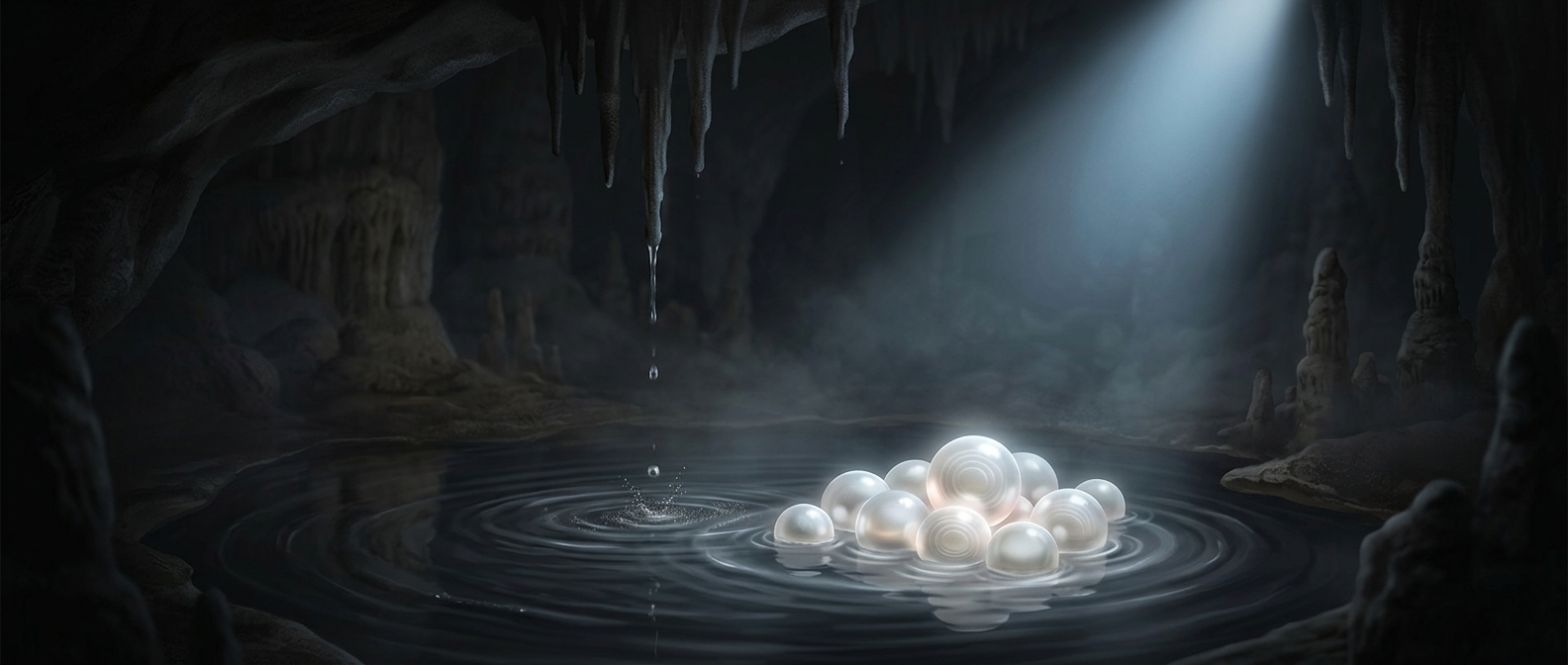
Cave pearls form in shallow pools where water carries dissolved minerals, often calcium carbonate. A grain of sand or other small fragment settles on the pool floor. As mineral-rich water moves over it, some of those minerals come out of solution and leave a thin coating behind.
That coating is called a deposit: material that builds up when dissolved substances separate from water and settle onto a surface. With repeated wetting and drying, or changes in the water’s chemistry, the coating thickens a little at a time.
Why the pearl stays round
A grain that remains still would collect more mineral on exposed surfaces and could become lopsided. In a cave pool, small currents, drips, or splashes can nudge the grain and roll it across the bottom. Each turn presents a different side to the mineral-bearing water, helping deposits build around the center rather than in one direction.
The motion does not need to be dramatic. A slow, repeated tumble is enough to distribute the coating, much as rotating a small object while painting it helps cover its whole surface. Over time, successive layers turn the original grit into a rounded stone.
The pool’s movement shapes the result
Cave pearls are not made by an animal, and they are not necessarily polished by a powerful current. Their smoothness and shape emerge from the balance between mineral deposition and gentle movement: too little motion can leave uneven growth, while continued rolling spreads new layers around the grain. The finished sphere is a record of many small encounters between water, mineral, and grit.