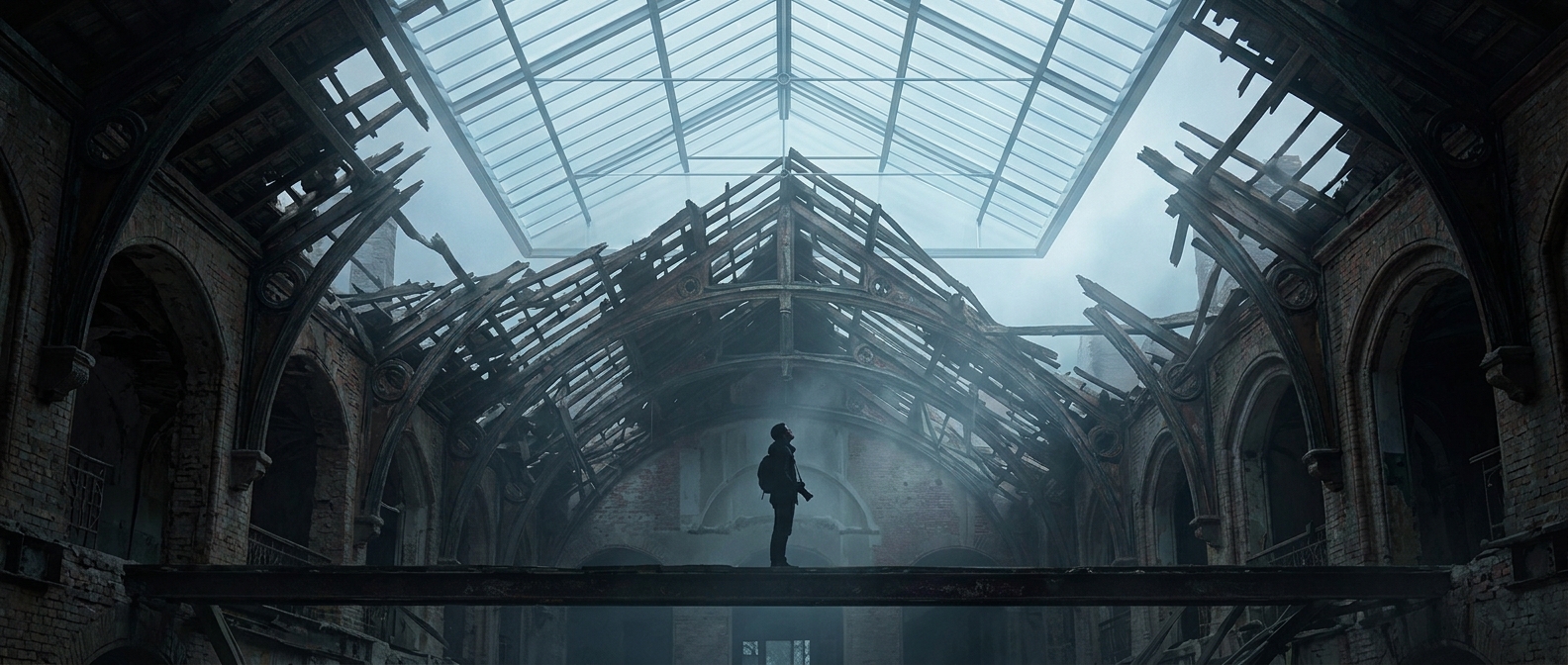
A forest hospital seen from above
At Beelitz-Heilstätten, the sanatorium buildings were part of a large medical complex set among the pines outside Berlin. When it opened in the late 19th century, its wooded setting offered distance from crowded city life—a practical feature when tuberculosis was common and treatment often involved extended stays, rest, and fresh air.
The site’s later history includes a brief chapter in the life of Adolf Hitler: he recuperated there after being wounded during the First World War. That episode sits within a much longer institutional story, as the complex continued to serve patients in changing political eras before many of its buildings fell out of use.
Why the view stays above the ruins
Decades without regular upkeep have left some structures unstable. An elevated walkway gives visitors a way to see the scale and layout of the complex without walking through deteriorating interiors, where weakened floors, loose masonry, and exposed openings can make exploration dangerous.
The height also changes what the ruins reveal. From ground level, a collapsed building can look like an isolated shell; from above, roofs and tree growth show how nature has gradually occupied the site. The path turns an unsafe interior into a visible landscape, letting visitors read the buildings’ decline without treating them as safe to enter.