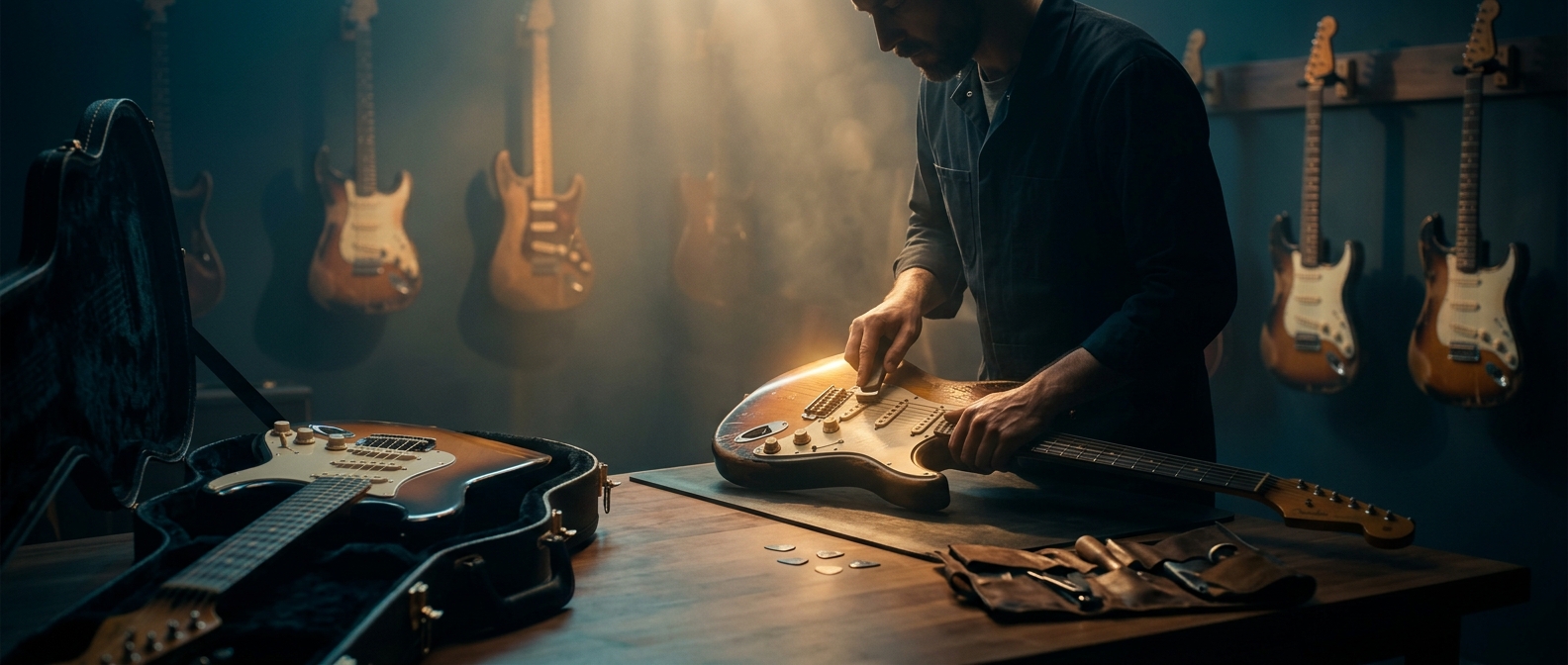
The price of a guitar with a past
A “relic” guitar is new, but its finish is made to suggest years of use. The wear is usually placed where a player’s arm, belt, or hand might naturally rub the instrument; small dents and dulled or aged-looking hardware help complete the effect. The challenge is to make the damage look accidental while keeping it controlled: a convincing scratch should not interfere with the guitar’s function.
That work helps explain the premium. Unlike a uniform factory finish, artificial aging takes additional hands-on time and judgment. The maker is not just applying damage; they are arranging clues so the guitar reads as a coherent object with a history. Different levels of distress can also let buyers choose how heavily played they want the instrument to appear.
What the buyer is paying for
The appeal is partly visual, but it is also practical. A pristine guitar can feel precious: its owner may hesitate before the first scratch. A relic arrives with that pristine surface already gone, so ordinary marks are less likely to feel like a loss. For some players, the worn look also connects the instrument to the familiar image of a guitar shaped by years onstage.
The tradeoff is that the wear is a designed finish, not evidence of actual use. Buyers pay extra for the craftsmanship and the look of a history, while getting a guitar whose history begins with them. Its first real dent may matter less precisely because the maker has made the guitar look as though it has survived many already.