The edible seam in a cardboard box
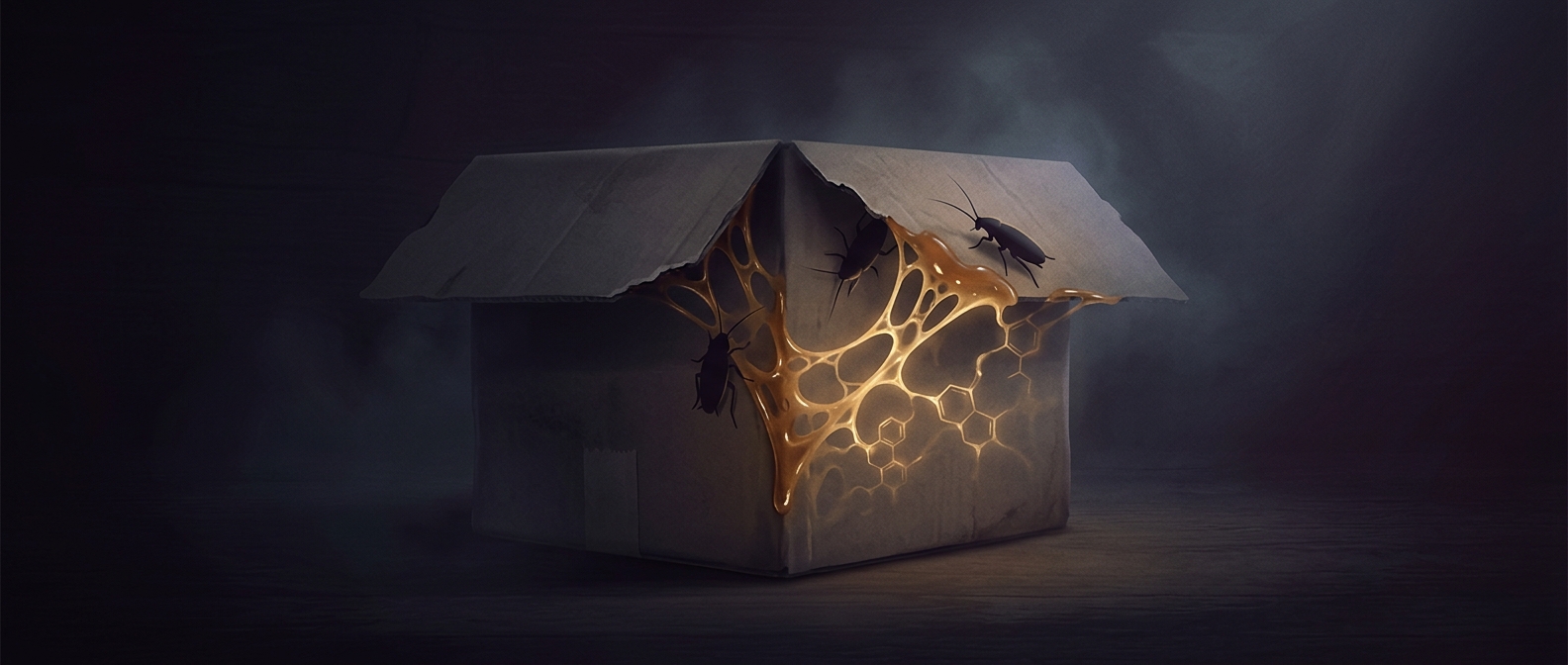
A corrugated box is made from paper layers, and the wavy middle layer is often held to the flat outer sheets with a starch-based paste. Starch is a carbohydrate—the same broad kind of nutrient found in foods such as bread and grains—so a cockroach can treat the glue as a small food source while scavenging.
The cardboard itself is mostly plant fiber. Cockroaches can chew paper and other cellulose-containing materials, but those are not as nourishing or easy to use as food scraps. The pasted seams are the more tempting part, especially when a box also carries crumbs, grease, or spills.
Why a box can become a pest hiding place
A box offers more than something to eat. Its folds and narrow spaces provide shelter, and boxes stored in damp or cluttered areas can sit undisturbed near other food sources. That combination—possible nourishment plus a protected hiding place—makes cardboard attractive to a cockroach exploring a home.
Not every box uses the same adhesive, and a box is not a complete food supply. But leaving old packaging stacked beside a pantry or kitchen gives pests both cover and something they may be able to nibble. Removing discarded boxes can take away that convenient shelter and snack in one step.