A shiny surface can hide a cheaper core
A token that looks like brass or another valuable metal may get its appearance from electroplating: an electric current deposits a thin layer of metal onto a different object. The token’s underlying alloy—sometimes called “pot metal,” an informal term for inexpensive mixed metals—does not have to match the finish at all.
That construction gives game makers a way to produce tokens that look weighty and polished without making the entire piece from costly material. The shine is a surface treatment, not proof of what the token is made of.
Why handling changes the finish
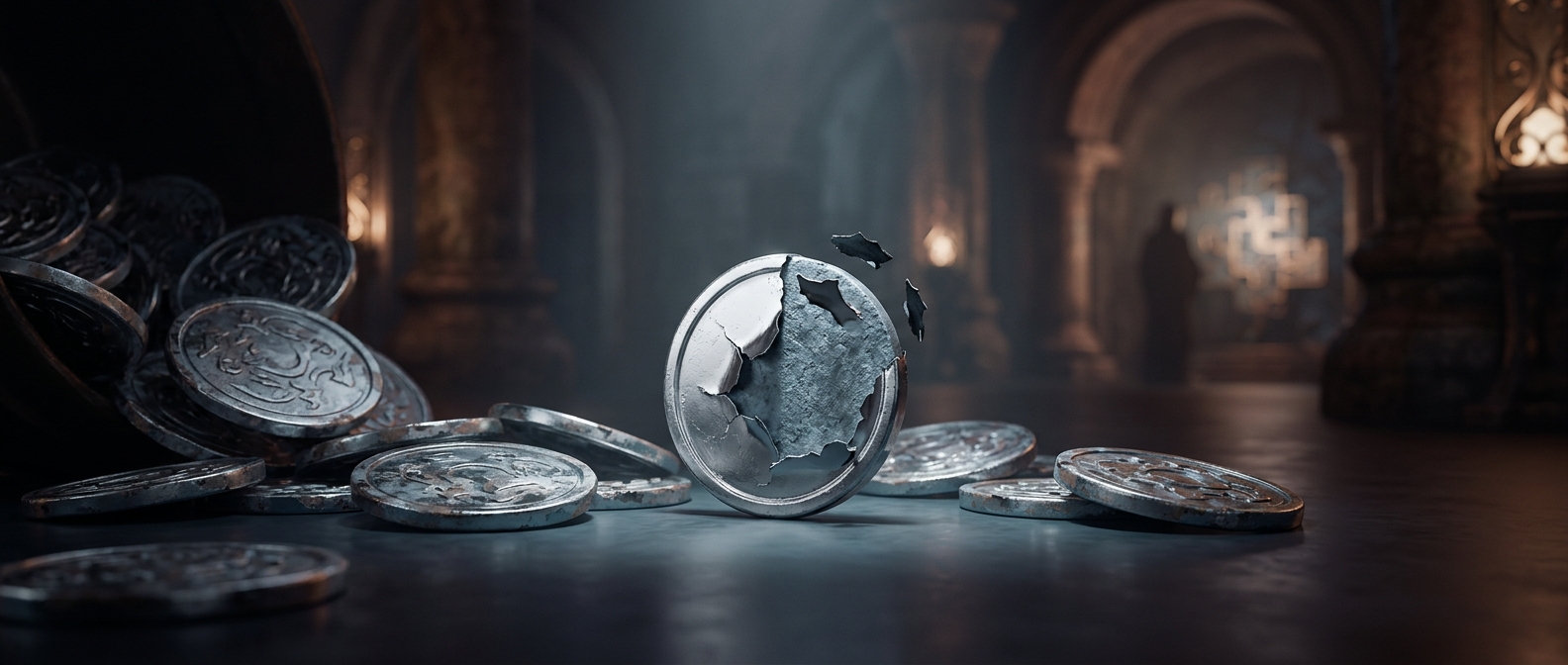
The plated layer is thin. Repeated rubbing can wear it down, and moisture or salts from sweaty hands can react with the surface or with metal exposed beneath it. Those reactions can dull the bright finish and leave a gray, tarnished-looking appearance. The precise change depends on the metals used and how the token has been treated, but ordinary handling can make the difference between a fresh-looking token and a worn one visible.
So the token’s premium look is partly a design choice: a reflective coating creates the impression, while the less expensive material underneath keeps the object practical to make and use. With enough handling, the surface itself tells the story of that construction.