Why a Game Mat Feels Soft but Stays Put
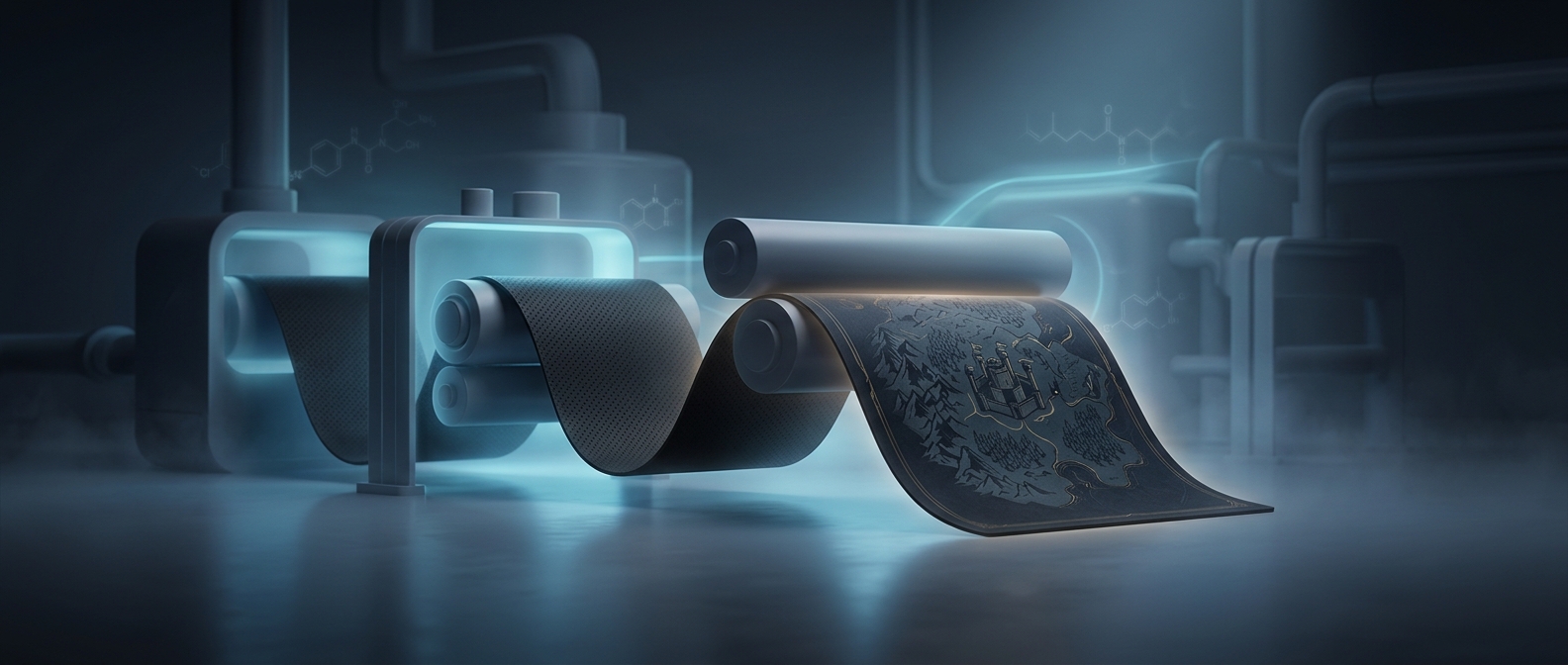
The familiar playmat is usually a layered object: a smooth fabric surface sits on a thick, springy backing. That backing is neoprene, the synthetic rubber foam also used in many wetsuits. Its tiny, mostly closed cells trap gas, giving the mat cushioning without making it heavy or porous. The fabric provides a comfortable place for cards and helps keep the rubber from tearing or snagging.
That combination solves several practical problems at once. The mat softens the impact of pieces set down on a table, lies flat enough for play, and grips the tabletop better than a loose sheet of cloth. It can also be rolled for transport and unrolled again for a game.
The Material’s Hidden Cost
Neoprene is not harvested from a plant or made by simply compressing natural rubber. It is a synthetic polymer produced from chloroprene, a chemical made through industrial processes that rely on petrochemical feedstocks. Making the rubber foam and bonding it to fabric also takes energy and involves chemical manufacturing, which can create pollution if emissions and waste are not well controlled.
The same properties that make the backing useful can complicate disposal. A mat combines rubber foam with fabric, so separating the layers for recycling is difficult; many ordinary recycling programs do not accept such composites. A small gaming accessory can therefore carry the environmental costs of a much larger industrial material system, even though its softness and grip are noticed long before its backing is.