Why a standee needs its flutes upright
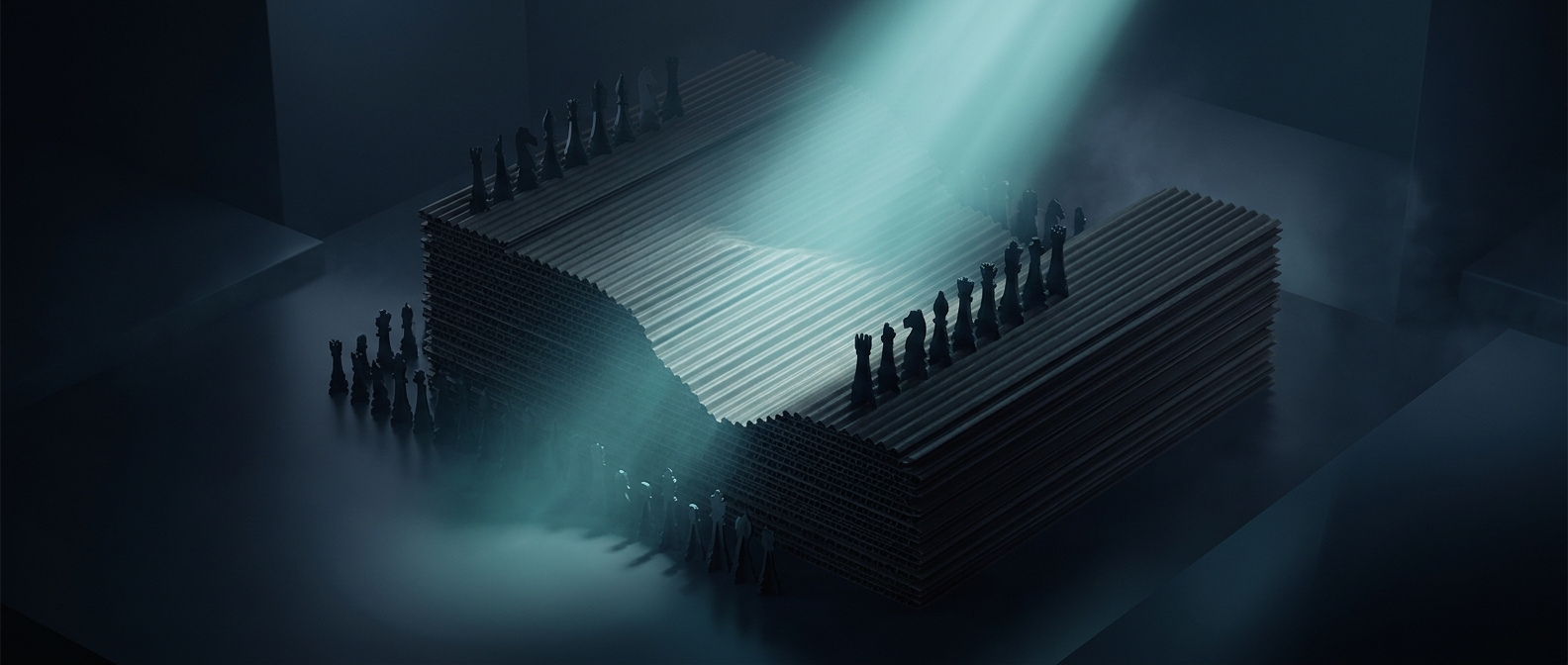
Corrugated cardboard is not equally stiff in every direction. Its middle layer is a wavy sheet—called the fluting—glued between flat outer liners. When the waves run from the standee’s base toward its top, they act like a row of tiny supporting columns. The panel resists bending under its own weight and is more likely to remain upright.
Turn that structure sideways and the flutes can flex across the height of the figure. The printed character may look identical, but the panel can bow or flop instead of holding its pose.
A small choice with production consequences
The direction has to be considered when the standee is laid out for printing and cutting. The outline, artwork, and sheet arrangement all need to work with the board’s grain-like structure. Rotating a figure to fit more efficiently on a sheet may save material, but it can put the flutes in the weaker direction; the layout must balance sheet use against the finished piece’s rigidity.
That is why a seemingly flat paper component can involve an engineering decision. For a standee, orientation is part of the support structure—not just a matter of how the picture is printed.