How Water Turns Acrylic Paint Into a Film
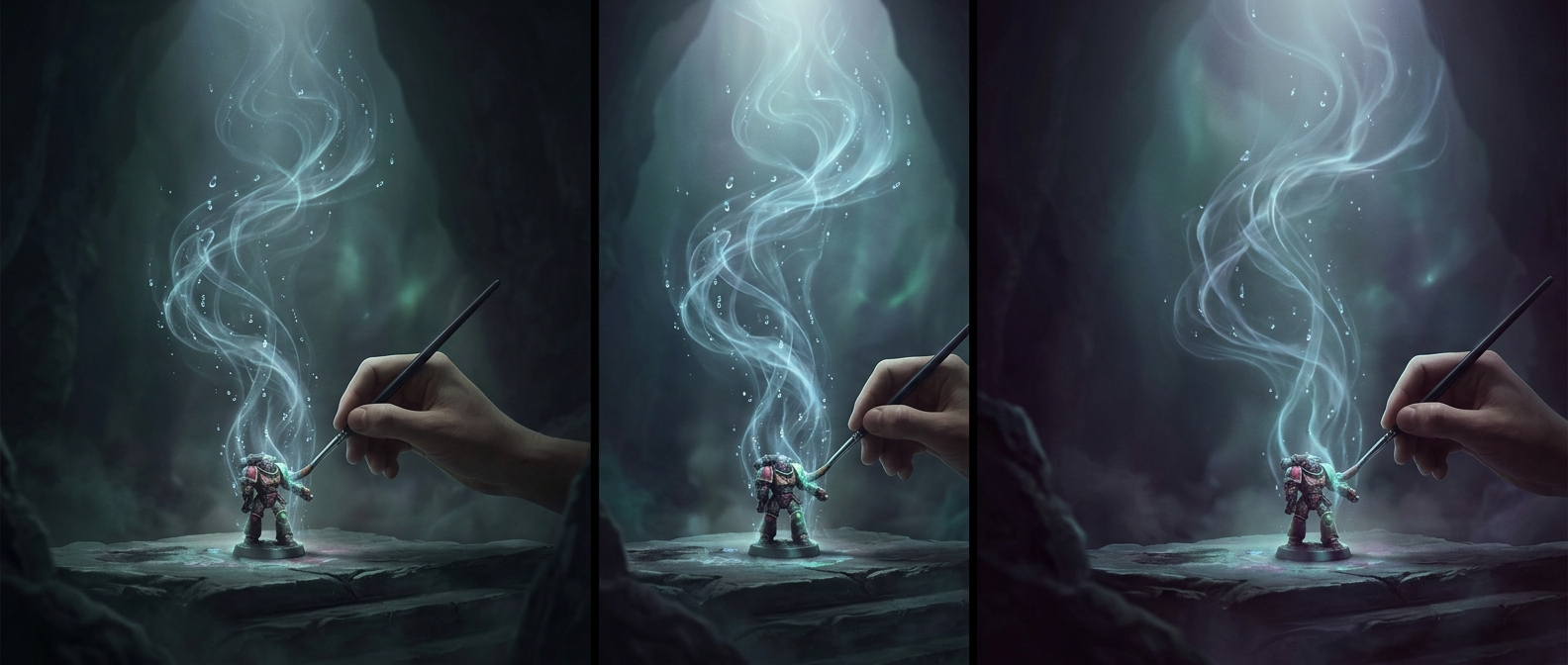
In hobby acrylic paint, the color and binder—the material that holds pigment in place—are suspended as tiny particles in water. As water escapes from a painted surface, those particles are pushed closer together. They then merge into a continuous plastic-like layer that grips the surface and traps the pigment.
That change is called coalescence: the particles join into a film instead of each one remaining separate. The paint’s lasting structure comes from that joined binder, not from a chemical reaction with oxygen. Oil paint, by contrast, hardens as its oils react with oxygen over time.
Why It Matters at the Painting Desk
Water loss makes acrylics convenient for small projects: a thin coat can become touch-dry relatively quickly, so another layer can often go on without waiting for the much slower hardening associated with oils. But speed has a tradeoff. Paint left exposed on a palette can begin forming a film, and a coat that dries before a painter can blend it may be harder to work smoothly.
A dry surface is also not the same as a puddle of paint that has simply lost some water. Once the binder has formed a film, adding water generally will not restore the paint to its original, workable state. The practical lesson is to keep paint covered while working and plan blends before the water disappears.