Why Strong Hair Can Still Turn Frizzy
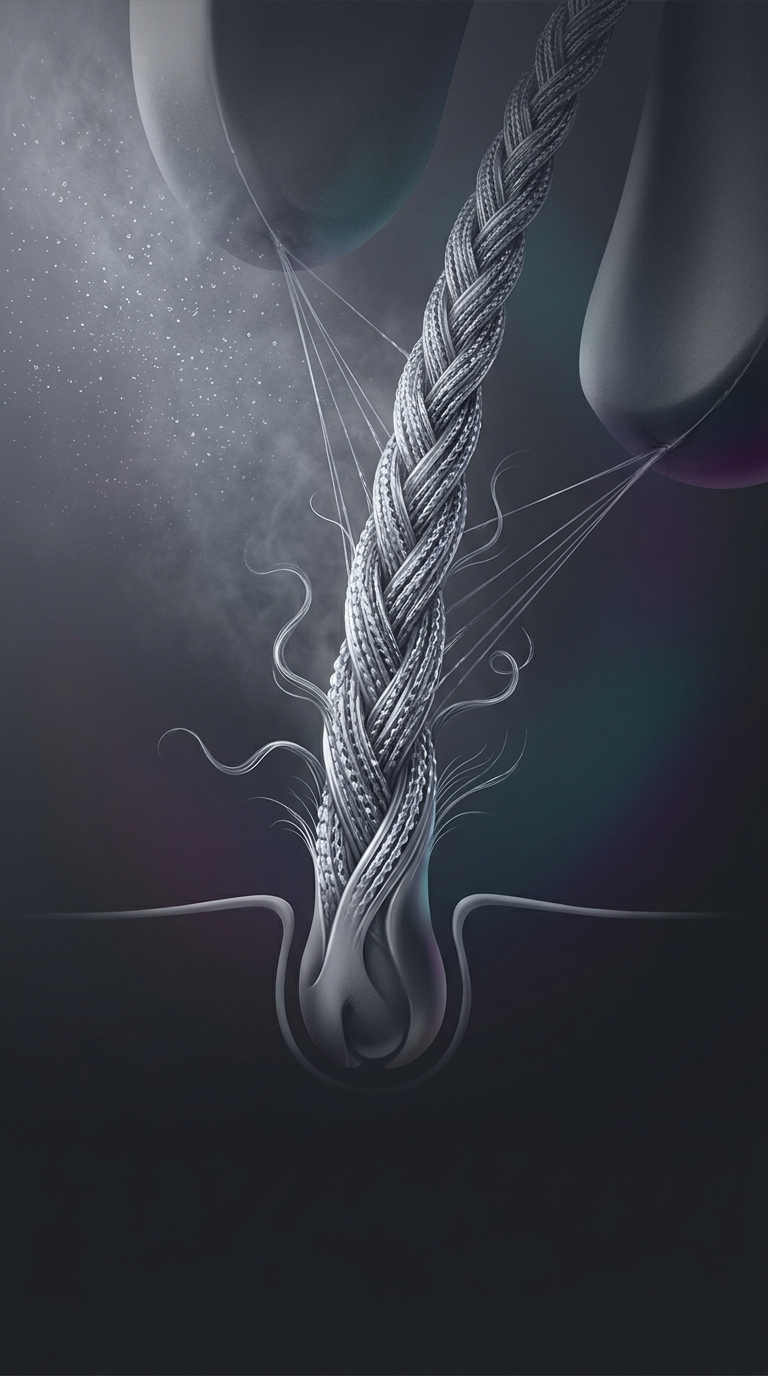
Hair’s strength comes largely from keratin, a structural protein packed into the hair shaft. In the shaft’s inner layer, long protein chains are held together by several kinds of bonds. Some, called disulfide bonds, are relatively sturdy; others, especially hydrogen bonds, are weaker and can form or break as conditions change. Together, this structure lets a strand withstand considerable pulling force without making it rigid or immune to change.
What Humidity Changes
Water in damp air can enter the hair shaft. As it does, it disrupts some of the temporary hydrogen bonds that help hold the strand’s shape. The fiber absorbs moisture and swells unevenly, particularly when its outer protective layer is worn or naturally more porous. Neighboring strands then bend or twist differently, creating the lifted, irregular surface we see as frizz.
That is not the same as the shaft snapping. Hair can be hard to pull apart yet easy to reshape because resistance to breaking and stability of shape depend on different parts of its structure. A strand under tension is being tested lengthwise; humid air changes how its protein chains are temporarily arranged.
Why Styling Can Last—Until the Air Changes
Heat and styling can set hair into a smoother shape by rearranging temporary bonds. When moisture returns, some of those bonds can form again in new positions, and the style may loosen. Chemical treatments can alter stronger bonds for longer-lasting changes, but they also affect the fiber itself, making damage and breakage more likely.
So the same hair that can bear a surprising load is still responsive to the air around it. Its resilience keeps a strand from breaking easily; it does not stop water from nudging its shape.