Dogo Onsen’s private room for emperors
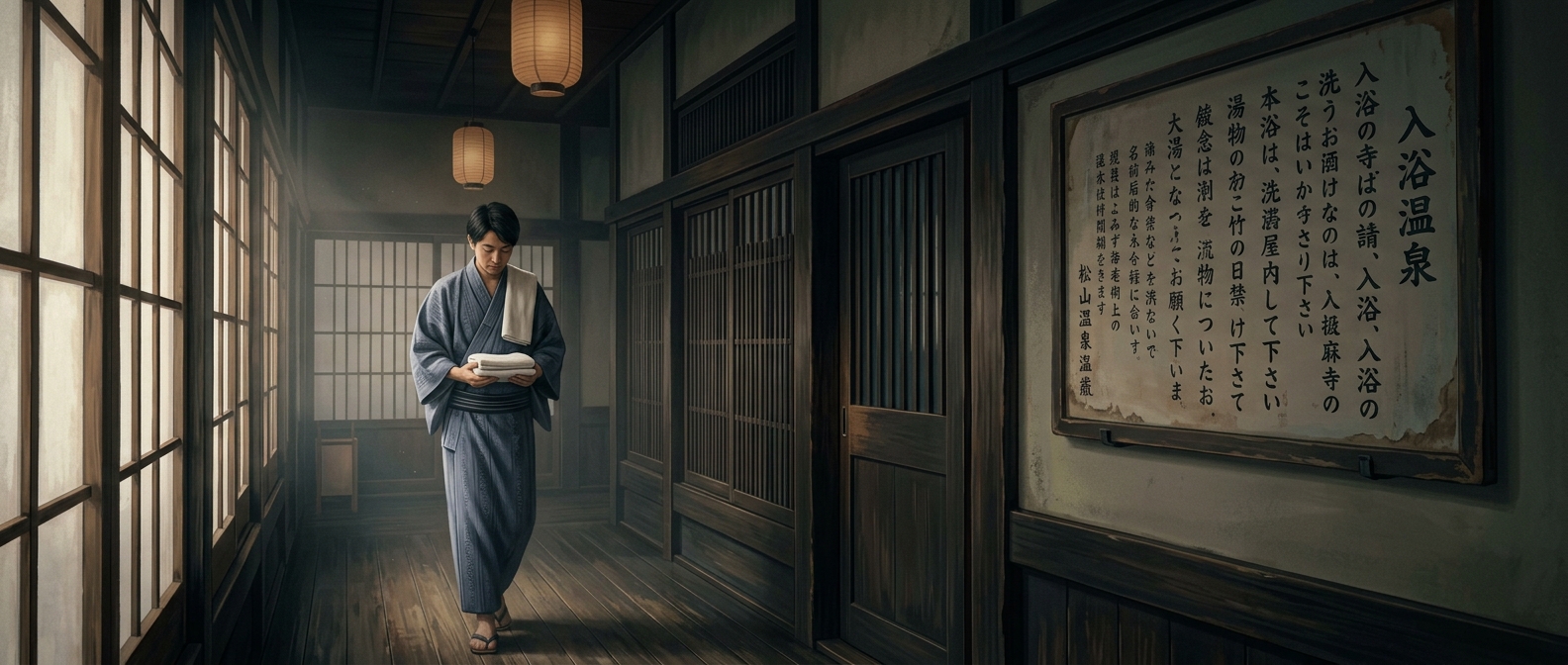
Dogo Onsen is celebrated as one of Japan’s oldest hot-spring resorts, but its best-known bathhouse is not a single ancient building preserved unchanged for a thousand years. The present wooden Honkan opened in 1894, and its layered wings and narrow passages reflect generations of additions and renovations.
Tucked inside is the Yushinden, a separate suite built in 1899 for visits by the imperial family. It includes its own bathing room, fitted with finely crafted materials and details more elaborate than those in the public baths. The suite was reserved for imperial use; ordinary visitors could not simply choose it as an upgrade. Its existence turns the building’s crowded, public maze into a place with a sharply drawn boundary between everyday bathing and ceremony.
Why it brings Spirited Away to mind
The Honkan’s stacked roofs, wooden corridors, stairways and shifting levels offer the sort of visual complexity that feels at home in Spirited Away. Dogo Onsen is often cited as an influence on the film’s bathhouse, but it is safer to understand the connection as an architectural echo than as a claim that the animated building is a direct copy of this one. The film’s setting combines an imaginative design with influences from more than one place.
That distinction makes the real bathhouse no less striking. Visitors move through a working public facility whose rooms preserve different layers of history, while the imperial suite reveals how the same building could accommodate both communal bathing and highly private state ceremony. Its maze is not just picturesque: it grew from the practical and social demands placed on the bathhouse over time.