A Stick Changes How Candy Is Held
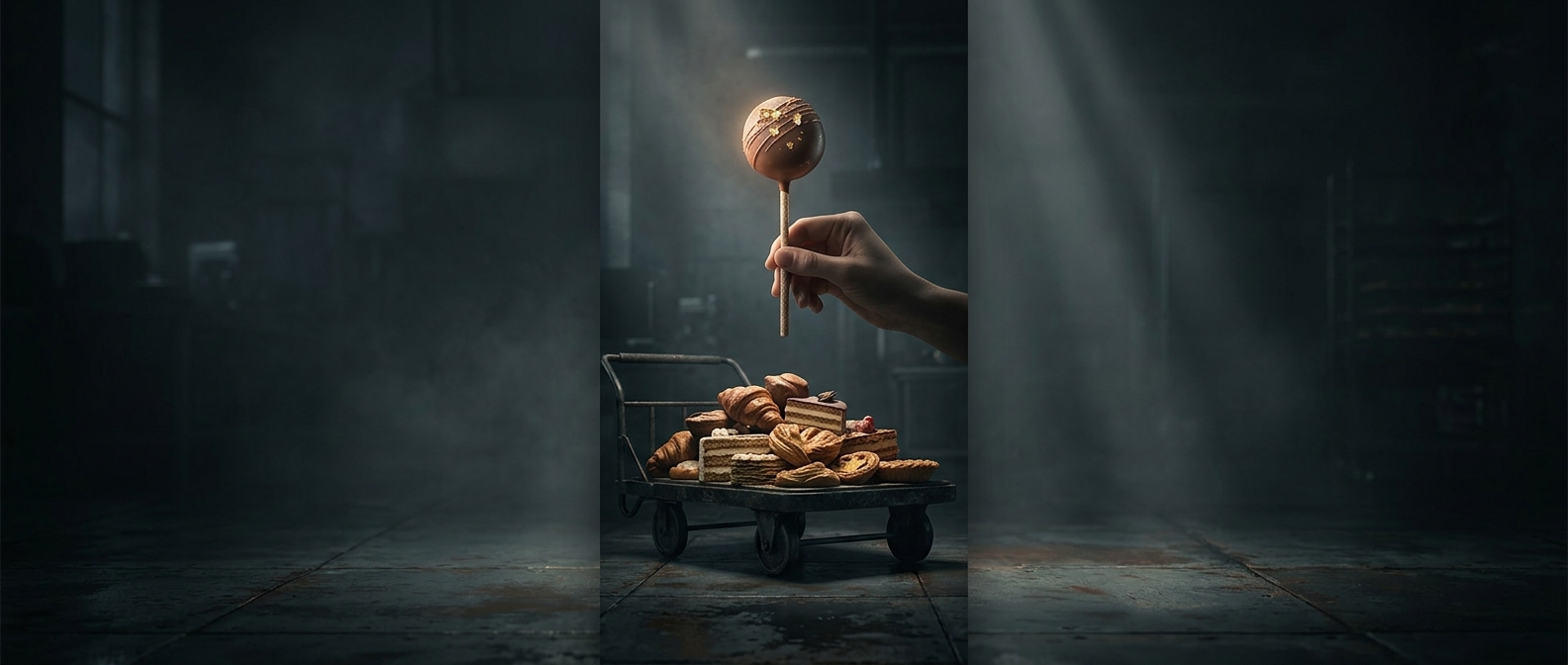
A lollipop separates two jobs that would otherwise compete: the candy provides the sweetness, while the stick provides the grip. Without that handle, fingers would have to pinch the sticky surface itself. With it, the hand can hold the candy at a distance and turn or tilt it toward the mouth without touching the part being eaten.
The stick also acts as a small support. It has to stay anchored in the candy while the candy is moved, so the connection must resist the twisting and pulling that come with ordinary handling. A firm grip on the stick helps keep those forces away from the candy’s surface.
A Small Tradeoff in the Design
The handle is useful because it is separate from the edible part, but it also makes the candy less compact than a piece meant to be held directly. That extra length gives the fingers room to hold on without crowding the mouth, and lets someone carry the treat between bites by its handle.
The result is a simple bit of functional design: the hand touches the part that can be discarded, while the part that melts and sticks stays mostly out of reach. When the treat is finished, the stick is the leftover handle—not a sticky hand to clean.