Why a Cake Pop Holds Together
Cake is usually too tender and crumbly to behave like a handheld snack. Crushing it changes the problem: instead of supporting its shape as one delicate sponge, the crumbs can be pressed into a compact mass. Frosting supplies the sticky binder, filling the gaps between crumbs and helping them cling to one another. Too little leaves the ball prone to cracking; too much makes it heavy and overly soft.
Chilling firms the mixture before the stick goes in. That matters because the stick acts as a small lever: when someone lifts or turns the pop, the weight of the cake pulls against the point where the stick enters. A cold, dense ball is less likely to split there.
The Coating Is Part of the Structure
A dipped outer layer does more than add flavor or decoration. Once it sets, it creates a thin shell around the cake, helping contain loose crumbs and resist small bumps during handling. The shell must be thin enough not to overwhelm the soft center, but sturdy enough to survive the trip from dipping to eating.
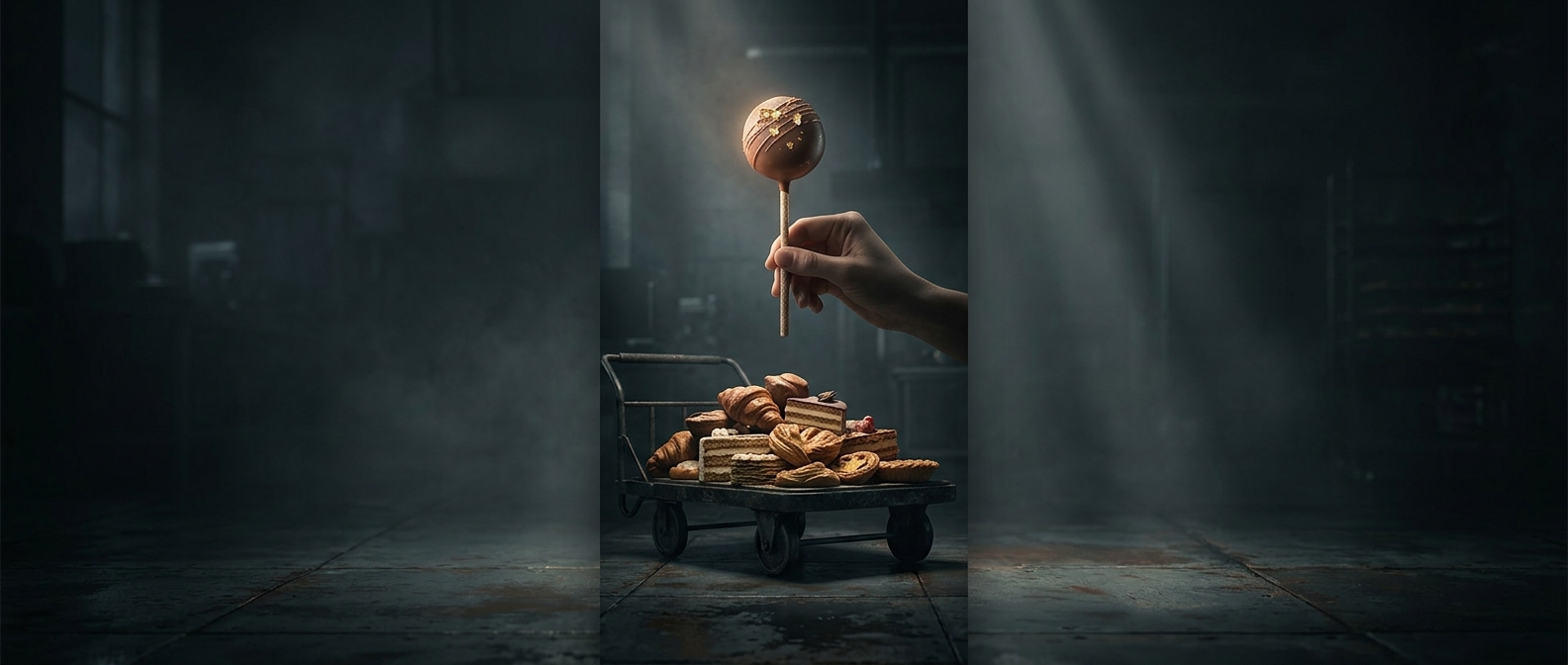
This is the practical engineering of the treat: compact the fragile interior, reinforce it with a coating, and give it a handle. The stick makes the cake easier to carry, but it also concentrates stress at one small point—so a cake pop works best when its center is firm and its outer shell has set.