Why a Hull Needs Its Own Protective Coating
A ship’s underwater surface is an inviting place for marine life to settle. Barnacles, algae, and other organisms build up there, roughening the hull and increasing drag—the resistance the vessel must overcome as it moves. More drag means more work for the engines and, typically, more fuel burned.
Antifouling paint addresses the problem at the surface. In copper-based coatings, compounds gradually released from the paint discourage organisms from attaching. The coating does not make the hull invulnerable; it slows the buildup between cleanings and repainting.
How Copper Became Associated With Red
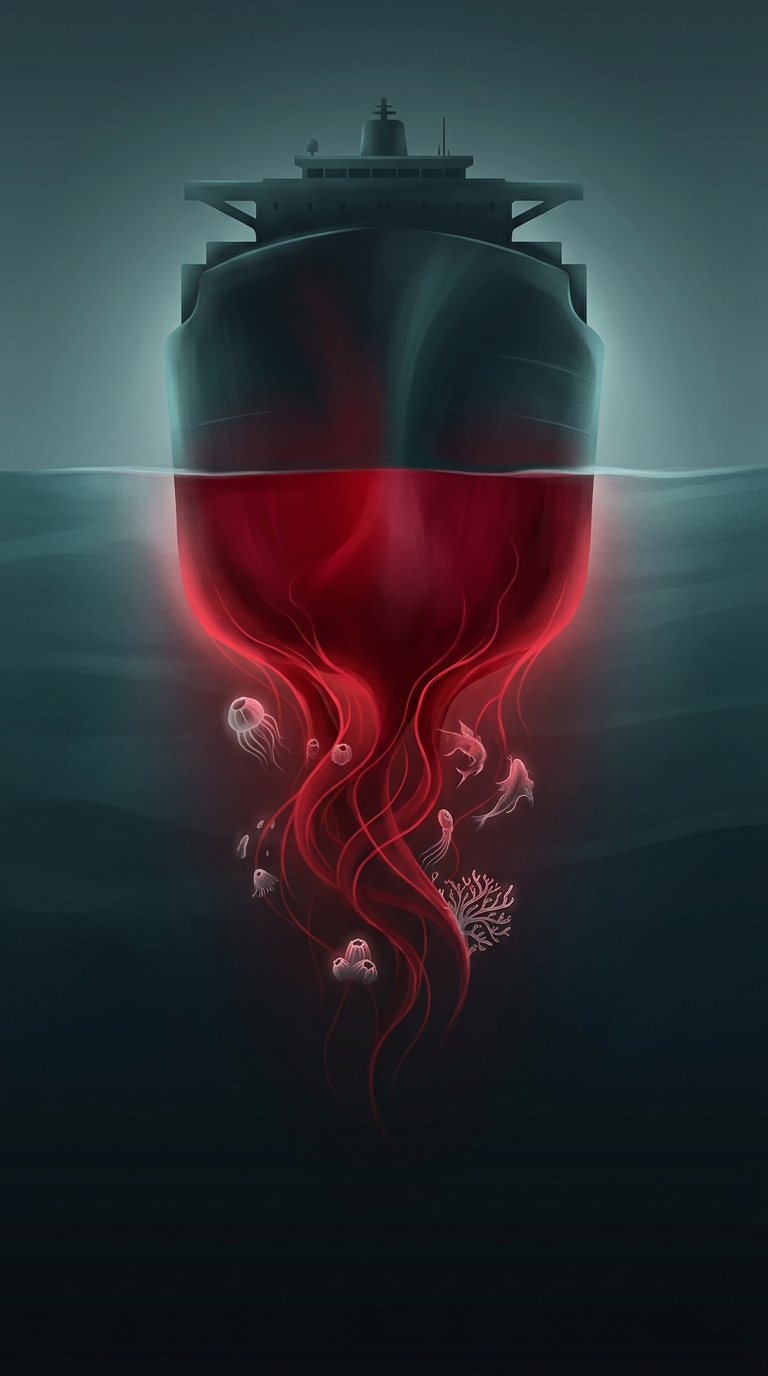
One traditional copper compound, cuprous oxide, has a reddish color. Its use in marine coatings helped make red a familiar sight below the waterline. The paint is not there to stop barnacles from eating the hull: it limits their attachment. Copper’s association with red is a consequence of the coating’s ingredients, not a requirement that every ship use that color.
Modern antifouling products come in other formulations and colors, but red remains common. Established paint systems, maintenance routines, and the recognizable appearance of working ships all help keep the convention in place.
The Tradeoff Beneath the Surface
The same release that discourages marine growth also means some copper enters the surrounding water. That creates an environmental tradeoff: a smoother hull can reduce the fuel needed to move a ship, while biocides can affect organisms beyond the hull. The practical question is therefore not simply whether to paint, but how to control fouling while limiting harm to marine life.
That familiar red band marks both sides of the bargain: less resistance for the ship, and a coating designed to remain chemically active in the sea.