A tunnel that cannot shed heat quickly
A train does more than carry passengers through the Underground: it leaves some of its energy behind as heat. Motors and brakes warm the air, and friction and air resistance add to the load. Passengers, lighting, and equipment contribute too. In an open railway, wind and exposure help disperse that warmth. In a tunnel, much of it has nowhere to go quickly.
The ground becomes part of the heating system
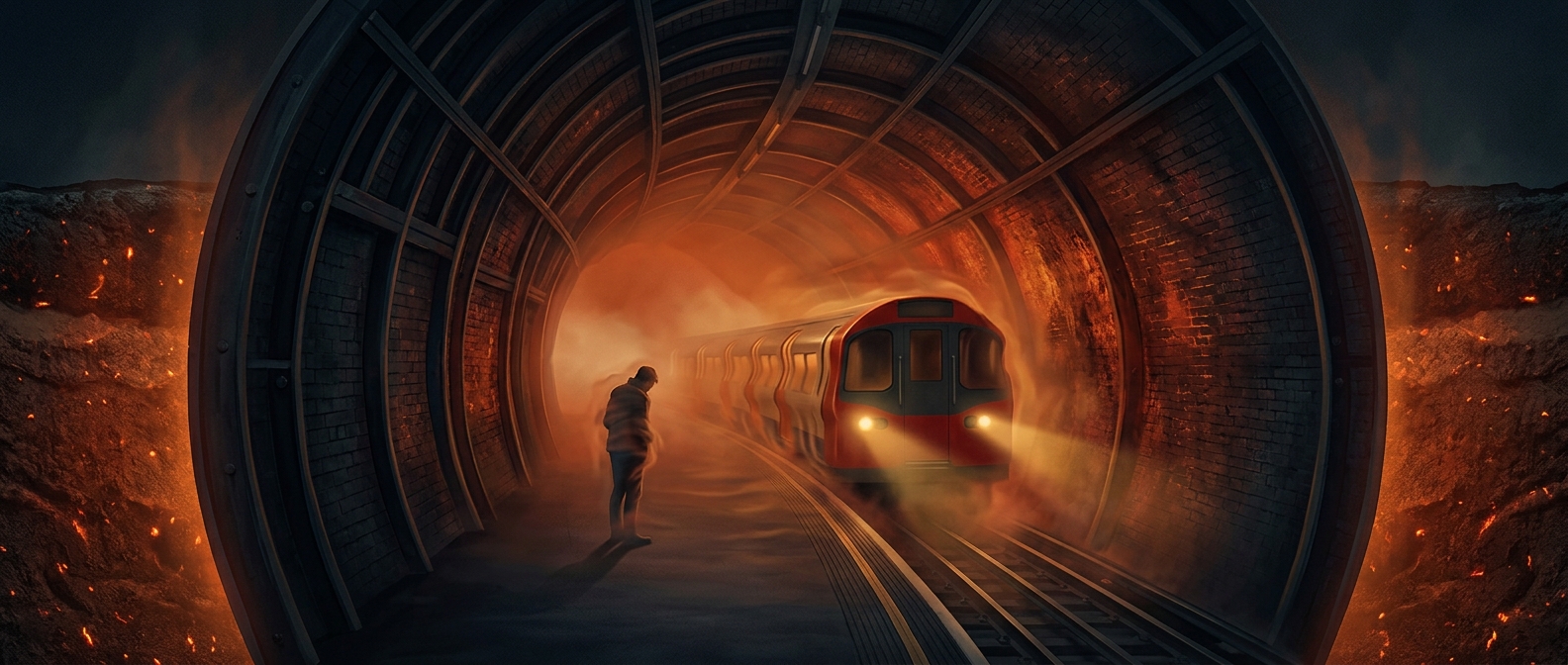
When the tunnels were new, their surrounding soil could absorb heat from the air. But the London clay is a poor conductor: it takes heat in and releases it slowly. That makes the tunnel walls a temporary heat store, not an endless drain. As trains keep adding warmth, heat seeps outward into the clay, while previously absorbed heat can seep back toward the tunnel. The ground’s temperature gradually rises, reducing its ability to cool the air.
This is the “geological memory” behind the problem. A busy day’s heat does not simply vanish overnight; some of it remains in the tunnel’s surroundings and influences conditions later.
Cooling is an engineering tradeoff
Moving fresh air through tunnels can help, but ventilation has limits: it must work around trains, stations, and confined underground spaces. Mechanical cooling poses another challenge. A refrigeration system does not destroy heat; it moves heat from one place to another, so the warmed air must ultimately be discharged somewhere outside the area being cooled.
That means the task is not just to make a carriage cooler in the moment. Operators have to manage heat across connected tunnels and stations, while accounting for where that heat can go. The clay that once helped absorb warmth can, after years of use, return it—so the tunnel’s past becomes part of the next commute.