Why a Bare Seafloor Benefits From Steel
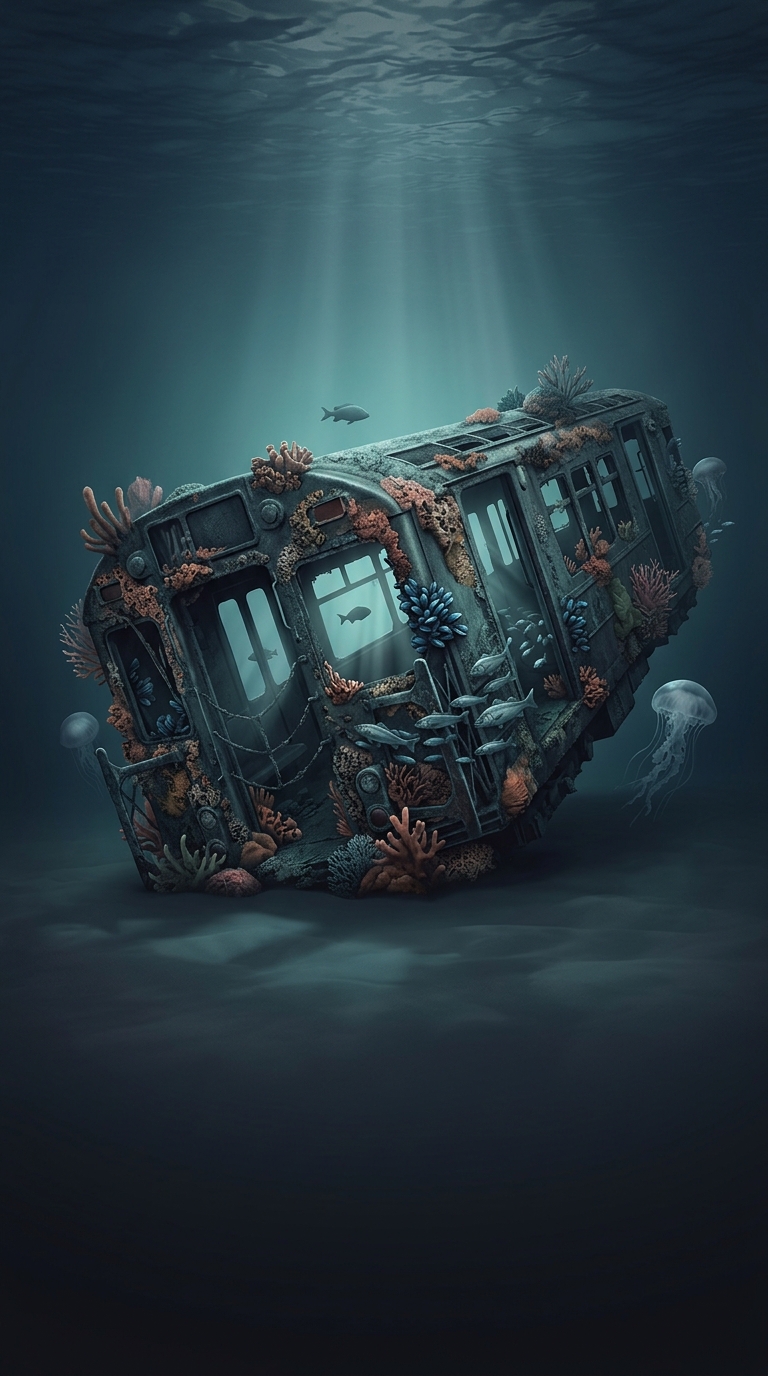
Many stretches of the continental shelf off the U.S. East Coast are relatively flat and muddy or sandy. That seabed supports life, but it offers few of the firm, elevated surfaces found on natural reefs. A retired subway car can change that local geometry: its frame rises above the bottom, creating sheltered spaces and surfaces where organisms can attach.
Small organisms such as algae and invertebrates can colonize those surfaces. As growth accumulates, the structure becomes habitat and a food source for other animals. Fish can use gaps in the frame to hide from predators or shelter from currents, while larger fish may gather where prey is easier to find. The car does not manufacture marine life; it provides structure that can make an otherwise open patch of seabed more useful to it.
Why Preparation Matters
A vehicle cannot simply be dropped into the ocean in its subway-service condition. Crews remove materials that could pollute the water and prepare the car so water can pass through it. Openings also let marine animals move in and out. This turns a sealed, enclosed vehicle into a permeable structure rather than a large underwater container.
The steel frame must also be able to withstand years of saltwater exposure. Over time it corrodes, so an artificial reef is not a permanent replacement for a natural rock formation. Its value depends on the habitat it provides while it remains structurally useful.
A Different Measure of a Train’s Useful Life
The reefing program repurposed cars that had reached the end of their service on the tracks. Instead of treating them only as scrap, it put their size and sturdy framework to work underwater. That is the practical appeal—and the tradeoff—of artificial reefs: they can add shelter and hard surface to suitable sites, but only after careful preparation and placement. A subway car’s second life begins when its familiar human-scale spaces become passages and hiding places for marine animals.